

Glutathione: The Complete Research Guide to the Master Antioxidant Tripeptide
What Is Glutathione?
Glutathione (GSH) is a naturally occurring tripeptide synthesized endogenously in virtually every mammalian cell from three amino acid precursors: L-glutamate, L-cysteine, and glycine. It is the most abundant low-molecular-weight thiol in the human body, present in millimolar concentrations in the cytoplasm, and is universally recognized as the cell’s primary endogenous antioxidant and master redox regulator.
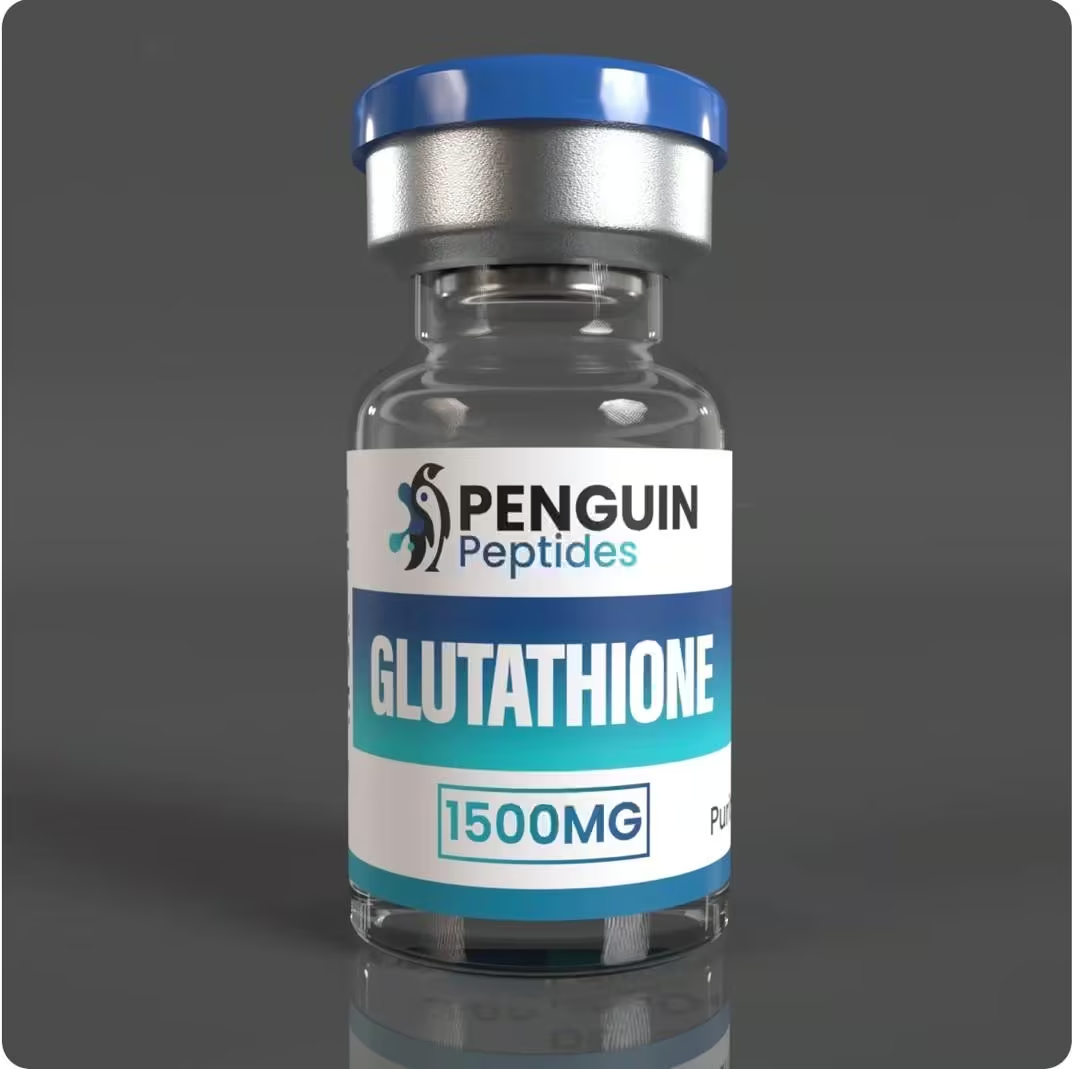
As a research compound, Glutathione is supplied as a lyophilized (freeze-dried) white powder in research-grade vials — most commonly in 200mg, 500mg, or 600mg formats — for use in controlled laboratory studies investigating oxidative stress, cellular redox biology, detoxification pathways, immune signaling, and Nrf2-mediated gene regulation.
Important Disclaimer: Research-grade Glutathione is strictly for laboratory use only. It is not approved by the FDA for human consumption, therapeutic use, medical treatment, or diagnostic purposes outside of approved clinical applications.
Biochemistry: What Makes Glutathione the “Master Antioxidant”?
The designation of Glutathione as the body’s master antioxidant is not marketing language — it reflects a specific, well-characterized biochemical reality. Unlike dietary antioxidants such as Vitamins C and E, which are obtained externally, Glutathione is synthesized intracellularly in a tightly regulated, two-step enzymatic process:
Step 1 — γ-Glutamylcysteine Synthesis: L-glutamate and L-cysteine are joined by the enzyme Glutamate-Cysteine Ligase (GCL) — a heterodimer composed of a catalytic subunit (GCLC) and a modulatory subunit (GCLM). This is the rate-limiting step of the entire GSH biosynthesis pathway and is the primary regulatory checkpoint. Importantly, GCL synthesis is non-redundant; it is also directly upregulated by the Nrf2 transcription factor under oxidative stress conditions.
Step 2 — GSH Synthesis: γ-Glutamylcysteine is then combined with glycine by the enzyme Glutathione Synthetase (GS) to produce the final tripeptide, Glutathione (GSH).
The resulting GSH molecule carries a reactive thiol (–SH) group on its cysteine residue — and it is this sulfhydryl group that is the functional core of Glutathione’s antioxidant activity. It donates electrons to neutralize reactive oxygen species (ROS), reactive nitrogen species (RNS), and lipid peroxides, converting to its oxidized form glutathione disulfide (GSSG) in the process.
The GSH:GSSG Redox Cycle
Glutathione does not simply function as a one-time sacrificial antioxidant — it participates in a continuous enzymatic redox cycle that regenerates active GSH from its oxidized form:
- Glutathione Peroxidase (GPx) uses GSH as a cofactor to reduce hydrogen peroxide (H₂O₂) and lipid hydroperoxides to water and lipid hydroxides — producing GSSG in the process
- Glutathione Reductase (GR) then reduces GSSG back to two molecules of active GSH using NADPH as the electron donor — completing the cycle
This regenerative loop allows a relatively small pool of Glutathione molecules to provide sustained, continuous antioxidant protection. The GSH:GSSG ratio — the balance between reduced and oxidized glutathione — functions as a sensitive cellular redox sensor. A high GSH:GSSG ratio signals a reduced, healthy redox environment supporting cell proliferation and repair. A declining ratio indicates oxidative stress, triggering a cascade of protective responses including Nrf2 pathway activation, NF-κB inflammatory signaling, and — if oxidative damage becomes severe — apoptosis.
Glutathione and the Nrf2-Keap1 Pathway
One of the most actively studied aspects of Glutathione biology is its relationship with the Nrf2 (Nuclear Factor Erythroid 2-Related Factor 2) — Keap1 signaling axis — the cell’s primary transcriptional response to oxidative stress.
Under basal conditions, Nrf2 is bound to its repressor protein Keap1, which targets it for ubiquitination and proteasomal degradation, keeping Nrf2 activity low. When oxidative stress depletes intracellular GSH and elevates ROS, the resulting oxidative modifications to Keap1’s cysteine residues release Nrf2, allowing it to translocate to the nucleus and bind the Antioxidant Response Element (ARE) in gene promoters.
ARE activation drives the transcription of a coordinated battery of cytoprotective genes — including:
- GCLC and GCLM (GSH synthesis enzymes — directly increasing GSH production)
- Glutathione Reductase (GR) (GSH recycling)
- Glutathione S-Transferases (GSTs) (Phase II detoxification)
- NQO1, HO-1 (additional antioxidant and cytoprotective enzymes)
Research published in Nature Communications (2024) revealed that GSH in the liver also directly represses Nrf2 under basal conditions — identifying GSH as a “fulcrum” in the liver’s balance between redox buffering and lipid metabolism, with deletion of the GSH synthesis enzyme GCLC in adult mice disrupting both triglyceride production and Nrf2 activity. This bidirectional relationship makes Glutathione a critical variable in any research involving Nrf2 pathway modulation.
Key Research Areas for Glutathione
1. Oxidative Stress and Redox Biology
Glutathione is the benchmark tool for studying intracellular redox status. The GSH:GSSG ratio is one of the most widely used markers of cellular oxidative stress in preclinical research, and exogenous Glutathione administration is used to probe the consequences of GSH depletion and restoration in oxidative stress models.
2. Hepatic Detoxification Research
The liver maintains the highest intracellular GSH concentrations of any organ — a reflection of its central role in metabolic detoxification. Glutathione’s Phase II detoxification function operates through Glutathione S-Transferases (GSTs), which conjugate GSH to electrophilic xenobiotics, drugs, heavy metals, and reactive metabolites, rendering them water-soluble for excretion. Research-grade Glutathione is used extensively in hepatology and toxicology studies examining drug metabolism, hepatoprotection, and liver redox homeostasis.
3. Neurological and Neuroprotection Research
Oxidative stress plays a well-established role in the pathophysiology of numerous neurodegenerative conditions. Glutathione depletion in brain tissue is a consistent finding across Parkinson’s disease, Alzheimer’s disease, and ALS models. Research in preclinical neurological models uses Glutathione to examine its neuroprotective capacity, its role in supporting mitochondrial function in neurons, and its potential to attenuate ROS-driven neuronal apoptosis.
4. Immune Function Studies
Glutathione is required for optimal immune cell function — particularly in T lymphocytes and natural killer (NK) cells, where adequate GSH levels are necessary for proliferation, cytokine production, and antigen-driven responses. Research has demonstrated that GSH depletion impairs Th1 cytokine profiles and reduces immune competence in experimental models.
5. Skin Pigmentation and Melanogenesis Research
Glutathione exerts a regulatory effect on melanogenesis through its ability to inhibit the enzyme tyrosinase — the rate-limiting enzyme in melanin synthesis. By scavenging ROS that would otherwise activate tyrosinase, and by directly binding the enzyme’s copper ion cofactor, GSH shifts the balance from eumelanin (dark pigment) toward pheomelanin (lighter pigment). This mechanism is an active area of research in dermatological and pigmentation biology studies.
Glutathione Forms: GSH vs GSSG vs Liposomal vs S-Acetyl
Understanding which form of Glutathione is appropriate for a given research application is important for experimental design:
| Form | Description | Research Consideration |
|---|---|---|
| Reduced GSH | Active form; standard research vial format | Primary form for antioxidant, redox, and detox studies |
| GSSG | Oxidized disulfide form | Used to model oxidative stress state; induces apoptosis in GSH-deficient models |
| S-Acetyl Glutathione | Acetylated form; improved cell membrane penetration | Studies requiring intracellular GSH elevation with enhanced uptake |
| Liposomal Glutathione | Encapsulated in phospholipid vesicles | Oral bioavailability research; GI absorption studies |
| NAC (N-Acetylcysteine) | GSH precursor; provides cysteine substrate | Upstream GSH synthesis studies; cysteine-rate-limiting models |
Research-grade lyophilized Glutathione vials supply the reduced GSH form — the biologically active molecule directly involved in the GPx/GR redox cycle and Phase II conjugation reactions.
Glutathione Research Product Specifications
| Specification | Details |
|---|---|
| Compound | Glutathione (L-Glutathione, GSH) |
| Structure | Tripeptide: γ-L-Glutamyl-L-Cysteinyl-Glycine |
| CAS Number | 70-18-8 |
| Molecular Formula | C₁₀H₁₇N₃O₆S |
| Molecular Weight | 307.32 g/mol |
| Physical Form | White lyophilized powder |
| Common Vial Sizes | 200mg, 500mg, 600mg |
| Purity | ≥99% (HPLC verified) |
| Storage (lyophilized) | −20°C (−4°F); dry, dark, cool conditions |
| Storage (reconstituted) | Refrigerate at 2–8°C; use within 2–3 weeks; do not freeze |
| Reconstitution | Bacteriostatic water; inject slowly along vial wall; do not shake |
| Certificate of Analysis | Required — third-party batch verified per lot |
| Stability Note | Light-sensitive and relatively unstable once reconstituted; protect from UV exposure |
Frequently Asked Questions About Glutathione
What is Glutathione made of? Glutathione is a tripeptide assembled from three amino acids: L-glutamate, L-cysteine, and glycine. Its synthesis is controlled by two sequential enzymatic steps: first by Glutamate-Cysteine Ligase (GCL), then by Glutathione Synthetase (GS). The rate-limiting step is the first enzymatic reaction, controlled by GCL.
What is the difference between GSH and GSSG? GSH is the reduced, active form of Glutathione — the form that donates electrons to neutralize ROS and participates in antioxidant enzyme reactions. GSSG is oxidized glutathione disulfide — the form produced when two GSH molecules are oxidized and joined by a disulfide bond. The GSH:GSSG ratio is a primary indicator of cellular redox status.
Why is Glutathione called the “master antioxidant”? Because it is not only a direct antioxidant itself but also a required cofactor for multiple antioxidant enzymes (GPx, GSTs), it regenerates other antioxidants (Vitamins C and E), and its availability regulates the Nrf2 transcriptional response that governs the entire cellular antioxidant defense network. No other single molecule occupies as central a position in cellular redox biology.
What is the relationship between Glutathione and Nrf2? Nrf2 is a transcription factor that upregulates GSH synthesis enzymes (GCL, GS) and recycling enzymes (GR) in response to oxidative stress. Conversely, adequate GSH represses Nrf2 under basal conditions. This bidirectional feedback loop makes GSH and Nrf2 deeply interdependent regulatory partners in cellular antioxidant homeostasis.
Is research-grade Glutathione approved for human use? Research-grade lyophilized Glutathione vials are not FDA-approved for human consumption or therapeutic use and are intended for laboratory research only. Glutathione is, however, available in FDA-approved clinical contexts (e.g., as an adjunct in cisplatin chemotherapy under specific clinical protocols). Research-grade products and clinical-grade products are entirely distinct categories.
Summary
Glutathione — the γ-L-Glutamyl-L-Cysteinyl-Glycine tripeptide — is the cell’s foundational antioxidant, redox sensor, and detoxification cofactor. Its GSH:GSSG cycle, Nrf2-Keap1 regulatory interplay, Phase II xenobiotic conjugation activity, and essential roles in immune function, neurological protection, and melanogenesis make it one of the most broadly relevant compounds in all of molecular biology research. Research-grade Glutathione, supplied as a ≥99% purity lyophilized powder, provides laboratory researchers with the active, reduced form of this critical molecule for precise, reproducible in vitro and preclinical studies. All use must remain fully compliant with applicable institutional, ethical, and regulatory guidelines.
This content is provided for educational and informational purposes only. Research-grade Glutathione is intended strictly for laboratory research use and is not for human consumption, medical treatment, therapeutic application, or diagnostic use. Always comply with applicable laws, institutional protocols, and safety guidelines when handling research compounds.
Be the first to review “GLUTATHIONE”
Related products
Dermal Research Compounds
Peptide Research Compounds
Dermal Research Compounds
Neuro Research Compounds
Dermal Research Compounds
Reviews
There are no reviews yet.