


Hexarelin Acetate 5mg: The Complete Research Guide to Examorelin
What Is Hexarelin Acetate 5mg?
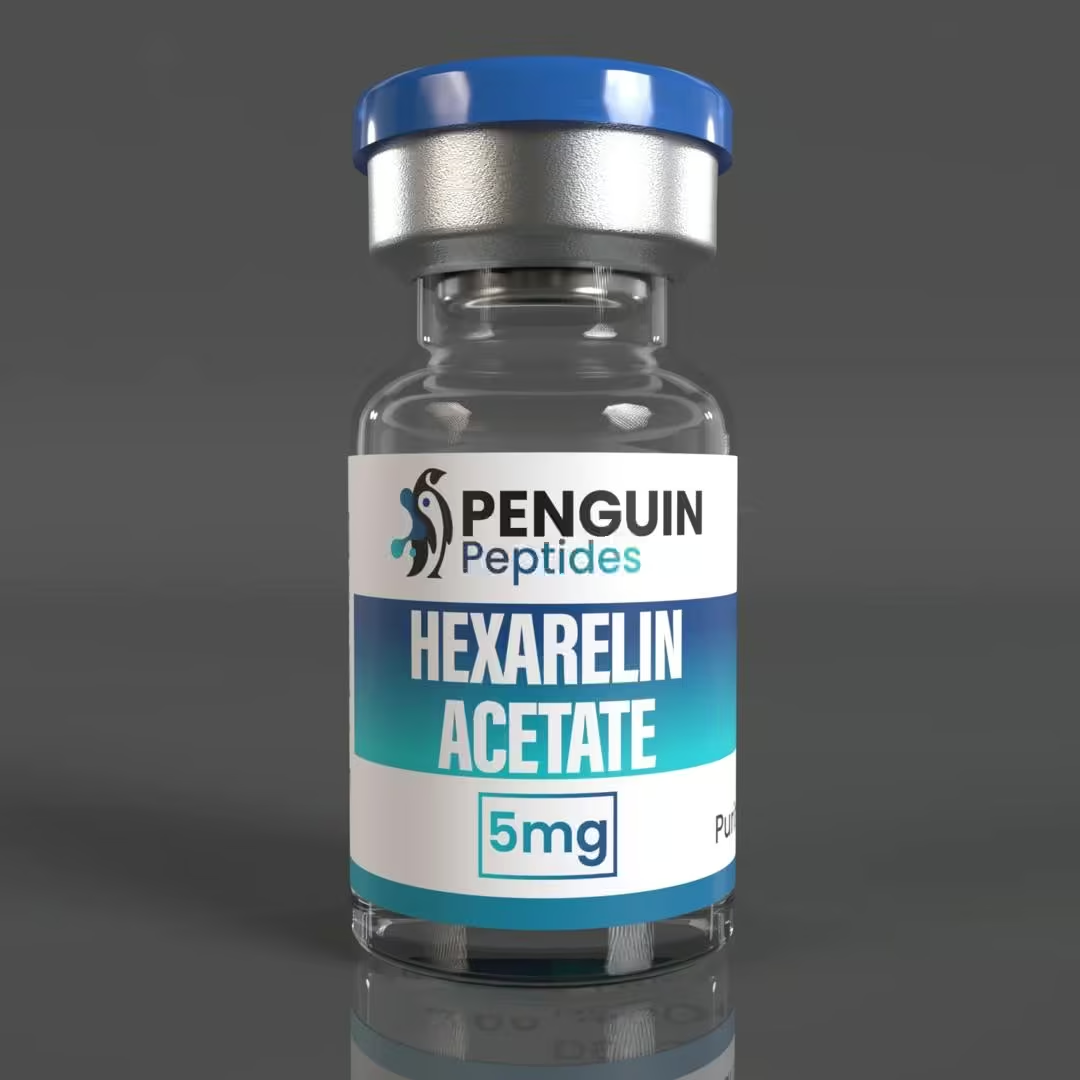
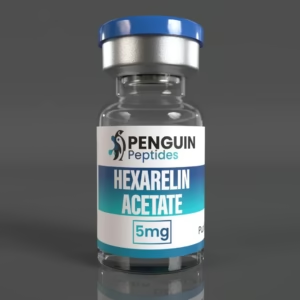
Hexarelin Acetate 5mg is a research-grade lyophilized peptide supplied in a 5mg vial, formulated as the acetate salt of Hexarelin — a synthetic hexapeptide also known by its INN name Examorelin. It is one of the most potent growth hormone secretagogues (GHS) in the GHRP (Growth Hormone-Releasing Peptide) family and is uniquely distinguished among its class by a dual receptor mechanism: stimulating GH release via the GHS-R1a (ghrelin receptor) and exerting cardioprotective effects through the CD36 scavenger receptor — through a pathway largely independent of growth hormone itself.
Hexarelin Acetate 5mg is supplied as a white lyophilized powder requiring reconstitution with bacteriostatic water prior to laboratory use. It is intended strictly for controlled research by qualified personnel in certified research facilities.
Important Disclaimer: Hexarelin Acetate 5mg is strictly for laboratory research use only. It is not approved by the FDA for human consumption, medical treatment, therapeutic use, or diagnostic purposes.
Chemical Identity and Structure
Hexarelin is a six-amino-acid (hexapeptide) synthetic analog of ghrelin that shares structural similarities with GHRP-6 — with one critical modification: the inclusion of a methyl group on the tryptophan residue at position 2. This single structural change compared to GHRP-6 is responsible for Hexarelin’s significantly enhanced receptor binding affinity and greater metabolic stability in research models.
- CAS Number: 140703-51-1
- Molecular Formula: C₄₇H₅₈N₁₂O₆
- Molecular Weight: 887.04 g/mol
- PubChem ID: 6918297
- Salt Form: Acetate
- Physical Appearance: White lyophilized powder
- Also Known As: Examorelin, HEX
The acetate salt form is standard for research-grade GHRPs and is chemically stable in lyophilized storage conditions.
Mechanism of Action: Dual Receptor Engagement
What distinguishes Hexarelin Acetate from most other growth hormone-releasing peptides is its engagement of two distinct receptor populations, each driving a separate and largely independent axis of biological activity.
1. GHS-R1a (Ghrelin Receptor) — Growth Hormone Axis
Hexarelin binds with high affinity to the growth hormone secretagogue receptor type 1a (GHS-R1a) — the canonical ghrelin receptor — on somatotroph cells in the anterior pituitary gland. This binding triggers a signaling cascade that results in robust, pulsatile growth hormone release, followed by downstream elevation of IGF-1 (Insulin-like Growth Factor-1). Hexarelin is recognized as one of the most potent synthetic GHS-R1a agonists available, producing GH pulses of greater magnitude than GHRP-6 or GHRP-2 at equivalent doses in laboratory settings.
GHS-R1a activation by Hexarelin also stimulates the release of additional pituitary hormones in research models, including prolactin, ACTH, and cortisol — an important variable in study design that distinguishes it from the more selective ghrelin receptor agonist Ipamorelin, which does not significantly elevate these hormones.
2. CD36 Scavenger Receptor — Cardioprotective Axis
Hexarelin’s second receptor target — and the one that makes it uniquely valuable in cardiovascular research — is CD36, a scavenger receptor expressed in cardiac myocytes, macrophages, and adipose tissue. Activation of CD36 by Hexarelin triggers pro-survival intracellular signaling cascades, including the PI3K/Akt pathway and ERK1/2 phosphorylation, protecting cardiomyocytes from ischemia-induced apoptosis.
Crucially, this cardioprotective mechanism appears to be substantially independent of GH release. Research in hypophysectomized (GH-deficient) rat models has confirmed that Hexarelin still exerts significant cardiac protective effects in the absence of a functional GH axis — and studies in CD36-null mice demonstrated that the cardioprotective effects were completely abolished when the CD36 receptor was genetically removed, confirming this receptor as the essential mediator of Hexarelin’s cardiovascular activity.
Key Research Areas for Hexarelin Acetate 5mg
Growth Hormone Secretagogue Research
Hexarelin is studied as a benchmark compound for maximum GHS-R1a activation — the ceiling of achievable GH pulse amplitude through synthetic ghrelin receptor stimulation. Research has shown Hexarelin produces significantly greater GH peak levels than GHRP-6 at matched doses, making it the tool of choice for studies examining acute GH response, dose-response curves, and receptor pharmacology where maximal GH output is the experimental objective.
Cardiovascular and Cardioprotection Research
The CD36-mediated cardioprotective axis is Hexarelin’s most distinctive and extensively studied research application. Published studies have documented:
- Improved left ventricular ejection fraction (LVEF), cardiac output, and cardiac index in ischemic heart failure models
- Significant reductions in cardiomyocyte apoptosis via anti-apoptotic modulation of Bax, Bcl-2, caspase-3, and caspase-9 expression
- Reduction in atherosclerotic plaque and neointima formation in atherosclerotic rat models
- Improvement in serum nitric oxide levels and endothelial nitric oxide synthase (eNOS) expression
- Suppression of cardiac fibrosis in hypertensive models
A key study in streptozotocin-induced diabetic rats (Physiological Reports) found that Hexarelin improved cardiomyocyte function by recovering Ito K⁺ currents, restoring intracellular Ca²⁺ homeostasis, and activating anti-apoptotic signaling pathways — all in a diabetic cardiomyopathy context.
GH Axis Research in Pathological Models
Because Hexarelin can stimulate GH release even in the presence of elevated somatostatin — conditions where normal GH pulsatility is disrupted — it is particularly valuable for studying pathological GH deficiency states, aging-related GH decline, and disrupted hypothalamic-pituitary axis function.
Metabolic and Lipid Research
Research in obese and atherosclerotic animal models has shown that Hexarelin may influence plasma cholesterol levels and modify the HDL/LDL ratio, opening study avenues into how GHS-R1a and CD36 co-activation affects lipid metabolism and metabolic syndrome-related endpoints.
Hexarelin Acetate vs Other GHRPs: How It Compares
Researchers choosing between GHRPs need to understand the trade-offs between potency, selectivity, and desensitization profile:
| Peptide | GH Potency | Receptor Selectivity | Cortisol/Prolactin Elevation | Desensitization Rate | Unique Feature |
|---|---|---|---|---|---|
| Hexarelin | Highest | GHS-R1a + CD36 | Higher | Faster | CD36 cardioprotection |
| GHRP-2 | High | GHS-R1a | Moderate | Moderate | Potent, mid-range tolerance |
| GHRP-6 | Moderate | GHS-R1a | Moderate | Moderate | Strong appetite stimulation |
| Ipamorelin | Moderate | GHS-R1a (selective) | Minimal | Slowest | Cleanest GHS-R1a agonist |
The key trade-off with Hexarelin Acetate in research protocols is that its exceptional GH potency comes with a faster receptor desensitization rate compared to Ipamorelin or GHRP-2. Studies observe waning GH response beginning around weeks 4–6 of continuous daily dosing, making cycling protocols an important consideration when designing longer-duration studies.
For research specifically focused on maximum acute GH amplitude, cardioprotection via CD36, or receptor pharmacology of the GHS-R1a system, Hexarelin Acetate 5mg remains the compound with no direct equivalent in the GHRP class.
Hexarelin Acetate 5mg Research Product Specifications
| Specification | Details |
|---|---|
| Peptide Name | Hexarelin (Examorelin) |
| Salt Form | Acetate |
| Vial Size | 5mg |
| Physical Form | Lyophilized (freeze-dried) white powder |
| Purity | ≥99% (HPLC and MS verified) |
| CAS Number | 140703-51-1 |
| Molecular Formula | C₄₇H₅₈N₁₂O₆ |
| Molecular Weight | 887.04 g/mol |
| Storage (lyophilized) | −20°C (−4°F); store in cool, dark, dry conditions |
| Storage (reconstituted) | Refrigerate at 2–8°C (36–46°F); use within 30 days |
| Certificate of Analysis | Required — third-party batch verified |
| Reconstitution | Bacteriostatic water (not included) |
Frequently Asked Questions About Hexarelin Acetate 5mg
What does “Acetate” mean in Hexarelin Acetate 5mg? It refers to the salt form of the peptide. Research-grade peptides are commonly supplied as acetate salts, which improves stability and solubility in lyophilized form. The acetate counterion does not affect the biological activity of the Hexarelin molecule.
What is the difference between Hexarelin and GHRP-6? Hexarelin and GHRP-6 are both synthetic hexapeptides that activate GHS-R1a, but Hexarelin has a methyl group substitution that confers higher receptor binding affinity, significantly greater GH-releasing potency, and crucially, the ability to also activate the CD36 cardiac receptor — a capacity GHRP-6 does not share.
Why is Hexarelin considered unique among GHRPs? Its engagement of the CD36 scavenger receptor gives Hexarelin cardioprotective research applications that are independent of GH release. No other GHRP in the class replicates this dual-receptor mechanism, making Hexarelin Acetate 5mg the only option for research into GH-independent cardiovascular effects of the ghrelin receptor system.
Is Hexarelin Acetate 5mg the same as Examorelin? Yes. Examorelin is the International Nonproprietary Name (INN) for Hexarelin. Both names refer to the identical compound.
Is Hexarelin Acetate 5mg approved for human use? No. Hexarelin Acetate 5mg is not FDA-approved for any human, therapeutic, or veterinary use. It is intended exclusively for qualified laboratory research.
Summary
Hexarelin Acetate 5mg — supplied as a ≥99% purity lyophilized peptide vial — is one of the most scientifically distinctive and potent GHRPs available for laboratory research. Its dual mechanism of action, engaging both GHS-R1a for maximum GH pulse generation and CD36 for GH-independent cardioprotection, gives it a research profile unmatched by any other peptide in the GHRP family. For researchers investigating GH secretagogue pharmacology, cardiovascular protection models, ischemia-reperfusion injury, or cardiomyocyte signaling, Hexarelin Acetate 5mg represents the most compelling single-compound tool in the class. All handling and use must remain fully compliant with applicable institutional and regulatory guidelines.
This content is provided for educational and informational purposes only. Hexarelin Acetate 5mg is intended strictly for laboratory research use and is not for human consumption, medical treatment, therapeutic application, or diagnostic use. Always comply with applicable laws, institutional protocols, and safety guidelines when handling research peptides.
Be the first to review “HEXARELIN ACETATE 5MG”
Related products
Regenerative Research Compounds
Regenerative Research Compounds
Regenerative Research Compounds
Dermal Research Compounds
Regenerative Research Compounds
Regenerative Research Compounds
Regenerative Research Compounds
Regenerative Research Compounds
Reviews
There are no reviews yet.