


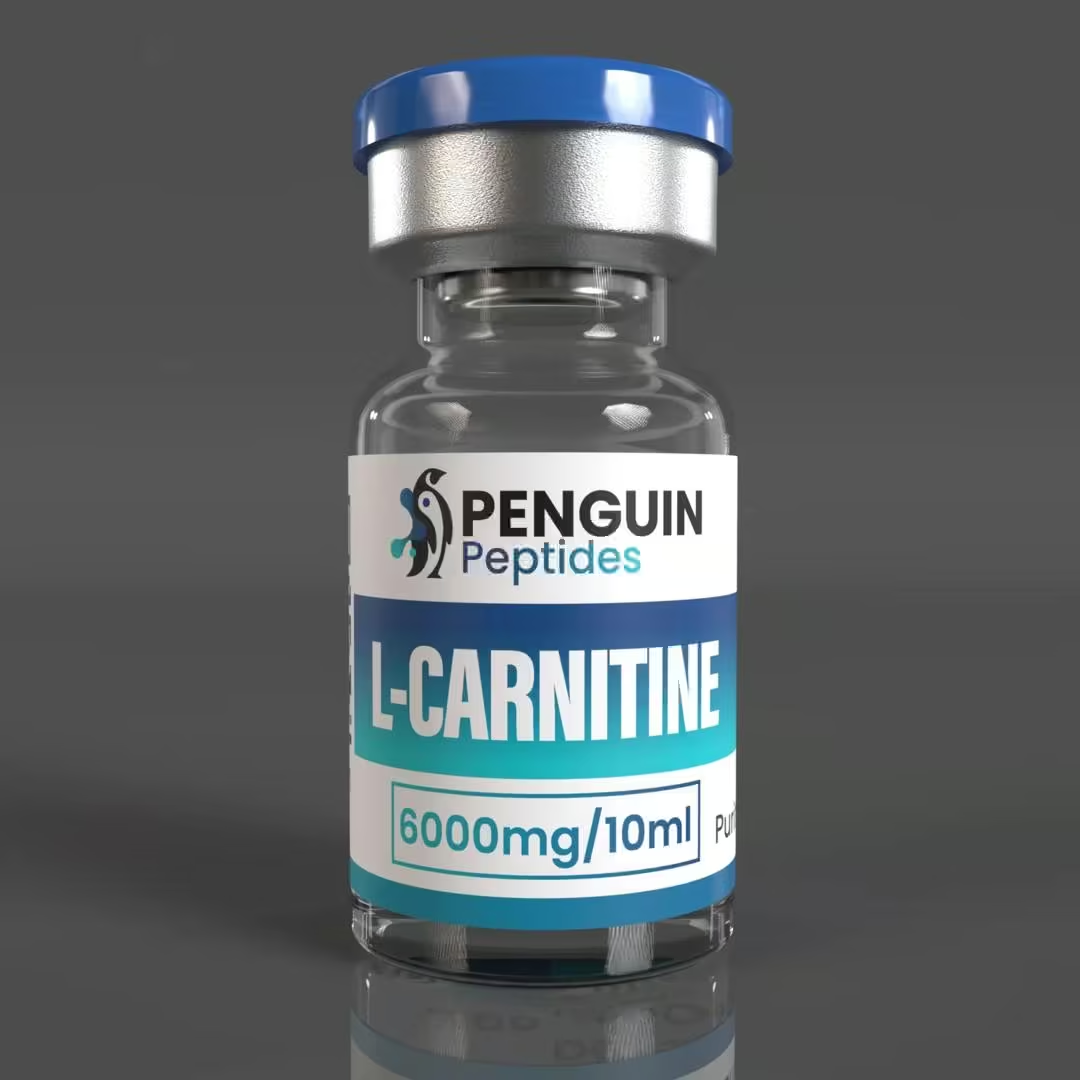
L-Carnitine 6000mg/10ml: The Complete Research Guide to Injectable Levocarnitine
What Is L-Carnitine 6000mg/10ml?
L-Carnitine 6000mg/10ml is a research-grade injectable solution of Levocarnitine — the biologically active L-isomer of carnitine — formulated at a concentration of 600mg per milliliter in a 10mL sterile vial, yielding a total content of 6,000mg (6g) per vial. Supplied as a ready-to-use liquid that requires no reconstitution, it is intended exclusively for controlled laboratory research by qualified personnel in certified research facilities.
This high-concentration liquid format makes L-Carnitine 6000mg/10ml one of the most practical and precise tools available for preclinical and in vitro research into mitochondrial fatty acid metabolism, lipid oxidation pathways, energy substrate utilization, and carnitine-dependent signaling.
Important Disclaimer: L-Carnitine 6000mg/10ml is strictly for laboratory research use only. It is not approved for human consumption, therapeutic use, veterinary use, or any medical or diagnostic application.
What Is L-Carnitine? Background and Biochemistry
L-Carnitine (levocarnitine) is a naturally occurring, trimethylated amino acid derivative synthesized endogenously from two dietary precursors: lysine and methionine. It is found in significant concentrations in high-energy tissues — including skeletal muscle, cardiac muscle, and the brain — reflecting its central role in cellular energy metabolism.
The compound is not a peptide or hormone, but rather a small molecule cofactor with an essential and irreplaceable function in mitochondrial fatty acid transport. Without adequate L-carnitine, long-chain fatty acids cannot cross the inner mitochondrial membrane and therefore cannot enter the beta-oxidation pathway for energy production.
Research-grade L-Carnitine 6000mg/10ml provides this molecule in its pure, active levorotatory (L-) form — as opposed to D-carnitine, which is the biologically inactive mirror-image isomer and can actually interfere with endogenous carnitine activity.
Mechanism of Action: How L-Carnitine Works
The core function of L-Carnitine in research and biology centers on the carnitine shuttle system, which governs mitochondrial fatty acid oxidation:
Step 1 — Activation: Long-chain fatty acids in the cytoplasm are first activated by Coenzyme A (CoA) to form long-chain acyl-CoA esters at the outer mitochondrial membrane.
Step 2 — CPT1 Transfer: Carnitine Palmitoyltransferase 1 (CPT1) — the rate-limiting enzyme of fatty acid beta-oxidation — transfers the acyl group from acyl-CoA onto L-carnitine, producing a long-chain acylcarnitine. This reaction is the primary regulatory checkpoint of the entire pathway, controlled by malonyl-CoA availability.
Step 3 — Membrane Transport: The acylcarnitine is transported across the inner mitochondrial membrane by the carnitine-acylcarnitine translocase (CACT).
Step 4 — CPT2 Regeneration: On the matrix side, Carnitine Palmitoyltransferase 2 (CPT2) transfers the acyl group back to mitochondrial CoA, releasing free L-carnitine and regenerating the acyl-CoA substrate for beta-oxidation, which then proceeds to produce acetyl-CoA and generate ATP.
Research published in Cell Reports (December 2024) further clarified that the combined activities of CPT1 and CPT2 facilitate mitochondrial fatty acid oxidation in a non-cell-autonomous manner — with CPT1a and CPT1b isoforms displaying distinct metabolic and molecular phenotypes across liver and muscle tissue. This highlights the nuance researchers must account for when designing carnitine-related studies across tissue types.
Key Research Areas for L-Carnitine 6000mg/10ml
1. Mitochondrial Beta-Oxidation Studies
L-Carnitine 6000mg/10ml is a primary substrate in research examining how CPT1 isoforms (CPT1A in liver/kidney, CPT1B in muscle/heart, CPT1C in brain) regulate the rate of long-chain fatty acid entry into the mitochondria and downstream energy production.
2. Lipid Metabolism and Body Composition Models
L-Carnitine has been extensively studied for its role in lipid handling. Research in high-fat feeding models has shown that carnitine supplementation can reduce blood lipid levels, improve muscle fiber morphology, and modulate fatty acid partitioning between oxidation and storage. A 2025 study in high-fat-fed carp (Cyprinus carpio, published in PMC) demonstrated that L-carnitine significantly reduced blood lipid levels, increased crude protein content in muscle, and enhanced intestinal barrier gene expression — illustrating how carnitine-based research extends beyond mammals into broader metabolic biology.
3. Hemodialysis and Renal Metabolism Research
Patients with end-stage renal disease on hemodialysis often exhibit carnitine depletion due to dialysate losses, creating secondary carnitine deficiency and contributing to dyslipidemia. A 2024 systematic review and meta-analysis (Frontiers in Medicine) examining RCTs in hemodialysis populations confirmed that L-carnitine significantly influences lipid profiles in this context, making it an active area of ongoing preclinical and translational research.
4. Cardiometabolic Signaling
L-Carnitine plays a particularly important role in cardiac muscle, which depends heavily on fatty acid oxidation for its energy supply. Research has investigated carnitine’s role in cardiomyopathy models, cardiac energy substrate switching, and mitochondrial function in the heart.
5. Oncology Metabolomics
Emerging research — including a study in Signal Transduction and Targeted Therapy (2024) — has shown that CPT1A, acting with L-carnitine derived from tumor-associated macrophages, plays a role in ferroptosis resistance in lung cancer models. This positions L-carnitine as a relevant variable in studies examining metabolic reprogramming in oncology research contexts.
L-Carnitine Forms: Understanding the Differences
Not all L-carnitine forms are equal for research purposes. The 6000mg/10ml injectable product is standard L-carnitine (levocarnitine) — distinct from the acylated and esterified derivatives:
| Form | Also Known As | Primary Research Focus |
|---|---|---|
| L-Carnitine | Levocarnitine | General fatty acid transport, metabolic studies, renal research |
| Acetyl-L-Carnitine | ALCAR | CNS and neurological research; crosses blood-brain barrier |
| L-Carnitine L-Tartrate | LCLT | Skeletal muscle metabolism, rapid plasma uptake models |
| Propionyl-L-Carnitine | PLC / PLCAR | Vascular research, peripheral circulation models |
| Glycine Propionyl-L-Carnitine | GPLC | Nitric oxide pathway studies, blood flow research |
Standard L-carnitine (as in this 6000mg/10ml format) is the foundational form — directly involved in the CPT1/CPT2 shuttle mechanism — and the most relevant form for research centered on core mitochondrial fatty acid oxidation and carnitine pool studies.
L-Carnitine 6000mg/10ml Research Product Specifications
| Specification | Details |
|---|---|
| Active Compound | L-Carnitine (Levocarnitine) |
| Concentration | 600mg/mL |
| Vial Volume | 10mL |
| Total Content | 6,000mg (6g) per vial |
| Format | Ready-to-use sterile liquid solution |
| Purity | ≥99% (HPLC verified) |
| Appearance | Clear, colorless to slightly yellow solution |
| Certificate of Analysis | Required — third-party batch verified |
| Storage | Cool, dry place away from direct light; do not freeze unless specified |
| Handling | For qualified laboratory personnel in certified research facilities only |
Frequently Asked Questions About L-Carnitine 6000mg/10ml
What does 6000mg/10ml mean on the label? It refers to the total content and volume of the vial: 6,000mg (6 grams) of L-Carnitine in a 10mL solution, at a concentration of 600mg per milliliter. This high-concentration liquid format eliminates the need for reconstitution and allows for precise volumetric dosing in research protocols.
Is L-Carnitine 6000mg/10ml the same as an oral L-carnitine supplement? No. Research-grade L-Carnitine 6000mg/10ml is a sterile injectable solution produced to pharmaceutical-quality purity standards for laboratory use only. Oral supplements are consumer-grade products subject to entirely different regulatory frameworks and are not sterile injectable solutions.
What is the difference between L-Carnitine and Acetyl-L-Carnitine (ALCAR)? Standard L-carnitine (levocarnitine) is the base form, primarily studied for its role in the mitochondrial fatty acid transport shuttle via CPT1/CPT2. Acetyl-L-Carnitine (ALCAR) is an acetylated derivative that crosses the blood-brain barrier more readily and is studied predominantly in the context of neurological and CNS research applications.
Why is the L-isomer specified? L-Carnitine is the biologically active stereoisomer. Its mirror image, D-carnitine, is not only inactive in the carnitine shuttle but can also compete with and inhibit endogenous L-carnitine activity in research models. Specifying the L-isomer ensures research accuracy and reproducibility.
Is L-Carnitine 6000mg/10ml approved for human use? No. This product is not FDA-approved for any human or veterinary use. It is intended exclusively for qualified laboratory research.
Summary
L-Carnitine 6000mg/10ml — a high-concentration 600mg/mL sterile solution of levocarnitine — is a well-characterized, research-grade compound used in laboratory studies of mitochondrial fatty acid beta-oxidation, CPT1/CPT2 pathway activity, lipid metabolism, cardiometabolic signaling, and carnitine pool dynamics across tissue models. Its ready-to-use liquid format, ≥99% purity specification, and broad research applicability make it one of the most practical carnitine formulations available for preclinical research settings. All use must remain fully compliant with applicable institutional, ethical, and regulatory guidelines.
This content is provided for educational and informational purposes only. L-Carnitine 6000mg/10ml is intended strictly for laboratory research use and is not for human consumption, medical treatment, therapeutic application, or diagnostic use. Always comply with applicable laws, institutional protocols, and safety guidelines when handling research compounds.
Be the first to review “L-CARNITINE 6000MG/10ML”
Related products
Structural Research Compounds
Reviews
There are no reviews yet.