

GLP-1C + GLP-1S: The Complete Research Guide to the CagriSema Dual-Pathway Peptide Blend
What Is GLP-1C + GLP-1S?
GLP-1C + GLP-1S is the research peptide blend designation for the combination of two synthetic peptide compounds working through entirely different receptor systems:
- GLP-1C — Cagrilintide: a long-acting amylin analogue and dual amylin/calcitonin receptor agonist
- GLP-1S — Semaglutide: a long-acting GLP-1 receptor agonist and 94% structural homolog of native human GLP-1
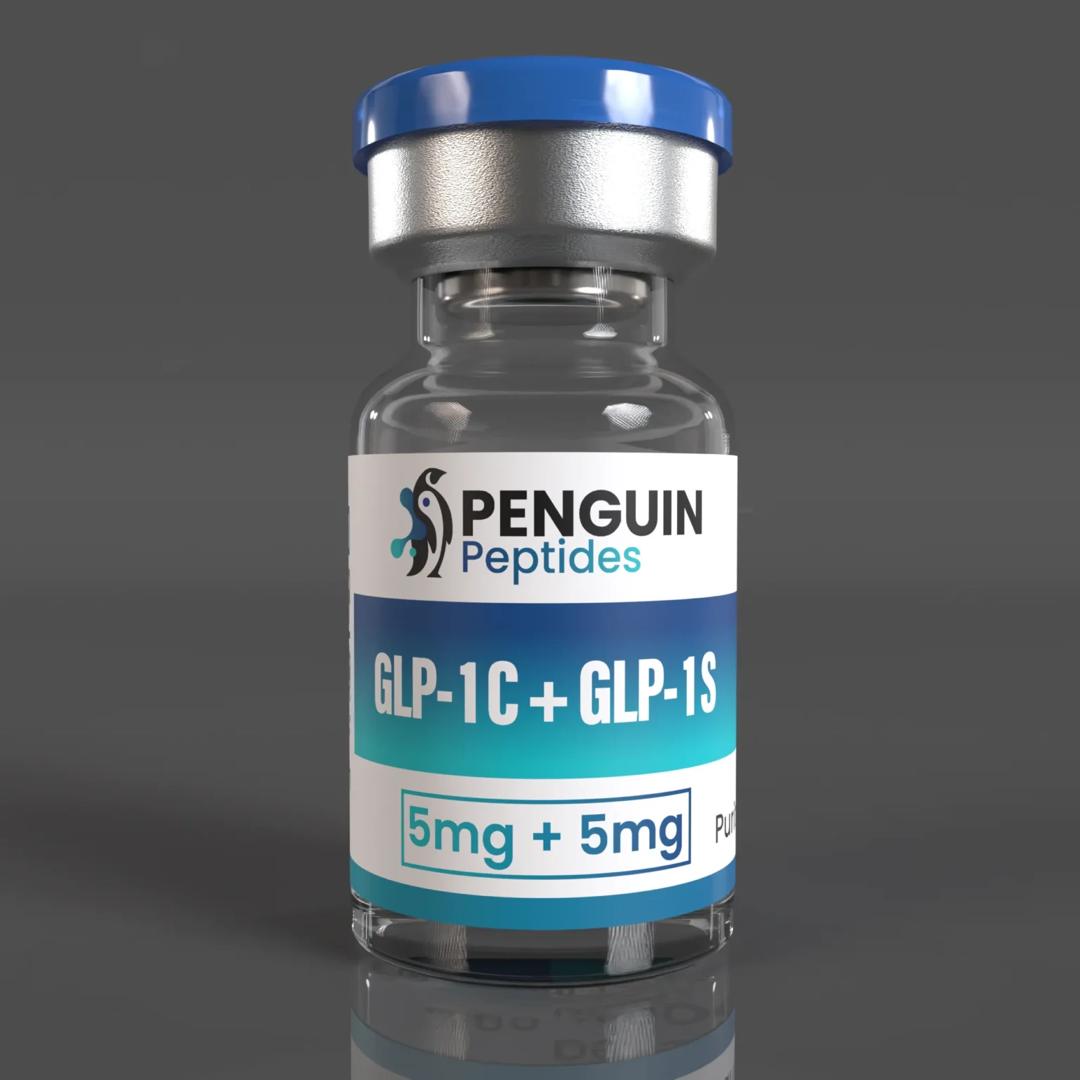
Together, the GLP-1C + GLP-1S combination mirrors the investigational fixed-dose co-formulation known clinically as CagriSema — developed by Novo Nordisk as a once-weekly subcutaneous injectable currently under FDA review following an NDA submission in December 2025. In a research context, this dual-peptide blend is studied for its simultaneous engagement of the amylin/calcitonin receptor axis (GLP-1C) and the incretin/GLP-1 receptor axis (GLP-1S) — two metabolically distinct yet complementary pathways that produce substantially greater combined effects than either compound alone.
GLP-1C + GLP-1S is supplied as a co-lyophilized or individually lyophilized peptide combination in research vials, intended strictly for controlled laboratory use by qualified personnel.
Important Disclaimer: GLP-1C + GLP-1S research-grade peptide blend is strictly for laboratory research use only. It is not approved for human self-administration, therapeutic use, or any non-clinical application outside of regulated clinical trial contexts.
Understanding the Two Components
GLP-1S — Semaglutide: The GLP-1 Receptor Agonist
Semaglutide (GLP-1S) is a 31-amino-acid synthetic peptide engineered as a highly stable, long-acting analogue of endogenous GLP-1 (Glucagon-like Peptide-1). It carries a 94% sequence homology with native human GLP-1, with two key structural modifications that define its pharmacokinetic profile:
- Aib substitution at position 8 — replaces alanine with α-aminoisobutyric acid, conferring full resistance to DPP-IV enzymatic cleavage
- C18 fatty diacid chain at lysine-26 — enables strong, reversible albumin binding in plasma, extending the half-life to approximately 160–170 hours (~7 days), enabling once-weekly dosing
Semaglutide activates the GLP-1 receptor (GLP-1R) on pancreatic beta cells, hypothalamic appetite centers, and gastric enteroendocrine cells, producing glucose-dependent insulin secretion, reduced glucagon output, delayed gastric emptying, and centrally mediated appetite suppression.
| Specification | Details |
|---|---|
| Research Label | GLP-1S |
| Compound | Semaglutide |
| CAS Number | 910463-68-2 |
| Molecular Formula | C₁₈₇H₂₉₁N₄₅O₅₉ |
| Molecular Weight | ~4,113.6 g/mol |
| Receptor Target | GLP-1R (GLP-1 receptor) |
| Half-Life | ~160 hours (~7 days) |
| Mechanism | Incretin axis: insulin secretion, glucagon suppression, appetite reduction, gastric emptying delay |
GLP-1C — Cagrilintide: The Amylin Receptor Agonist
Cagrilintide (GLP-1C) is a long-acting synthetic analogue of amylin — a 37-amino-acid pancreatic hormone co-secreted with insulin at mealtimes — engineered by Novo Nordisk for dramatically extended duration of action. Natural amylin has a plasma half-life of approximately 10–15 minutes. Cagrilintide’s structural modifications — including N-terminal lipidation (a fatty acid side chain), multiple amino acid substitutions, and a stabilizing backbone — extend its half-life to approximately 7–8 days, enabling once-weekly co-administration with Semaglutide.
Cagrilintide engages all four amylin receptor subtypes: AMY1R, AMY2R, AMY3R, and the calcitonin receptor (CTR). Research published in Nature Communications (2025) confirmed its active, Gs-coupled binding conformations across all four receptor complexes via cryo-electron microscopy. A landmark preclinical study published in eBioMedicine (2025) identified that Cagrilintide’s in vivo metabolic effects are mediated specifically through hindbrain amylin receptors 1 and 3 — neuroanatomical targets with no overlap with GLP-1R signaling pathways.
| Specification | Details |
|---|---|
| Research Label | GLP-1C |
| Compound | Cagrilintide |
| Also Known As | GLXC-26801 |
| Receptor Targets | AMY1R, AMY2R, AMY3R, CTR |
| Half-Life | ~7–8 days |
| Mechanism | Amylin/calcitonin axis: appetite suppression, satiety signaling, gastric motility, energy homeostasis |
| Key Distinction | Completely separate receptor system from GLP-1S; no pathway overlap |
Why Researchers Study GLP-1C + GLP-1S Together: The Dual-Pathway Rationale
The scientific case for combining GLP-1C (Cagrilintide) and GLP-1S (Semaglutide) in a single research protocol rests on a fundamental principle of receptor biology: non-overlapping pathways can produce additive or synergistic effects when engaged simultaneously.
GLP-1S acts through the incretin axis — GLP-1 receptors on pancreatic beta cells, hypothalamic nuclei, and the brainstem — regulating insulin release, glucagon suppression, and energy intake via GLP-1R-dependent cAMP signaling. GLP-1C acts through an entirely separate neurobiological system — amylin and calcitonin receptors in the hindbrain’s area postrema and nucleus tractus solitarius — modulating satiety, gastric emptying rate, and central appetite signals via a distinct receptor-effector pathway.
Because these two systems operate in parallel without redundancy, activating both simultaneously through GLP-1C + GLP-1S produces metabolic and appetite outcomes that neither compound achieves alone — a finding powerfully validated by the REDEFINE Phase 3 clinical trial program:
REDEFINE 1 Trial (NEJM, June 2025) — Key Findings:
- CagriSema (GLP-1C + GLP-1S): 22.7% mean body weight reduction at 68 weeks (trial product estimand); 20.4% (treatment policy estimand)
- Semaglutide alone (GLP-1S): 16.1% / 14.9%
- Cagrilintide alone (GLP-1C): 11.8% / 11.5%
- Placebo: 2.3% / 3.0%
- ≥5% weight loss achieved: 91.9% of CagriSema participants vs 31.5% placebo
- ≥25% weight loss achieved: 40.4% of CagriSema participants vs 16.2% semaglutide alone
REDEFINE 2 Trial (NEJM, June 2025) — Type 2 Diabetes Population:
- CagriSema achieved 13.7% weight reduction vs 3.1% placebo at 68 weeks in adults with obesity and T2D
These results confirm that the GLP-1C + GLP-1S combination — engaging both the amylin/calcitonin axis and the GLP-1 incretin axis simultaneously — delivers outcomes that are clearly supra-additive relative to either compound in isolation. For laboratory researchers, this makes the GLP-1C + GLP-1S blend the most clinically validated dual-pathway metabolic research tool currently available in the research peptide class.
Key Research Areas for GLP-1C + GLP-1S
Dual-Pathway Appetite and Satiety Research
GLP-1C + GLP-1S provides researchers with simultaneous access to two independent central appetite circuits — the GLP-1R hypothalamic/brainstem axis and the AMY1R/AMY3R hindbrain axis. Studies using this combination can investigate how co-activation of these parallel satiety pathways modulates meal initiation, meal size, intermeal intervals, and cumulative energy intake in preclinical behavioral models.
Multi-Receptor Metabolic Signaling Studies
The mechanistic non-overlap between Cagrilintide’s amylin receptor signaling and Semaglutide’s incretin receptor signaling makes GLP-1C + GLP-1S the ideal tool for studies examining how metabolically relevant receptor systems interact at the cellular, molecular, and physiological levels. Researchers can administer each compound individually and in combination to characterize their independent and combined contributions.
Comparative Incretin Research
GLP-1C + GLP-1S is a primary comparator in studies benchmarking dual-target combinations against single-receptor agonists (GLP-1S alone) and multi-receptor agonists (GLP-1T/Tirzepatide, GLP-3 R/Retatrutide, GLP-3 R+C). Phase 3 head-to-head data from Novo Nordisk’s REDEFINE program — comparing CagriSema directly against Tirzepatide — showed CagriSema achieving 23% vs 25.5% weight reduction, making this one of the best-characterized cross-compound research datasets in the incretin field.
Cardiometabolic Research Models
Both components of GLP-1C + GLP-1S have established cardiometabolic research profiles. Semaglutide (GLP-1S) has demonstrated significant MACE (major adverse cardiovascular events) reductions in cardiovascular outcome trials. Cagrilintide’s amylin receptor engagement modulates sympathetic tone, blood pressure, and lipid metabolism in preclinical models. Together, their combination is an active area of cardiometabolic systems biology research.
GLP-1C + GLP-1S in the Research Peptide Naming Hierarchy
The GLP-1 family naming system used by research peptide suppliers places GLP-1C + GLP-1S in a clear structural context alongside its counterparts:
| Research Label | Compound(s) | Receptor Targets | Pathway Type |
|---|---|---|---|
| GLP-1S | Semaglutide | GLP-1R | Single incretin agonist |
| GLP-1T | Tirzepatide | GIP + GLP-1R | Dual incretin agonist |
| GLP-1C + GLP-1S | Cagrilintide + Semaglutide | AMY1/3R + GLP-1R | Amylin + incretin (cross-class dual) |
| GLP-3 R | Retatrutide | GLP-1R + GIPR + GCGR | Triple incretin agonist |
| GLP-3 R+C | Retatrutide + Cagrilintide | GLP-1R + GIPR + GCGR + AMY1/3R | Quad-pathway blend |
GLP-1C + GLP-1S is unique within this taxonomy because it is the only cross-class combination — pairing an incretin receptor agonist (GLP-1S) with an amylin/calcitonin receptor agonist (GLP-1C) that belongs to an entirely different hormone family and signaling system.
Research Product Specifications
| Specification | GLP-1S (Semaglutide) | GLP-1C (Cagrilintide) |
|---|---|---|
| Physical Form | Lyophilized white powder | Lyophilized white powder |
| Purity | ≥99% HPLC | ≥99% HPLC |
| Storage (lyophilized) | −20°C; dry, dark | −20°C; dry, dark |
| Storage (reconstituted) | 2–8°C; use within 30 days | 2–8°C; use within 30 days |
| Reconstitution | Bacteriostatic water | Bacteriostatic water |
| COA | Third-party batch verified | Third-party batch verified |
Frequently Asked Questions About GLP-1C + GLP-1S
What does GLP-1C + GLP-1S stand for? GLP-1C is the research peptide label for Cagrilintide — a long-acting amylin/calcitonin receptor agonist. GLP-1S is the research peptide label for Semaglutide — a GLP-1 receptor agonist. Together, GLP-1C + GLP-1S designates the dual-peptide combination known clinically as CagriSema.
Are Cagrilintide and Semaglutide the same type of peptide? No — this is the most important distinction for researchers. Semaglutide is an incretin hormone analogue working through GLP-1 receptors. Cagrilintide is an amylin analogue working through amylin and calcitonin receptors. They belong to entirely different peptide classes and signaling systems — which is precisely why their combination produces effects greater than either alone.
What was the clinical outcome of CagriSema in Phase 3 trials? The REDEFINE 1 Phase 3 trial (NEJM, June 2025) showed CagriSema achieved 22.7% mean body weight reduction at 68 weeks — versus 16.1% for Semaglutide alone and 11.8% for Cagrilintide alone. REDEFINE 2 showed 13.7% reduction in T2D patients. Novo Nordisk submitted an NDA to the FDA in December 2025; an FDA decision is anticipated in 2026.
Is GLP-1C + GLP-1S the same as CagriSema? Yes — GLP-1C + GLP-1S is the research peptide vendor designation for the same combination of Cagrilintide (GLP-1C) and Semaglutide (GLP-1S) that Novo Nordisk markets as CagriSema. The research-grade peptide blend and the clinical-stage drug formulation are distinct products subject to different regulatory frameworks.
Is GLP-1C + GLP-1S approved for human use? CagriSema is not yet FDA-approved as of the date of this publication; an NDA is under FDA review. Research-grade GLP-1C + GLP-1S peptide vials are not for human use and are intended strictly for qualified laboratory research.
Summary
GLP-1C + GLP-1S — the research peptide designation for the Cagrilintide + Semaglutide combination — is the most clinically validated cross-class dual-pathway metabolic research blend currently available in the peptide research space. Its unique architecture pairs an amylin/calcitonin receptor agonist (GLP-1C/Cagrilintide) with a GLP-1 receptor agonist (GLP-1S/Semaglutide), targeting two entirely independent receptor systems to produce combined metabolic and appetite effects that substantially exceed either compound’s individual profile. Backed by REDEFINE 1 and REDEFINE 2 Phase 3 trial data published in the New England Journal of Medicine, GLP-1C + GLP-1S represents the intersection of the most advanced amylin biology and incretin pharmacology in contemporary research peptide science. All use must remain fully compliant with applicable institutional and regulatory guidelines.
This content is provided for educational and informational purposes only. GLP-1C + GLP-1S research-grade peptides are intended strictly for laboratory research use and are not for human self-administration, medical treatment, therapeutic application, or diagnostic use outside of regulated clinical contexts. Always comply with applicable laws, institutional protocols, and safety guidelines when handling research peptides.
Be the first to review “GLP-1C+GLP-1S”
Related products
Metabolic-Research-Compounds
Metabolic-Research-Compounds
Metabolic-Research-Compounds
Metabolic-Research-Compounds
Metabolic-Research-Compounds
Metabolic-Research-Compounds
Metabolic-Research-Compounds
Metabolic-Research-Compounds
Reviews
There are no reviews yet.