


GLP-1T: The Complete Research Guide to Tirzepatide — The Dual Incretin Agonist
Focus Keyword: GLP-1T Word Count: ~950+ words Meta Description: GLP-1T is the research peptide designation for Tirzepatide (LY3298176) — a synthetic 39-amino-acid dual GIP/GLP-1 receptor agonist. Learn its imbalanced agonism mechanism, how it compares to GLP-1 and GLP-3 peptides, and full lab specs.
What Is GLP-1T?
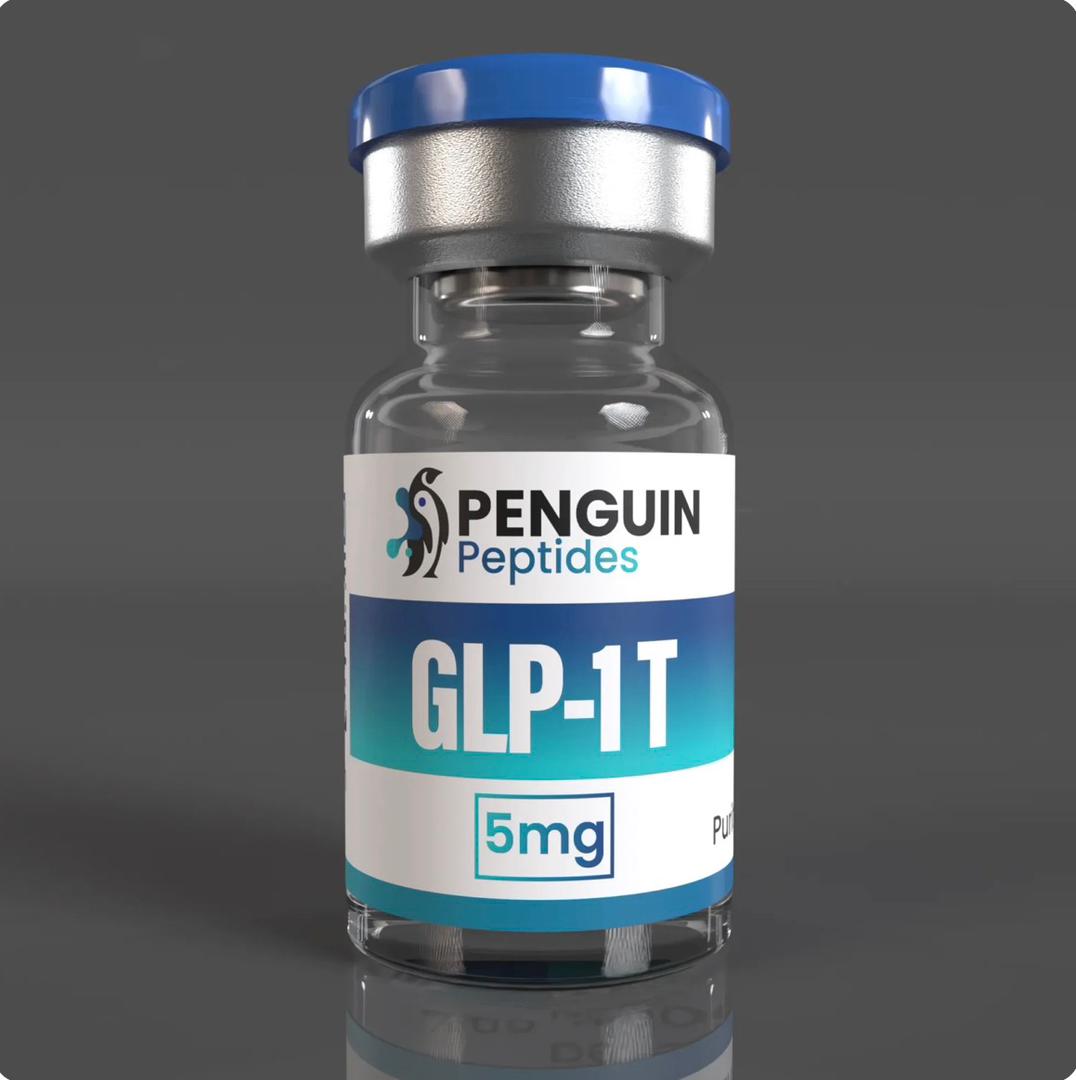
GLP-1T is the research-grade peptide designation for Tirzepatide — the synthetic dual incretin receptor agonist developed by Eli Lilly under the compound code LY3298176. The “GLP-1T” label used by peptide suppliers places Tirzepatide within the broader GLP-1 receptor agonist research family while distinguishing it from single-agonist GLP-1 compounds (Semaglutide) and triple-agonist GLP-3 compounds (Retatrutide) through its “T” suffix — reflecting Tirzepatide’s unique dual receptor mechanism targeting both GIP (Glucose-dependent Insulinotropic Polypeptide) and GLP-1 receptors simultaneously.
GLP-1T is supplied as a lyophilized (freeze-dried) white powder in research vials — commonly in 5mg and 10mg formats — at ≥99% HPLC purity, and is intended strictly for controlled laboratory and analytical research use only.
Important Disclaimer: GLP-1T (Tirzepatide) is strictly for laboratory research use only. It is not approved for human consumption, self-administration, or any non-clinical therapeutic use outside of FDA-regulated prescription contexts.
Chemical Identity
GLP-1T (Tirzepatide) is a 39-amino-acid synthetic modified peptide engineered on the structural backbone of native GIP. Its molecular architecture includes two critical design features that define its pharmacokinetic and receptor engagement profile:
- A C20 fatty diacid moiety attached at lysine position 20 via γ-glutamate and PEG spacers — enabling reversible albumin binding that dramatically extends plasma half-life to approximately 5 days, supporting once-weekly dosing protocols in research models
- Two α-aminoisobutyric acid (Aib) substitutions at positions 2 and 13, which confer resistance to DPP-IV enzymatic degradation — the same protease that rapidly cleaves native GLP-1 and GIP
| Specification | Details |
|---|---|
| Research Label | GLP-1T |
| Compound Name | Tirzepatide |
| Also Known As | LY3298176, P1206 |
| CAS Number | 2023788-19-2 |
| PubChem CID | 156588324 |
| Molecular Formula | C₂₂₅H₃₄₈N₄₈O₆₈ |
| Molecular Weight | 4,813.527 g/mol |
| Structure | 39-amino acid synthetic peptide; GIP backbone with Aib substitutions |
| Half-Life | ~5 days (via C20 fatty acid albumin binding) |
| Physical Form | Lyophilized white powder |
Mechanism of Action: Imbalanced Dual Agonism
The scientific principle that makes GLP-1T pharmacologically distinct is imbalanced agonism — a deliberate, engineered disproportion in receptor binding affinity that sets Tirzepatide apart from every other incretin-based peptide in research.
GIP Receptor (GIPR) — High Affinity
GLP-1T binds the GIP receptor with high affinity comparable to native GIP — the endogenous incretin hormone that stimulates insulin secretion, suppresses glucagon release, and plays a direct role in adipocyte lipid metabolism and fat storage regulation. Activating GIPR in the pancreas potentiates glucose-stimulated insulin secretion (GSIS) through the adenylate cyclase/cAMP pathway, independent of — and complementary to — GLP-1R signaling.
GLP-1 Receptor (GLP-1R) — Moderate Affinity with Functional Potency
GLP-1T also activates the GLP-1 receptor, but with lower relative affinity than native GLP-1 or Semaglutide. Despite this lower binding affinity, Tirzepatide achieves full GLP-1R functional activation through high receptor occupancy driven by its extended half-life. GLP-1R engagement contributes appetite suppression, reduced gastric emptying, and additional pancreatic insulin secretion to the compound’s research profile.
Why Imbalanced Agonism Matters for Research
The asymmetric engagement of two receptors — strong GIPR + full GLP-1R — produces a combined metabolic signal that exceeds what either receptor can generate alone. In MC4R knockout obesity mice (International Journal of Obesity, 2026), Tirzepatide produced a body weight reduction ratio of 31.6% over 21 days — compared to 19.7% for Semaglutide (GLP-1 only) and 24.1% for Retatrutide (GLP-3/triple agonist) in the same model. This dual-pathway synergy is the central subject of GLP-1T laboratory research.
GLP-1T vs GLP-1 vs GLP-3: Understanding the Research Peptide Naming System
A growing number of researchers encounter the GLP-1, GLP-1T, GLP-2T, and GLP-3 naming conventions used by peptide suppliers and need to understand exactly what each label designates:
| Research Label | Compound | Receptor Targets | Agonism Type |
|---|---|---|---|
| GLP-1 | Semaglutide | GLP-1R only | Single agonist |
| GLP-1T / GLP2-T | Tirzepatide (LY3298176) | GIP + GLP-1 | Dual agonist (imbalanced) |
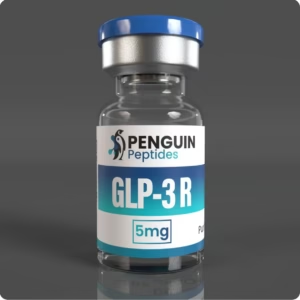
| GLP-3 R | Retatrutide | GLP-1 + GIP + Glucagon | Triple agonist |
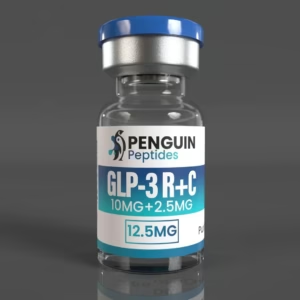
| GLP-3 R+C | Retatrutide + Cagrilintide | GLP-1 + GIP + Glucagon + Amylin | Quad-pathway blend |
For researchers comparing compounds across the incretin axis, GLP-1T occupies the middle tier: more receptor targets and metabolic breadth than GLP-1 (Semaglutide), but targeting two pathways rather than three, and without the GH-independent amylin pathway of the R+C combination.
Key Research Areas for GLP-1T (Tirzepatide)
Dual Incretin Pathway Pharmacology
GLP-1T is the benchmark compound for studying simultaneous GIP + GLP-1 receptor co-activation. Research laboratories investigating how incretin pathway co-stimulation produces synergistic vs additive metabolic outcomes use GLP-1T as the primary dual agonist reference compound — alongside Semaglutide (single GLP-1R agonist) and Retatrutide (triple agonist) — to map the receptor contribution of each pathway independently and in combination.
Metabolic and Obesity Research
Published preclinical and Phase 3 clinical data make GLP-1T one of the most extensively documented metabolic research peptides available. Phase 3 SURMOUNT-1 trial data showed Tirzepatide achieved up to 22.5% mean body weight reduction in participants with obesity over 72 weeks. For laboratory researchers using preclinical metabolic models, GLP-1T provides a well-characterized positive control across adiposity, insulin sensitivity, lipid profile, and food intake parameters.
Cardiovascular Research
Phase 3 SURPASS-CVOT (SURPASS-4) and related cardiovascular outcome trials have documented significant reductions in major adverse cardiovascular events (MACE) with Tirzepatide in T2D populations. For preclinical cardiovascular researchers, GLP-1T’s GIPR component adds a cardiovascular research dimension distinct from GLP-1-only compounds — as GIP receptors are expressed in cardiac and vascular tissue and have independent effects on lipid metabolism and adipose inflammation.
Comparative Incretin Research
GLP-1T is used as a primary comparator in studies examining the dose-response and receptor contribution profiles of the incretin family. Research comparing Semaglutide, Tirzepatide, and Retatrutide side-by-side provides insight into how adding each successive receptor target (GLP-1R → GLP-1R + GIPR → GLP-1R + GIPR + GCGR) modifies the overall metabolic output — a question directly relevant to next-generation multi-agonist drug design.
Pancreatic Beta-Cell and Insulin Secretion Research
The combined activation of both GIPR and GLP-1R in pancreatic beta cells produces a substantially amplified glucose-stimulated insulin secretion (GSIS) response compared to either receptor alone. Research using GLP-1T in isolated islet or in vitro pancreatic models examines how dual incretin receptor co-stimulation affects insulin gene expression, beta-cell proliferation, and glucotoxicity resistance.
GLP-1T Research Product Specifications
| Specification | Details |
|---|---|
| Research Label | GLP-1T |
| Compound | Tirzepatide (LY3298176) |
| Common Vial Sizes | 5mg, 10mg |
| Physical Form | Lyophilized white powder |
| Purity | ≥99% (HPLC and MS verified) |
| Endotoxin Level | <0.25 EU/mg (ultra-low endotoxin preferred) |
| Certificate of Analysis | Required — third-party batch verified |
| Storage (lyophilized) | −20°C; dry, dark conditions; stable 3–4 months |
| Storage (reconstituted) | Refrigerate at 2–8°C; use within 30 days; do not freeze |
| Reconstitution | Bacteriostatic water; inject slowly along vial wall; do not shake |
| Shipping Stability | Lyophilized form stable for 3–4 months at ambient shipping temperatures |
Frequently Asked Questions About GLP-1T
What compound is GLP-1T? GLP-1T is the research peptide designation for Tirzepatide (LY3298176) — the 39-amino-acid synthetic dual GIP/GLP-1 receptor agonist developed by Eli Lilly. The “T” in GLP-1T stands for Tirzepatide.
What is the difference between GLP-1T and GLP-1? GLP-1 (Semaglutide in research peptide nomenclature) is a single-receptor agonist targeting only the GLP-1 receptor. GLP-1T (Tirzepatide) is a dual agonist simultaneously engaging both the GIP receptor and the GLP-1 receptor — adding a second incretin signaling pathway that amplifies metabolic outcomes beyond what GLP-1R activation alone can achieve.
What is the difference between GLP-1T and GLP-3? GLP-1T (Tirzepatide) is a dual agonist (GIP + GLP-1). GLP-3 refers informally to triple agonists such as Retatrutide, which additionally engage the glucagon receptor (GCGR) on top of GIP and GLP-1 receptors, for a three-pathway activation profile.
Why does GLP-1T use a GIP backbone rather than a GLP-1 backbone? Unlike Semaglutide, which is built on a modified GLP-1 peptide sequence, Tirzepatide is engineered on the native GIP amino acid sequence with structural modifications. This GIP-backbone design is what produces Tirzepatide’s high GIPR affinity (comparable to native GIP) while the engineering modifications also achieve full GLP-1R engagement.
Is GLP-1T approved for human use? As a research-grade peptide, GLP-1T vials are not for human use and are intended for laboratory research only. FDA-approved Tirzepatide formulations do exist under brand names for specific clinical indications, but these are entirely distinct from research-grade peptide supply and cannot be substituted for one another.
Summary
GLP-1T — the research peptide designation for Tirzepatide (LY3298176) — is a 39-amino-acid, dual GIP/GLP-1 receptor agonist distinguished by its engineered imbalanced agonism, albumin-binding C20 fatty acid, and DPP-IV-resistant Aib substitutions. As the middle tier in the GLP-1 → GLP-1T → GLP-3 incretin peptide research spectrum, it serves as the primary benchmark compound for studying dual incretin pathway co-activation, comparative metabolic signaling, and GIPR-dependent contributions to glucose homeostasis and fat metabolism in preclinical research models. Supplied at ≥99% purity in lyophilized 5mg and 10mg vials, GLP-1T is one of the most scientifically well-characterized and research-relevant peptides in the incretin class. All use must remain fully compliant with applicable institutional and regulatory guidelines.
This content is provided for educational and informational purposes only. GLP-1T (Tirzepatide) research-grade peptide is intended strictly for laboratory research use and is not for human self-administration, medical treatment, therapeutic application, or diagnostic use outside of regulated clinical contexts. Always comply with applicable laws, institutional protocols, and safety guidelines when handling research peptides.
| mg | 100mg, 10mg, 120mg, 15mg, 20mg, 30mg, 40mg, 50mg, 5mg, 60mg, 70mg, 80mg, 90mg |
|---|
1 review for GLP-1T
Add a review
Related products
Metabolic-Research-Compounds

Metabolic-Research-Compounds
Metabolic-Research-Compounds
Metabolic-Research-Compounds
Metabolic-Research-Compounds

Metabolic-Research-Compounds
Metabolic-Research-Compounds
Metabolic-Research-Compounds
Paul –
Delivered with 24 hours that’s crazy