


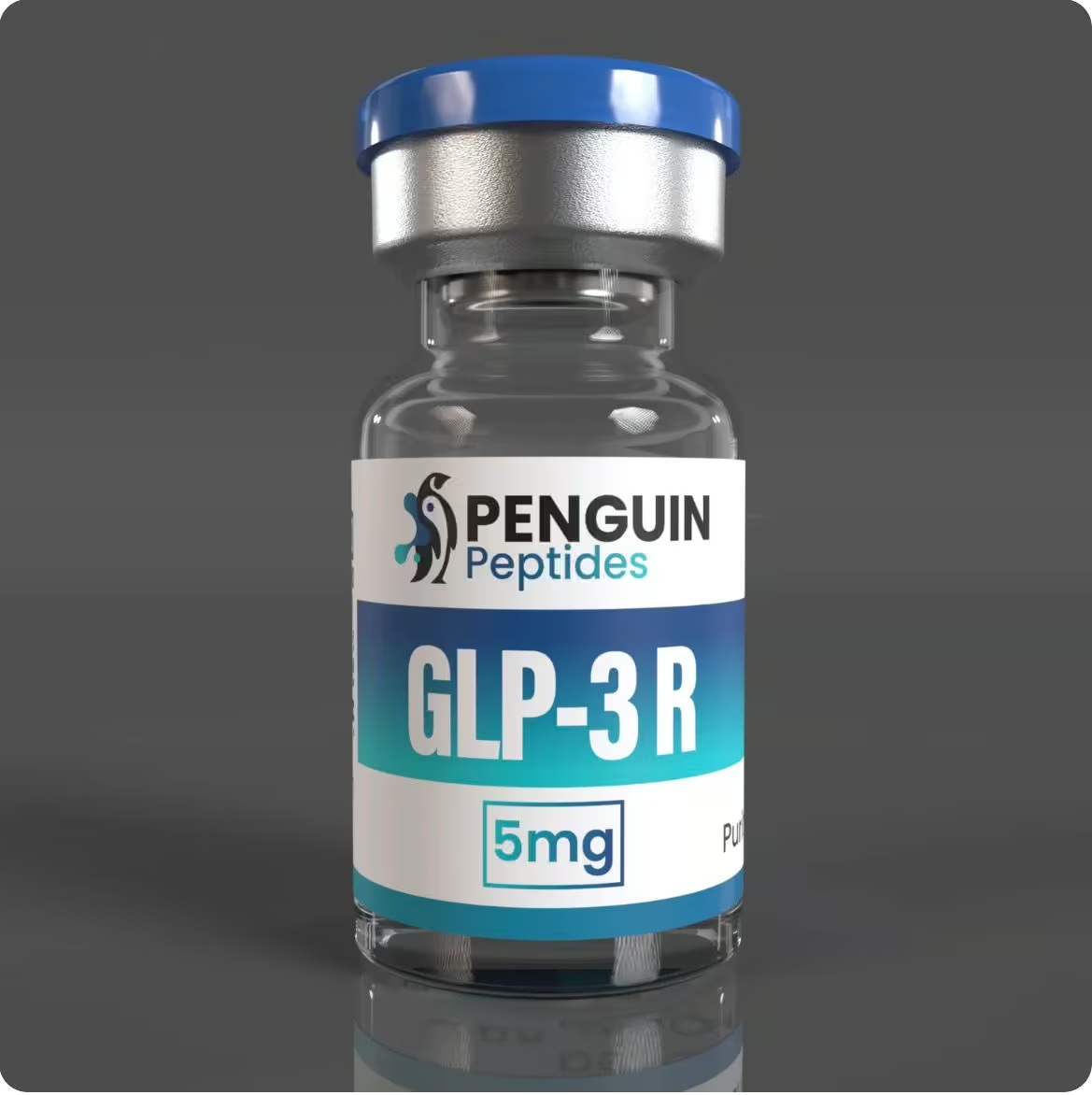

GLP-3R (Retatrutide): The Complete Guide to the Triple Agonist Redefining Metabolic Medicine
If you’ve been following the explosive rise of GLP-1 medications like semaglutide (Wegovy, Ozempic) or tirzepatide (Zepbound, Mounjaro), you’ve seen the world wake up to the power of incretin-based therapy. But a new molecule is poised to make even those landmark drugs look like a first chapter.
GLP-3R — a popular shorthand used to describe retatrutide, Eli Lilly’s investigational triple hormone receptor agonist — represents the next evolution in this rapidly advancing field. By simultaneously targeting three metabolic receptors instead of one or two, it is producing weight loss results that rival bariatric surgery and generating some of the most significant excitement in endocrinology in decades.
This complete guide covers what GLP-3R/retatrutide is, how it works, what the latest clinical trials show, how it compares to existing therapies, its safety profile, and where it stands in the path toward potential FDA approval.
What Is GLP-3R? Understanding the Terminology
First, an important clarification. The term “GLP-3” is a scientifically inaccurate label used informally in the media to describe triple hormone receptor agonists, such as Lilly’s retatrutide. There is no officially recognized receptor called “GLP-3R” in pharmacology. The name has emerged colloquially to distinguish triple agonists from the already-established GLP-1 (single agonist) and GLP-1/GIP (dual agonist) classes.
The correct scientific description is: retatrutide is an investigational, once-weekly triple hormone receptor agonist, which activates the body’s receptors for glucose-dependent insulinotropic polypeptide (GIP), glucagon-like peptide-1 (GLP-1), and glucagon.
In practical terms, this means retatrutide is a single molecule that hits three different hormonal targets simultaneously — a level of mechanistic complexity that no approved drug in this class has achieved before.
The Evolution of Incretin Therapy: From Single to Triple Agonism
To appreciate what GLP-3R/retatrutide represents, it helps to understand the trajectory that led here.
The emergence of GLP-1 receptor agonists, such as the first clinically approved agonist exenatide in 2005, paved the way for the thorough exploration of these molecules. Other molecules such as liraglutide, dulaglutide, and semaglutide followed, offering once-weekly dosage. Beyond achieving more effective glucose control and worthy weight loss, these medications achieved a reduction in rates of major adverse cardiovascular effects, heart failure, kidney disease, and cardiovascular death. These promising results led to the development of the first dual agonists, with tirzepatide — a GIP and GLP-1 receptor agonist — being the most prominent.
What makes retatrutide genuinely different from every GLP-1 drug before it is the triple receptor mechanism. Semaglutide hits one receptor (GLP-1R). Tirzepatide hits two (GLP-1R and GIPR). Retatrutide hits all three — GLP-1R, GIPR, and the glucagon receptor (GCGR).
How Does GLP-3R/Retatrutide Work?
The power of retatrutide lies in what each receptor contributes:
GLP-1 Receptor Activation
The GLP-1 component is the familiar foundation of this drug class. GLP-1 receptor agonism reduces appetite by slowing gastric emptying, signaling satiety to the brain, and stimulating insulin secretion in a glucose-dependent manner. This is the mechanism responsible for the appetite suppression experienced by users of semaglutide and tirzepatide.
GIP Receptor Activation
GIP (glucose-dependent insulinotropic polypeptide) amplifies insulin release and has been shown to enhance the weight-loss effects of GLP-1 receptor agonism. Adding GIP receptor activation to GLP-1 is part of what made tirzepatide superior to semaglutide in head-to-head comparisons. In retatrutide, GIP contributes to improved glycemic control and metabolic flexibility.
Glucagon Receptor Activation — The Game-Changer
This is where retatrutide distinguishes itself from everything that came before. Glucagon receptor activation is the differentiating feature of retatrutide versus tirzepatide. While glucagon traditionally raises blood glucose — and was historically viewed as problematic in metabolic disease contexts — selective glucagon receptor co-agonism in the context of GLP-1/GIP activation produces additive energy expenditure effects, specifically increasing liver fat oxidation and thermogenesis, without the hyperglycemic consequences seen with glucagon alone.
In plain terms: the glucagon component turns the body into a more active fat-burning machine, particularly targeting hepatic (liver) fat — a critical factor in conditions like metabolic-associated steatotic liver disease (MASLD/MASH) and type 2 diabetes.
The net result of all three pathways operating simultaneously is a substantially larger reduction in body weight, hepatic fat, and metabolic risk markers than any single or dual pathway can produce.
Clinical Trial Results: Record-Breaking Weight Loss
Phase 2 — New England Journal of Medicine (2023)
The study that put retatrutide on the global map was published in the New England Journal of Medicine in 2023. The landmark Phase 2 trial demonstrated that retatrutide produced dose-dependent weight loss of up to 24.2% at 48 weeks — the highest weight reduction ever reported in a pharmacological obesity trial at that point.
Phase 3 — TRIUMPH-4 Trial (December 2025)
The first Phase 3 results arrived in December 2025, and they exceeded even the Phase 2 benchmark. In TRIUMPH-4, participants with obesity and knee osteoarthritis taking retatrutide 12mg lost an average of 28.7% of their body weight at 68 weeks. Retatrutide also reduced WOMAC pain scores by up to an average of 75.8% and significantly improved measures of physical function, with more than 1 out of 8 retatrutide-treated patients completely free from knee pain at the end of the trial.
To put the weight loss figure in perspective: for a 250-pound person, 28.7% average weight loss at the 12mg dose translates to approximately 72 pounds lost with retatrutide, versus 56 pounds with tirzepatide and 38 pounds with semaglutide.
Phase 3 — TRIUMPH-1 Trial (May 2026)
The landmark pivotal obesity trial confirmed and extended these findings. In the randomized, double-blind, placebo-controlled TRIUMPH-1 trial of 2,339 participants over 80 weeks, all studied doses (4mg, 9mg, and 12mg) met the primary and key secondary endpoints, demonstrating significant, clinically meaningful weight reduction alongside improvements in cardiometabolic risk factors. The trial reported up to 30.3% average weight loss at the highest dose — a figure that firmly places retatrutide in surgical territory for weight reduction.
Phase 3 — Type 2 Diabetes (March 2026)
In the TRANSCEND-T2D-1 Phase 3 clinical trial, retatrutide met the primary and all key secondary endpoints, delivering superior A1C reduction and weight loss at 40 weeks compared to placebo in adults diagnosed with type 2 diabetes with inadequate glycemic control with diet and exercise alone.
Beyond Weight Loss: Additional Research Applications
Liver Disease (MASLD/MASH)
Retatrutide simultaneously activates GLP-1, GIP, and glucagon receptors — a mechanism hypothesized to reduce intrahepatic triglyceride content through multiple complementary pathways. Phase 2 trial data showed substantial MRI-PDFF-measured liver fat reductions at 8mg and 12mg weekly doses, with some participants falling below the 5% hepatic steatosis threshold.
A separate Phase 2a trial published in Nature Medicine looked specifically at retatrutide in patients with MASLD, showing significant liver fat reduction, with some patients achieving resolution of MASLD criteria entirely. The glucagon receptor component in retatrutide appears to provide additional hepatic fat-burning that exceeds what GLP-1R agonism alone achieves.
Cardiovascular Health
Reductions in LDL-cholesterol of approximately 20% with retatrutide may reflect the effects of glucagon agonism on PCSK9 degradation, a key protein involved in cholesterol regulation. Ongoing Phase 3 trials are specifically designed to capture hard cardiovascular endpoints, including major adverse cardiovascular events.
Osteoarthritis Pain
The TRIUMPH-4 data demonstrated something unexpected: not only did retatrutide produce record weight loss, but it also delivered dramatic reductions in osteoarthritis pain — a finding that may reflect both the mechanical benefit of weight loss and potential anti-inflammatory effects of the triple agonist mechanism.
Obstructive Sleep Apnea and Chronic Low Back Pain
Lilly is studying retatrutide in several Phase 3 clinical trials to evaluate its potential efficacy and safety in obesity and overweight with at least one weight-related medical problem, type 2 diabetes, knee osteoarthritis pain, moderate-to-severe obstructive sleep apnea, chronic low back pain, cardiovascular and renal outcomes, and metabolic dysfunction-associated steatotic liver disease.
GLP-3R vs. GLP-1 and Dual Agonists: How Does It Compare?
Established GLP-1 receptor agonist applications demonstrate robust efficacy in diabetes management (HbA1c reductions of 1.5–2.0%), obesity treatment (weight loss of 7–24%), and cardiovascular protection (14–20% reduction in major adverse cardiovascular events).
Retatrutide builds meaningfully on this foundation:
vs. Semaglutide (Wegovy/Ozempic): Semaglutide is a single GLP-1 receptor agonist achieving approximately 15% average body weight reduction in trials. Retatrutide’s Phase 3 data showing up to 30.3% represents roughly double that efficacy — achieved through the additional GIP and glucagon receptor pathways.
vs. Tirzepatide (Zepbound/Mounjaro): Tirzepatide’s dual agonism produces approximately 20–21% average weight loss. Retatrutide’s triple agonism adds the glucagon receptor’s energy expenditure and hepatic fat-burning effects, producing meaningfully greater reductions — though with a corresponding increase in certain side effects.
Dosage and Administration
Retatrutide is administered as a once-weekly subcutaneous injection, following a dose-escalation protocol designed to minimize gastrointestinal side effects while titrating toward therapeutic doses. The doses studied in Phase 3 trials are 4mg, 9mg, and 12mg weekly.
The dose-escalation approach — starting low and gradually increasing — is consistent with the approach used for semaglutide and tirzepatide, and reflects the importance of allowing the body to adapt to GLP-1/GIP/glucagon pathway activation before reaching full therapeutic doses.
Important: Retatrutide is not currently FDA-approved for any indication. FDA approval was anticipated by mid-2026, though exact timing depends on the trial readout schedule. If Phase 3 confirms Phase 2 outcomes — which is the general expectation given the robust signal — retatrutide could reach market by late 2026 or early 2027.
Side Effects and Safety Profile
Retatrutide’s side effect profile is broadly consistent with other drugs in the GLP-1 class, though the addition of glucagon receptor agonism introduces some unique considerations.
Common side effects: Common side effects include nausea, vomiting, diarrhoea, and a modest increase in resting heart rate linked to glucagon receptor agonism.
Gastrointestinal effects: These are the most frequently reported adverse events across all GLP-1-class drugs and are typically dose-dependent and transient, improving as the body adapts during the dose-escalation phase.
Dysesthesia: A notable new safety signal observed in retatrutide trials is dysesthesia — altered or enhanced skin sensation. Cases of altered or enhanced skin sensation were mild to moderate in severity and did not lead to discontinuation of treatment, and these events did not appear to be related to the magnitude or rate of weight loss.
Heart rate: Heart rate increased with retatrutide treatment in a dose-dependent manner, peaking at 24 weeks, followed by a decline at 36 and 48 weeks — increases similar to those reported for GLP-1 receptor agonists. This is relevant for individuals with pre-existing cardiac conditions.
Cholesterol: Interestingly, retatrutide’s impact on lipids appears favorable, with the Phase 2 NEJM trial showing meaningful LDL-cholesterol reductions — an unexpected metabolic benefit that warrants further study.
Who Is GLP-3R/Retatrutide Most Relevant For?
Based on current clinical trial populations and emerging data, retatrutide is being studied most extensively in:
Adults with obesity or significant overweight — particularly those who have not achieved sufficient weight loss on existing GLP-1 therapies or those with a higher BMI requiring more aggressive intervention.
Adults with type 2 diabetes and obesity — where the combination of glycemic control and substantial weight loss offers dual therapeutic benefit.
Individuals with MASLD/MASH — where the glucagon receptor component provides hepatic fat reduction that may exceed what single or dual agonists can achieve.
Patients with obesity-related comorbidities — including osteoarthritis, obstructive sleep apnea, and chronic low back pain, where weight reduction itself drives meaningful symptom improvement.
The Road to FDA Approval
Seven additional Phase 3 trials evaluating the investigational once-weekly treatment in obesity and type 2 diabetes are expected to complete in 2026, making this one of the most comprehensively studied investigational compounds in metabolic medicine history. The breadth of the TRIUMPH program — spanning obesity, type 2 diabetes, cardiovascular outcomes, liver disease, sleep apnea, and orthopedic pain — reflects Eli Lilly’s ambition to position retatrutide as a multi-indication metabolic platform drug.
Final Thoughts
GLP-3R/retatrutide represents a genuine paradigm shift — not an incremental improvement over existing therapies, but a structurally distinct approach to metabolic disease that leverages three complementary hormonal pathways simultaneously. The clinical data accumulated to date is unprecedented: weight loss figures rivaling bariatric surgery, meaningful reductions in liver fat, improved glycemic control, and now evidence of osteoarthritis pain relief — all from a once-weekly injection.
Whether the term “GLP-3R” becomes the commonly accepted shorthand for this class or not, the underlying science is compelling, the trial data is robust, and the therapeutic potential is vast. If Phase 3 results continue to confirm Phase 2 findings, retatrutide may well become one of the most consequential drug approvals of this decade.
As with all investigational therapies, access should only occur through legitimate clinical trial participation or, once approved, through qualified prescribing physicians.
Disclaimer: This article is for educational and informational purposes only. Retatrutide is an investigational drug and is not currently approved by the FDA or any other major regulatory authority for clinical use. All clinical trial data referenced is from publicly announced results. Always consult a licensed healthcare professional for medical advice.
| mg | 10mg, 15mg, 20mg, 30mg, 40mg, 50mg, 5mg, 60mg |
|---|
1 review for GLP-3R
Add a review
Related products
Metabolic-Research-Compounds

Metabolic-Research-Compounds
Metabolic-Research-Compounds
Metabolic-Research-Compounds
Metabolic-Research-Compounds
Metabolic-Research-Compounds

Metabolic-Research-Compounds
Metabolic-Research-Compounds
Ann –
Great results in within weeks