
LL-37 Peptide: The Complete Guide to Benefits, Mechanism, Dosage, and Research
In a world increasingly threatened by antibiotic-resistant bacteria and chronic immune dysfunction, the search for next-generation therapies has never been more urgent. Enter LL-37 — a naturally occurring human peptide that scientists are now calling one of the most versatile and promising compounds in the field of immunology and antimicrobial research.
Whether you’re a researcher, clinician, or health-conscious individual exploring cutting-edge peptide science, this guide covers everything you need to know about LL-37 — from its biological origins and mechanisms of action to its clinical applications, dosage protocols, and safety profile.
What Is LL-37?
LL-37 is a 37-amino acid peptide and the only known human member of the cathelicidin family of antimicrobial peptides (AMPs). It is derived from the precursor protein hCAP18 (human cationic antimicrobial protein of 18 kDa), which is cleaved by proteases to release the active LL-37 fragment.
The peptide is produced naturally by various cell types throughout the body, including neutrophils, epithelial cells, keratinocytes (skin cells), and macrophages. Its production is triggered in response to infection, injury, or inflammation — placing it at the very frontline of the body’s innate immune defense.
Among cathelicidins, LL-37 has garnered significant interest due to its potent antimicrobial, antiviral, antifungal, antiparasitic, and antitumor properties. This remarkable breadth of activity has made it one of the most intensely studied peptides in biomedical science today.
How Does LL-37 Work?
LL-37 operates through several distinct and complementary mechanisms, which is a key reason for its unique therapeutic value.
Direct Antimicrobial Action
At its core, LL-37 is a membrane-disrupting agent. Its positively charged (cationic) structure allows it to be attracted to the negatively charged membranes of bacteria, fungi, and some viruses. Once bound, it destabilizes and ruptures these membranes, effectively killing pathogens without the need for conventional antibiotic pathways.
LL-37 effectively combats over 38 bacteria, 16 fungi, and 16 viruses through various mechanisms, including membrane rupture, biofilm suppression, and membrane permeabilization. This positions it as a genuine broad-spectrum antimicrobial agent.
Crucially, because LL-37 kills through direct physical disruption of microbial membranes rather than targeting specific bacterial enzymes or receptors (as conventional antibiotics do), it is far less susceptible to the development of resistance — a critical advantage in an era of escalating antibiotic resistance.
Immunomodulation
Beyond direct killing of pathogens, LL-37 plays a sophisticated role in regulating the immune response. LL-37 activates G-coupled receptors such as formyl peptide receptor 2 (FPR2) and enables extracellular nucleic acids to enter the cytosol, modulating inflammation and immune signaling.
Acting through FPR2, LL-37 induces migration of neutrophils and eosinophils to sites of infection. Transactivation of the epidermal growth factor receptor by LL-37 also induces migration of keratinocytes, thereby promoting wound healing.
This dual role — fighting pathogens while simultaneously orchestrating the immune response — is what makes LL-37 far more than a simple antimicrobial compound.
Wound Healing and Tissue Repair
In addition to its bactericidal actions, LL-37 can bind to Toll-like receptors (TLRs), inhibit TLR signaling pathways, and reduce the production of pro-inflammatory cytokines. LL-37 also contributes to blood vessel formation and has been shown to act as a practical immune adjuvant.
TGF-β released from intestinal epithelial cells following exposure to LL-37 has important chemotactic effects for epithelial cell migration and the wound healing response. In practical terms, this means LL-37 helps recruit the cells needed to rebuild damaged tissue, stimulates new blood vessel growth (angiogenesis), and modulates inflammation to prevent chronic wound states.
Key Research Areas and Clinical Applications
1. Wound Healing — Venous Leg Ulcers
One of the most clinically advanced applications for LL-37 is in treating hard-to-heal chronic wounds. A Phase 2b clinical trial called HEAL evaluated the safety and efficacy of topical LL-37 at concentrations of 0.5 or 1.6 mg/mL in conjunction with compression therapy in 148 patients with hard-to-heal venous leg ulcers. After four weeks of therapy, researchers observed a significant benefit in patients with larger ulcers over 10 cm², and the treatment was deemed safe and well-tolerated.
This is significant because venous leg ulcers are among the most difficult and costly chronic wounds to treat in clinical medicine. An effective, well-tolerated topical peptide therapy could transform outcomes for millions of patients worldwide.
2. Antimicrobial Resistance
Perhaps no area of medicine is more urgent than the fight against antimicrobial resistance (AMR). Recent research has improved the clinical potential of LL-37 through multiple systematic modifications, and LL-37 derivatives are now being investigated for their antimicrobial applications, synergy with traditional antibiotics, and use in nanocarrier delivery systems.
LL-37-based analogs represent promising candidates for the development of next-generation antimicrobial and immunomodulatory therapies, with advances in computational modeling, high-throughput screening, and nanotechnology expected to play an important role in translating modified cathelicidins into clinical practice.
3. Skin Conditions and Dermatology
LL-37 is naturally present in human skin and plays a central role in cutaneous immunity. Researchers have explored its role in conditions such as psoriasis, rosacea, atopic dermatitis, and wound-associated infections.
LL-37-derived peptides have demonstrated strong direct antibacterial effects on antibiotic-sensitive as well as resistant-type strains, including clinical isolates of common skin pathogens. Research has shown that LL-37 analogs can significantly reduce wound area in keratinocyte infections with MRSA — one of the most dangerous antibiotic-resistant bacteria in clinical settings.
4. Antiviral Properties
LL-37 stands as a pivotal player in clinical microbiology, with broad-spectrum activity against diverse pathogens, from bacteria to viruses, underscoring its effectiveness in combating infectious diseases.
Research has also examined LL-37 in the context of COVID-19, with oral LL-37 being tested in one trial involving 238 participants infected with the Omicron BA.5.1.3 variant of SARS-CoV-2. While this area of research is still developing, it illustrates the remarkable versatility of this peptide.
5. Cancer Immunity
The emerging role of LL-37 in cancer immunity — where its immunomodulatory effects and direct cytotoxicity toward cancer cells — offers novel avenues for cancer therapy. While this remains a frontier research area requiring far more investigation before clinical application, it underscores the depth of scientific interest in LL-37 as a multi-functional therapeutic agent.
6. Metabolic and Orthopedic Applications
Research has extended into orthopedic medicine, where LL-37 and its shorter analogs are being investigated in various formulations for potential use in topical treatments for skin infections and wound healing, as well as coating agents for orthopedic implants, addressing both antimicrobial resistance and the need for new therapeutic strategies.
LL-37 Dosage and Administration
It’s important to note upfront that LL-37 does not have an FDA-approved clinical dosing standard for most applications, and its use outside of clinical trials should only occur under qualified medical supervision.
Topical application (wound healing and skin conditions): For topical applications such as wound healing or skin conditions, concentrations typically range from 0.1% to 2%, applied directly to the affected area to ensure direct exposure to the peptide’s antimicrobial and healing properties.
Subcutaneous injection (research protocols): Research and clinical protocols typically use 100–200 mcg per injection, administered 1–3 times per week, depending on the desired outcome — whether that is infection control, wound healing, or immune priming. Lower doses are considered safer and more physiologically mimetic of native human cathelicidin responses.
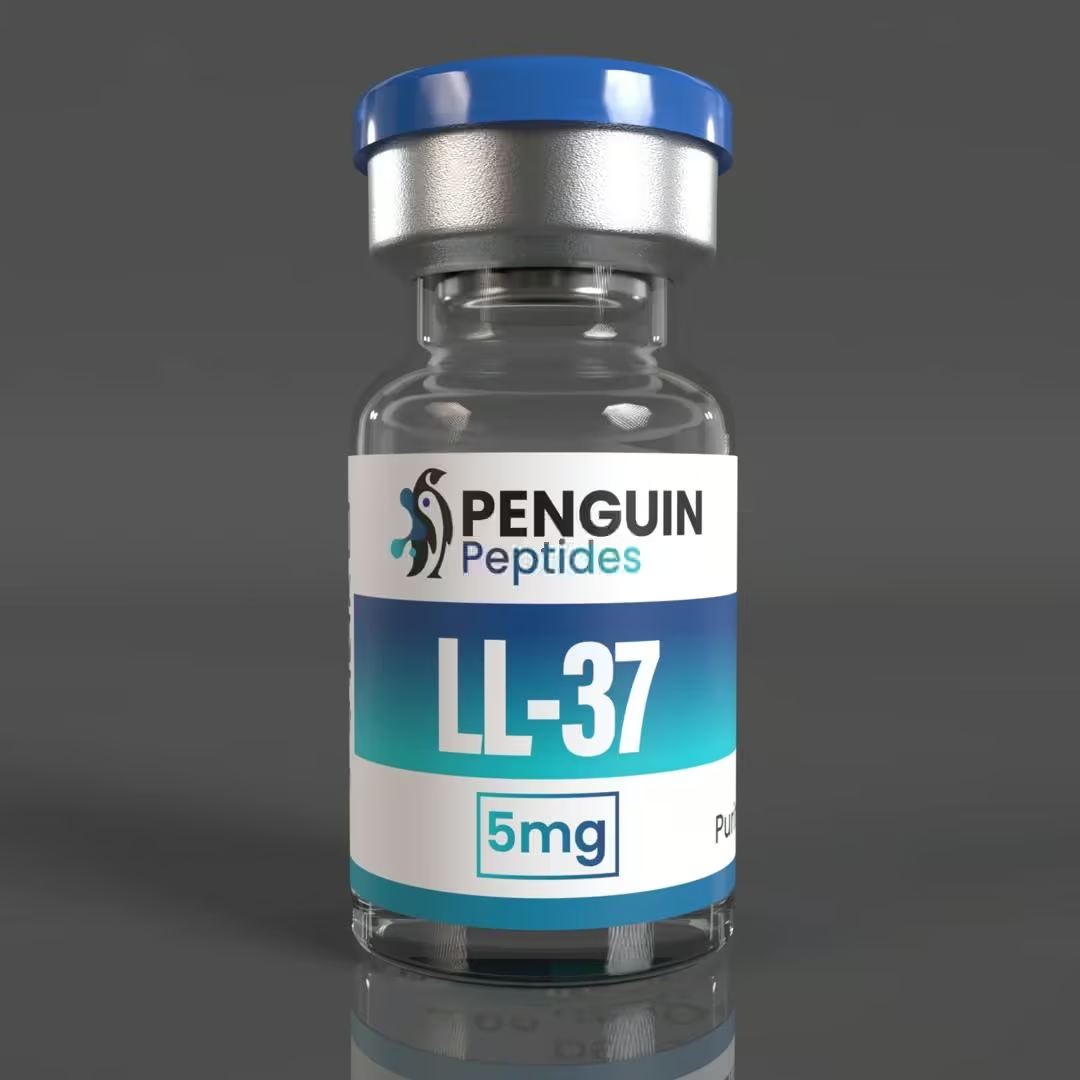
LL-37 comes as a lyophilized powder that must be reconstituted with bacteriostatic water before injection, typically administered subcutaneously 2–3 times per week depending on the specific protocol and therapeutic needs.
Key dosing principle: LL-37 levels in healthy tissue are tightly regulated. At physiological doses, LL-37 enhances chemotaxis, angiogenesis, and antimicrobial action. However, excessive levels can trigger local cytotoxicity or paradoxical inflammation due to its membrane-disruptive nature. This makes precision dosing critically important.
Side Effects and Safety Profile
In a Phase 2b clinical trial, LL-37 showed excellent safety and a low risk of side effects. Only some adverse events — such as infection at the site of the wound, phlebitis, and peripheral swelling — were judged as potentially related to its administration.
For subcutaneous injection use, mild injection site reactions are relatively common, including temporary redness, swelling, itching, or mild discomfort. These reactions are generally mild and transient, often attributed to the peptide’s cationic charge and its interaction with local tissues.
More serious systemic side effects are rare, but individuals with pre-existing medical conditions, autoimmune disorders, or a history of thrombotic events should approach LL-37 with particular caution, and the decision to use it should always be based on a careful risk-benefit assessment tailored to the individual’s specific health profile.
Challenges and Limitations
Despite its enormous promise, LL-37 faces real-world challenges that have slowed clinical translation. The clinical application of LL-37 is hindered by several limitations, including high production costs, reduced efficacy under physiological conditions, susceptibility to proteolytic degradation, and significant toxicity to human cells at higher concentrations.
The major challenge associated with LL-37 administration is its rapid degradation within the wound environment, meaning treatments may require higher dosage and dosing frequencies to achieve the desired therapeutic effect.
These challenges have spurred an active field of peptide engineering focused on developing LL-37 analogs and modified derivatives that preserve its activity while overcoming its stability and toxicity limitations — a field showing considerable early promise.
Who May Benefit from LL-37?
LL-37 is considered ideal for individuals with chronic non-healing wounds, recurrent infections not responding to conventional treatment, compromised immune function requiring additional support, biofilm-related infections, skin conditions with infectious components, or those seeking antimicrobial therapy without contributing to antibiotic resistance.
Final Thoughts
LL-37 occupies a genuinely unique position in peptide science. As the only human cathelicidin, it is not a foreign compound engineered in a laboratory — it is a molecule that the human body already produces, naturally, as a first line of defense against infection and injury. That biological legitimacy, combined with its extraordinary breadth of activity, makes it one of the most exciting research targets in modern medicine.
From chronic wounds and drug-resistant infections to antiviral defense and cancer immunity, the potential applications of LL-37 continue to expand with each new study. While it is not yet approved for widespread clinical use, the trajectory of research is compelling — and the next decade may well see LL-37 move from the research laboratory into mainstream therapeutic practice.
As with all peptide therapies, responsible use under qualified medical supervision is essential.
Disclaimer: This article is intended for educational and informational purposes only. LL-37 is primarily a research peptide and is not approved for clinical use outside of specific investigational contexts. Always consult a licensed healthcare professional before considering any peptide therapy.
Be the first to review “LL-37”
Related products
Immunology Researcg Compounds
Immunology Researcg Compounds
Reviews
There are no reviews yet.