

Thymalin 10mg: The Complete Guide to the Thymic Peptide Bioregulator for Immune Health and Longevity
In the expanding universe of peptide research, few compounds carry as much historical weight — or as compelling a body of clinical evidence — as Thymalin. Originally developed in the Soviet Union in the 1970s, this thymus-derived peptide bioregulator has accumulated over four decades of documented clinical data, making it one of the most extensively studied peptides in the field of immunology and anti-aging medicine.
Whether you’re researching immune restoration, exploring longevity science, or investigating the cutting edge of peptide bioregulators, this guide to Thymalin 10mg covers everything you need to know.
What Is Thymalin?
Thymalin is a natural polypeptide extract derived from the thymus of young calves, originally developed in Russia to regulate immune function and delay aging. It belongs to a class of compounds called cytomedins — short peptide bioregulators that influence DNA transcription and cellular differentiation.
Thymalin is the thymus-targeted bioregulator within the Khavinson family of peptide bioregulators — a class of short peptides designed to restore function to specific organs by modulating gene expression — alongside Epitalon (pineal gland), Cortagen (adrenal cortex), and Pinealon (central nervous system).
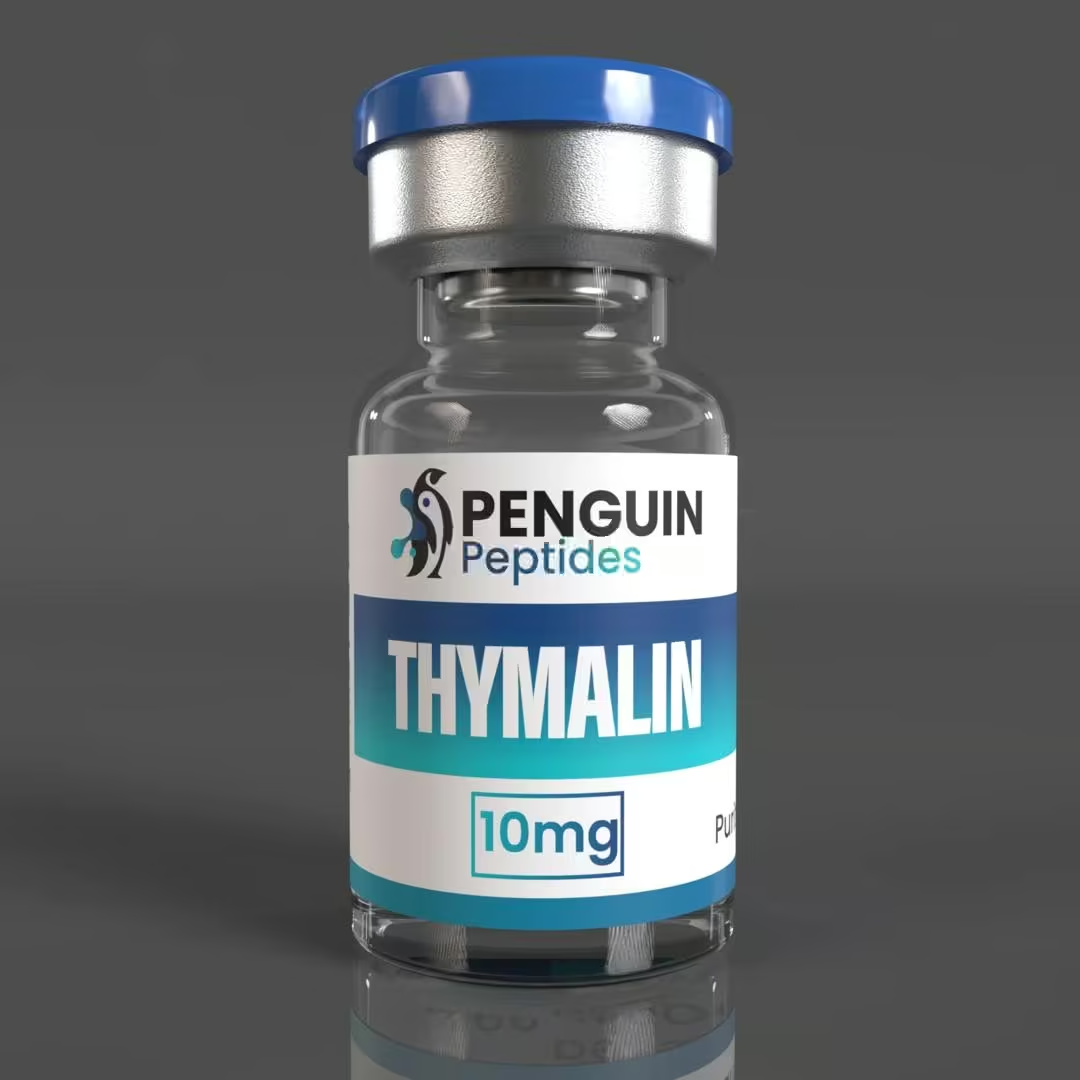
When researchers refer to Thymalin 10mg, they are typically referring to a lyophilized vial of this thymic peptide complex at a 10mg concentration — the standard research and clinical dose used in decades of published studies. Thymalin has been approved for medical use in Russia since the 1980s and has accumulated over 40 years of clinical data, though it remains classified as a research peptide in the United States and much of the Western world.
The Thymus Gland: Why It Matters
To understand Thymalin, you first need to understand the organ it targets — the thymus gland.
Located behind the sternum, the thymus is the training ground for T-lymphocytes (T-cells) — the white blood cells that form the backbone of adaptive immunity. Every pathogen your immune system has ever learned to fight was processed through this organ.
The problem is that the thymus doesn’t last. The thymus gland shrinks by roughly 3% every year after puberty, and by age 60, fewer than 10% of its original T-cell-producing capacity remains functional. This isn’t theoretical immune decline — it’s a documented biological bottleneck that drives age-related disease susceptibility.
This process — known as thymic involution — is one of the most significant contributors to immunosenescence (age-related immune decline). As the thymus shrinks, the body produces fewer naive T-cells, leaving it progressively less capable of mounting effective responses to new pathogens, vaccines, and cellular abnormalities including cancer.
Thymalin was developed specifically to address this bottleneck.
How Does Thymalin Work?
The molecular mechanism of Thymalin’s immunoprotective action is due to the effects of the short peptides KE, EW, and EDP in its composition. These short peptides can specifically bind to double-stranded DNA and/or histone proteins and regulate gene expression, synthesis of immune system proteins, activity of gerontogenes, and stimulate stem cell differentiation.
In practical terms, this means Thymalin doesn’t simply stimulate the immune system in a blunt, non-specific way. Instead, it operates at the epigenetic level — influencing which genes are expressed within thymic and immune cells — effectively instructing aging cells to resume functions they had progressively abandoned.
Thymalin promotes differentiation and proliferation of T-lymphocytes and stem cells, regulates gene expression for cytokines, heat-shock proteins, and gerontogenes, enhances NK cell activity while balancing immune responses to prevent overactivation, and reduces apoptosis in immune cells to support thymic function restoration.
This distinguishes Thymalin from downstream immune stimulants like Thymosin Alpha-1. This is mechanistically different from immune stimulants that act downstream on mature lymphocytes rather than at the thymic regeneration level. Thymalin targets the source — the thymus itself — rather than the immune cells it produces.
Key Research Findings and Clinical Benefits
1. Landmark Longevity Research — The Khavinson & Morozov Trials
No discussion of Thymalin is complete without reference to what remains perhaps the most significant long-term peptide study ever conducted.
Researchers at the St. Petersburg Institute of Bioregulation and Gerontology clinically assessed the geroprotective effects of thymic (Thymalin) and pineal (Epithalamin) peptide bioregulators in 266 elderly persons over 6–8 years. The results showed the ability of the bioregulators to normalize the basic functions of the human organism, improving indices of cardiovascular, endocrine, immune, and nervous systems, homeostasis, and metabolism.
The mortality outcomes were particularly striking. Homeostasis restoration was accompanied by a 2.0–2.4-fold decrease in acute respiratory disease incidence, reduced incidence of ischemic heart disease, hypertension, deforming osteoarthrosis, and osteoporosis. Mortality during observation decreased 2.0–2.1-fold in the Thymalin-treated group, and 4.1-fold in patients treated with Thymalin in combination with Epithalamin annually for 6 years, compared to controls.
The Khavinson & Morozov 6-year trial remains the longest human clinical trial ever conducted on a peptide bioregulator and produced the most significant mortality reduction data in the peptide literature, including a reported 28% reduction in all-cause mortality and 45% reduction in cardiovascular mortality.
2. T-Cell Restoration and Immune Biomarkers
Studies using aged rodent models show that Thymalin administration increases thymic cortical zone thickness, elevates CD4+ and CD8+ T-cell output, and restores naive T-cell populations that had been depleted through chronic immune challenge.
In human research, the data is equally compelling. A Phase II study involving 89 subjects aged 52–64 found that 20 subcutaneous injections of Thymalin at 10mg per dose over 30 days increased CD3+ T-cell counts by a mean of 18.7% from baseline, compared to 2.1% in placebo controls. Notably, this effect persisted for 120 days post-treatment, suggesting durable reactivation of thymopoiesis rather than transient immune stimulation.
3. COVID-19 and Cytokine Storm Suppression
Thymalin’s immune-regulating properties found a compelling new application during the COVID-19 pandemic. A study published in the International Journal of Molecular Sciences documented that administration of Thymalin to patients with severe COVID-19 markedly suppressed the expression of genes responsible for hyperinflammatory responses, thereby helping to mitigate the cytokine storm — a condition in which the immune system attacks its own tissues excessively.
In a controlled clinical trial, patients administered Thymalin alongside standard COVID-19 therapy manifested more rapid clinical improvement, higher proportions of recovery from lymphopenia, and faster normalization of inflammatory markers compared to those receiving standard care and placebo alone.
Thymalin normalizes thymus functions during the aging process and has no side effects when used in older age groups, which is essential for the prevention of the cytokine storm in COVID-19.
4. Cardiovascular and Multi-System Protection
The benefits observed in long-term Thymalin studies extend well beyond the immune system. Thymalin supports heart health, reducing the risk of heart attack and stroke, and thanks to its ability to slow the aging of the immune system, it contributes to a longer and higher-quality life.
This systemic effect makes biological sense: when the immune system functions optimally, it is better equipped to clear senescent cells, manage low-grade chronic inflammation, and maintain vascular and tissue integrity — all key drivers of cardiovascular disease and aging.
5. Recovery and Regeneration
Clinical studies in Russia have shown that Thymalin improved immune markers and reduced infection rates in elderly patients and individuals with chronic disease. By improving blood cell production, immune function, and inflammation control, Thymalin can speed up recovery from injury, illness, and surgical procedures.
Thymalin 10mg Dosage and Administration
The standard Khavinson clinical protocol consists of 10mg daily via intramuscular (IM) or subcutaneous (SubQ) injection for 5–10 days, repeated every 6 months. This short-course, cyclical approach distinguishes Thymalin from continuous-use compounds and is thought to provide lasting immune recalibration without overstimulation.
For more intensive research protocols, longer courses have been studied. Published trials targeting the 50–65 age cohort use 10mg subcutaneous injections administered daily for up to 30 days, with the 30-day course producing measurable increases in T-cell counts that persist for 90–120 days, suggesting the treatment reactivates thymopoiesis rather than causing transient immune stimulation.
Stacking considerations: Thymalin is often studied alongside peptides like Epitalon and Thymosin Beta-4 to explore synergistic effects in immune, recovery, and anti-aging protocols. The Thymalin + Epitalon combination in particular was the basis of the landmark longevity studies, with the combination producing greater mortality reductions than either compound alone.
Reconstitution: Thymalin typically comes in 10mg vials. Researchers reconstitute it with bacteriostatic (BAC) water and dose based on the parameters of their experimental model. Reconstituted vials should be refrigerated at 2–8°C.
Thymalin vs. Other Thymic Peptides
Understanding where Thymalin fits relative to other thymic peptides helps clarify its unique value.
Thymalin vs. Thymosin Alpha-1: Thymalin is a whole thymus peptide complex, while Thymosin Alpha-1 is a specific thymic fragment. Thymalin may offer broader immunomodulatory effects by virtue of its multiple active peptide sequences, whereas Thymosin Alpha-1 targets more specific downstream immune activation pathways.
Thymalin vs. Thymagen: Thymalin is often framed as a broader immune rehabilitation tool, while Thymagen emphasizes immune balance and cellular repair, acting more as a precision modulator — calming excess and lifting lagging responses.
In short, Thymalin is best understood as the foundational, broad-spectrum thymic bioregulator — the compound most suited to comprehensive immune restoration in the context of aging or significant immune compromise.
Safety Profile and Side Effects
Thymalin’s safety record is one of its most distinctive attributes. According to Khavinson et al., published in Biogerontology, “Thymalin exhibits a high safety margin with no reported systemic toxicity in long-term administration studies.”
Modern extraction techniques remove all heavy proteins and potential allergens, leaving only the low-molecular-weight peptides. Side effects are extremely rare — the most common being a mild reaction at the injection site.
For subcutaneous administration, mild injection site redness, swelling, or headache from dehydration may occur, but these are transient and generally self-resolving.
As with all peptide therapies, those with autoimmune conditions, active malignancies, or complex medical histories should consult a qualified healthcare professional before considering Thymalin.
Who Is Thymalin Best Suited For?
Based on existing research, Thymalin is most relevant for:
Older adults experiencing age-related immune decline — particularly those in the 50–70 age window, where thymic function is compromised but residual thymic tissue can still respond to peptide signaling.
Individuals recovering from serious illness or infection — Thymalin’s ability to accelerate normalization of T-cell counts and inflammatory markers makes it relevant in post-infection and post-surgical recovery contexts.
Those with chronic immunodeficiency — Research has demonstrated Thymalin’s value in conditions involving persistent lymphopenia, elevated inflammatory markers, or recurrent infections resistant to conventional treatment.
Longevity-focused researchers and clinicians — The depth and duration of the Khavinson trials position Thymalin as one of the most evidence-backed compounds in the emerging field of longevity medicine.
Final Thoughts
Thymalin 10mg occupies a remarkable position in peptide science — one built not on speculation or early-phase animal studies alone, but on over four decades of clinical research spanning thousands of patients. It is, in many ways, the peptide the modern longevity movement is only now catching up to.
The lack of FDA approval reflects the geographic origin of the clinical data rather than a safety concern — Thymalin has an extensive safety record spanning over 40 years of documented clinical use with minimal reported adverse effects.
As the thymus reasserts its place in longevity and immune science — and as Western researchers increasingly look to peptide bioregulators for answers that conventional pharmacology has struggled to provide — Thymalin stands as one of the field’s most credible and time-tested tools.
As always, all research applications should be conducted in compliance with applicable regulations and under the supervision of qualified healthcare professionals.
Disclaimer: This article is for educational and informational purposes only. Thymalin is not approved by the FDA for clinical use in the United States. It is intended for research purposes only. Always consult a licensed healthcare professional before considering any peptide therapy.
Be the first to review “THYMALIN 10MG”
Related products
Immunology Researcg Compounds
Immunology Researcg Compounds
Reviews
There are no reviews yet.