


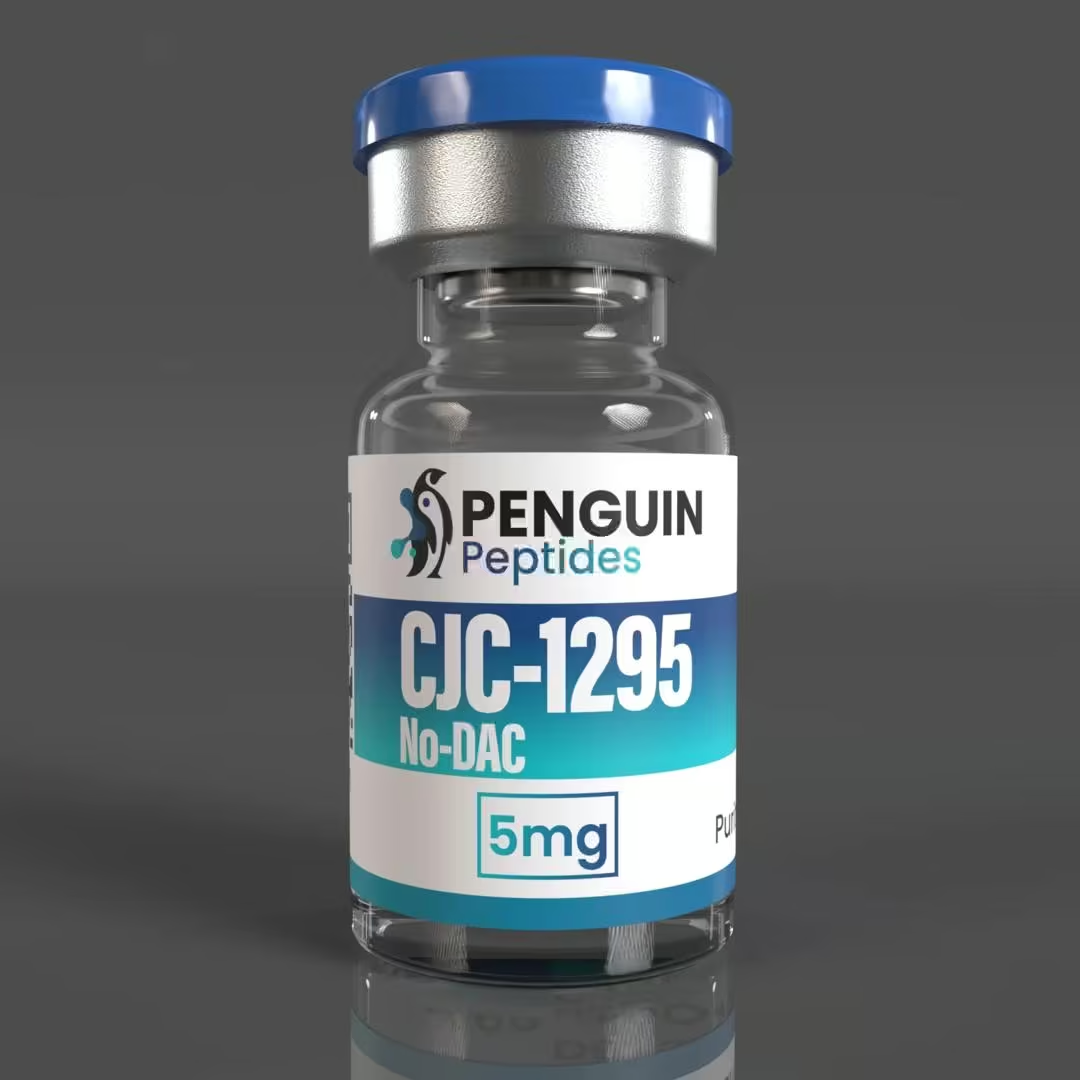

CJC-1295 No DAC 5mg: The Complete Research Guide to Mod GRF 1-29
What Is CJC-1295 No DAC 5mg?
CJC-1295 No DAC 5mg is a synthetic research peptide and a modified analog of Growth Hormone-Releasing Hormone (GHRH). Also widely known as Modified GRF 1-29 or Mod GRF 1-29, this compound is specifically the version of CJC-1295 formulated without the Drug Affinity Complex (DAC). It is supplied as a lyophilized (freeze-dried) powder in a 5mg research vial and is intended strictly for controlled laboratory use.
Understanding what “No DAC” means is essential for any researcher working in this space — because while CJC-1295 No DAC and CJC-1295 with DAC share the same base peptide structure, the absence of the DAC component creates a fundamentally different pharmacokinetic profile with distinct research applications.
Important Disclaimer: CJC-1295 No DAC 5mg is for research and laboratory use only. It is not approved by the FDA for human consumption, therapeutic use, medical treatment, or diagnostic purposes.
The Science Behind CJC-1295 No DAC: Mechanism of Action
CJC-1295 No DAC is a 29-amino-acid synthetic peptide that closely mirrors the biologically active fragment of endogenous GHRH. Natural GHRH contains 44 amino acids, but the first 29 are sufficient to retain full receptor-binding potency. However, the native 29-amino-acid fragment (GRF 1-29, also known as Sermorelin) is rapidly cleaved by dipeptidyl peptidase IV (DPP-IV) enzymes — with a serum half-life of as little as 2–7 minutes in most research models.
Modified GRF 1-29 (CJC-1295 No DAC) was engineered by substituting four specific amino acids in the chain — at positions 2, 8, 15, and 27 — to resist enzymatic degradation, reduce oxidation, and increase binding affinity at the GHRH receptor (GHRHR). The result is a compound with a half-life of approximately 30–60 minutes — significantly more stable than native GRF 1-29, but still short-acting by design.
The mechanism once the peptide engages its target is straightforward: CJC-1295 No DAC binds to GHRH receptors on somatotroph cells in the anterior pituitary, activating adenylate cyclase and elevating intracellular cyclic AMP (cAMP), which in turn promotes growth hormone (GH) synthesis and release.
CJC-1295 No DAC vs CJC-1295 with DAC: Key Differences
This is one of the most commonly searched questions in peptide research, and it matters significantly for study design.
| Feature | CJC-1295 No DAC (Mod GRF 1-29) | CJC-1295 with DAC |
|---|---|---|
| Also Known As | Modified GRF 1-29, Mod GRF | DAC:GRF, Long-Acting GHRH Analog |
| Half-Life | ~30–60 minutes | ~6–8 days |
| DAC Present? | No | Yes — binds albumin in plasma |
| GH Release Pattern | Pulsatile (mimics natural GHRH) | Prolonged, sustained elevation |
| Dosing Frequency | More frequent (acute, timed protocols) | Once weekly possible |
| Primary Research Use | GH pulse dynamics, pituitary signaling studies | Sustained GH axis studies |
The Drug Affinity Complex (DAC) is a molecular modification — specifically, a lysine derivative attached to the C-terminus — that allows the peptide to reversibly bind to albumin in plasma. This albumin binding effectively shields the peptide from enzymatic breakdown and dramatically extends its half-life to approximately 6–8 days.
For researchers, the choice between the two forms is a study design decision, not simply a preference. CJC-1295 No DAC is the tool of choice when the focus is on pulsatile GH secretion dynamics — the short, timed bursts of GH that more closely mirror normal physiological GHRH signaling. CJC-1295 with DAC is more relevant when researchers need prolonged, continuous activation of the GH/IGF-1 axis over days.
Why Researchers Choose CJC-1295 No DAC 5mg
In normal physiology, GH is not released continuously — it is secreted in pulses. The hypothalamus releases GHRH in episodic bursts, which are counterbalanced by somatostatin, producing the characteristic pulsatile GH pattern observed in mammals. Research has linked GH pulse amplitude and frequency to downstream effects on body composition, metabolism, and tissue signaling. The pulses are not just a delivery mechanism — they are part of the biological signal itself.
CJC-1295 No DAC’s short half-life is precisely what makes it scientifically valuable for this type of research. Its 30-minute activity window allows researchers to design precisely timed experiments that model and measure acute pituitary GH responses, rather than imposing prolonged, supraphysiological stimulation.
CJC-1295 No DAC + Ipamorelin: A Common Research Combination
One of the most widely cited pairings in GHRH peptide research is CJC-1295 No DAC combined with Ipamorelin — and critically, when researchers mention this combination, they almost always mean the No DAC form, not CJC-1295 with DAC.
Ipamorelin is a selective ghrelin receptor agonist (GHS-R agonist) that triggers GH release through a completely different pathway than GHRH — via the ghrelin/growth hormone secretagogue axis rather than the GHRH axis. Ipamorelin is also notable for its selectivity: unlike some other GH secretagogues, it does not significantly elevate cortisol or prolactin in research models.
When combined in laboratory studies, CJC-1295 No DAC and Ipamorelin work on complementary receptor systems, allowing researchers to investigate synergistic multi-pathway stimulation of GH release while maintaining the pulsatile timing that reflects physiological GH dynamics.
CJC-1295 No DAC 5mg: Research Peptide Specifications
When sourcing CJC-1295 No DAC 5mg for laboratory use, researchers should verify the following quality standards:
- Peptide: Modified GRF 1-29 (CJC-1295 without DAC)
- Vial size: 5mg lyophilized powder
- Purity: ≥99% (verified by HPLC and mass spectrometry)
- Endotoxin level: <0.25 EU/mg (ultra-low endotoxin preferred)
- CAS Number: 863288-34-0
- Molecular Formula: C₁₅₂H₂₅₂N₄₄O₄₂
- Molecular Weight: ~3,367.9 g/mol
- Storage: Lyophilized powder stable at −20°C; refrigerate after reconstitution and use within 30 days
- Certificate of Analysis: Should be available per batch, with third-party verification
Frequently Asked Questions About CJC-1295 No DAC 5mg
What is the difference between CJC-1295 No DAC and Mod GRF 1-29? They are the same compound. Modified GRF 1-29 (Mod GRF 1-29) is simply the more precise scientific name for CJC-1295 without DAC. Both terms refer to the same 29-amino-acid, tetra-substituted GHRH analog.
Why does the “No DAC” specification matter when ordering? Because CJC-1295 with DAC and CJC-1295 No DAC have significantly different half-lives (days vs. minutes), pharmacokinetics, and research applications. Ordering the wrong form can invalidate an experiment’s design. Always confirm which form is in the vial before proceeding.
Can CJC-1295 No DAC 5mg be used for human consumption? No. CJC-1295 No DAC 5mg is strictly for laboratory research use only. It is not FDA-approved for any human or veterinary use and is not available as a prescription or over-the-counter product.
What purity level should research-grade CJC-1295 No DAC have? A minimum of 98–99% purity verified by HPLC is the standard benchmark. Always request a Certificate of Analysis (COA) from a third-party laboratory before use.
Is CJC-1295 No DAC the same as Sermorelin? No, though both are derived from the same GRF 1-29 fragment. Sermorelin is the unmodified version, with a half-life as short as 5–10 minutes. CJC-1295 No DAC (Mod GRF 1-29) has four amino acid substitutions that extend its half-life to approximately 30 minutes and improve its enzymatic stability and receptor binding affinity.
Summary
CJC-1295 No DAC 5mg — also known as Modified GRF 1-29 — is a short-acting, tetra-substituted GHRH analog used in laboratory research to study pulsatile GH secretion, pituitary receptor signaling, and multi-pathway GH axis dynamics. Its ~30-minute half-life, absence of the albumin-binding DAC complex, and well-characterized receptor mechanism make it one of the most commonly used GHRH analogs in preclinical peptide research. All research use of CJC-1295 No DAC 5mg must remain fully compliant with applicable institutional and regulatory guidelines.
This content is intended for educational and informational purposes only. CJC-1295 No DAC 5mg is not intended for human consumption, therapeutic application, or medical use. Always adhere to applicable laws and institutional research protocols when handling research peptides.
Be the first to review “CJC-1295 NO DAC 5MG”
Related products
Metabolic-Research-Compounds
Metabolic-Research-Compounds
Metabolic-Research-Compounds
Metabolic-Research-Compounds
Metabolic-Research-Compounds
Metabolic-Research-Compounds
Metabolic-Research-Compounds
Metabolic-Research-Compounds
Reviews
There are no reviews yet.