

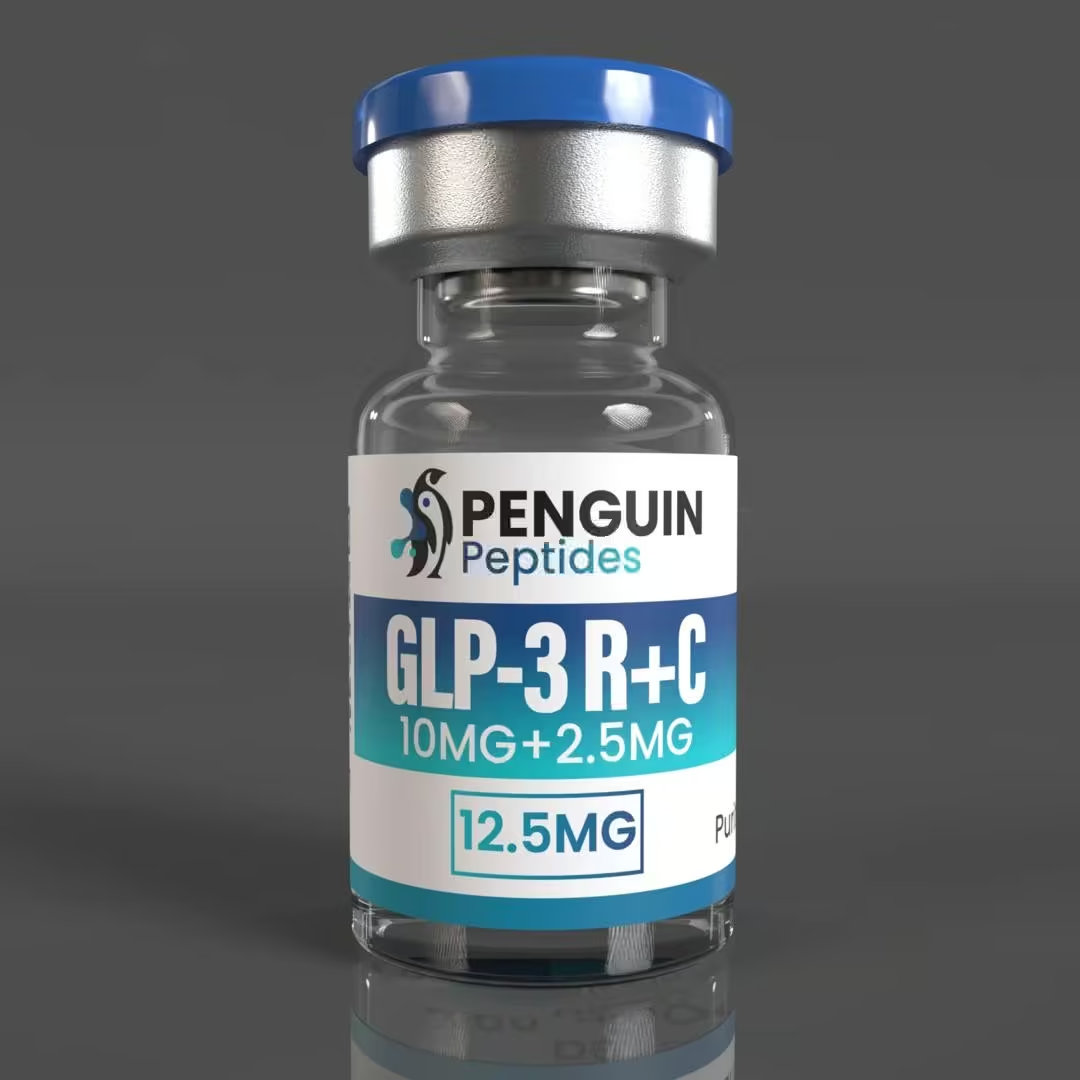

GLP-3 R+C: The Complete Research Guide to Retatrutide + Cagrilintide
What Is GLP-3 R+C?
GLP-3 R+C is a dual-peptide research blend combining two of the most studied investigational compounds in metabolic science: Retatrutide (R) — informally referred to as a “GLP-3” due to its triple-receptor action — and Cagrilintide (C), a long-acting amylin receptor agonist. Together, they represent a multi-pathway approach to studying metabolic signaling, making GLP-3 R+C one of the most sophisticated peptide blends available for laboratory research today.
Important: GLP-3 R+C is strictly for research and laboratory use only. It is not approved by the FDA for human consumption, medical treatment, or therapeutic use.
Understanding the “GLP-3” Label: What Is Retatrutide (R)?
The term “GLP-3” is an informal, media-popularized label rather than a formal scientific classification. It refers to triple hormone receptor agonists — compounds that simultaneously target three distinct receptors:
- GLP-1 (Glucagon-like Peptide-1)
- GIP (Glucose-dependent Insulinotropic Polypeptide)
- Glucagon receptor
Retatrutide, developed by Eli Lilly, is the most advanced molecule in this class. Unlike GLP-1 receptor agonists such as semaglutide — which engage only a single receptor — Retatrutide activates all three pathways simultaneously, making it a true triple agonist. For this reason, researchers sometimes describe it using the shorthand “GLP-3 R,” where “R” stands for Retatrutide.
In a Phase 2 clinical trial published in the New England Journal of Medicine, participants taking the highest dose (12 mg, once weekly) experienced an average weight reduction of approximately 24.2% at 48 weeks — a result that continued to progress even after the formal trial period ended. Separately, Phase 3 TRIUMPH-4 topline results released in late 2025 demonstrated both substantial weight reduction and significant relief from knee osteoarthritis pain. Phase 3 data for type 2 diabetes (TRANSCEND-T2D-1) were also released in early 2026, reflecting the compound’s broad metabolic research profile.
From a research perspective, Retatrutide’s multi-receptor mechanism makes it a valuable tool for studying how GLP-1, GIP, and glucagon receptor co-activation influences metabolic pathways in controlled, preclinical models.
What Is Cagrilintide (C)?
Cagrilintide is a long-acting synthetic analogue of amylin, a pancreatic hormone co-secreted alongside insulin at mealtime. The “C” in GLP-3 R+C refers to Cagrilintide, which works through a completely different signaling pathway than Retatrutide — making the combination particularly relevant for multi-pathway metabolic research.
Natural amylin has a half-life of only about 15 minutes. Cagrilintide, engineered by Novo Nordisk, was designed with structural modifications — including a lipid side chain and multiple amino acid substitutions — that extend its half-life to approximately 7–8 days, enabling once-weekly dosing protocols in research settings.
Cryo-electron microscopy research published in Nature Communications (2025) confirmed that Cagrilintide engages all four amylin receptor subtypes (AMY1, AMY2, AMY3, and the calcitonin receptor/CTR) in their active, Gs-coupled conformations. Research published in eBioMedicine (2025) further identified that Cagrilintide’s metabolic effects are mediated specifically through amylin receptors 1 and 3 in the hindbrain — anatomical targets entirely distinct from GLP-1 pathways.
This mechanistic separation is a core reason researchers study GLP-3 R+C as a combination blend: Retatrutide and Cagrilintide engage different receptor systems, potentially allowing researchers to examine complementary and additive multi-pathway signaling in the same experimental model.
Why Researchers Study GLP-3 R+C as a Combination
The scientific rationale for combining Retatrutide with Cagrilintide in a research peptide blend comes down to their non-overlapping mechanisms:
| Compound | Receptor Targets | Signaling Pathway |
|---|---|---|
| Retatrutide (GLP-3 R) | GLP-1, GIP, Glucagon | Incretin / glucagon axis |
| Cagrilintide (C) | AMY1R, AMY2R, AMY3R, CTR | Amylin / calcitonin axis |
By studying both compounds together, laboratory researchers can investigate how incretin-based triple agonism and amylinergic signaling interact at the molecular, cellular, and systems level. This type of research has grown in prominence as the broader peptide pharmacology field moves toward understanding combination therapies that target multiple metabolic pathways simultaneously.
Research Context: Where the Science Currently Stands
Both components of GLP-3 R+C are among the most clinically advanced investigational peptides in obesity and metabolic research:
- Retatrutide has completed Phase 2 trials and progressed into Phase 3, with topline data available for obesity, osteoarthritis, and type 2 diabetes. FDA approval is anticipated no earlier than 2027.
- Cagrilintide has completed Phase 2 monotherapy trials and Phase 3 combination trials (as CagriSema, alongside semaglutide), with Novo Nordisk filing an NDA in December 2025 and an FDA decision expected in late 2026.
As of the date of this writing, neither compound is approved for any human use outside of clinical trials. Research-grade GLP-3 R+C blends are available exclusively for qualified laboratory research purposes.
GLP-3 R+C Research Peptide Specifications
When sourcing GLP-3 R+C for laboratory use, researchers should look for:
- Retatrutide (GLP-3 R): Typically supplied at 10 mg per vial, ≥99% purity, verified by third-party COA
- Cagrilintide (C): Typically supplied at 2.5 mg per vial, ≥99% purity
- Endotoxin levels: Should be <0.25 EU/mg (ultra-low endotoxin)
- Testing: Triple-tested — HPLC, MS, and endotoxin testing recommended
- Storage: Lyophilized powder stable at −20°C; refrigerate after reconstitution
Frequently Asked Questions About GLP-3 R+C
What does R+C stand for in GLP-3 R+C? R stands for Retatrutide and C stands for Cagrilintide. Together, the blend is referred to as GLP-3 R+C.
Is GLP-3 R+C the same as retatrutide alone? No. GLP-3 R+C is a combination research blend. Retatrutide (GLP-3 R) is the triple agonist component, while Cagrilintide (C) adds amylin/calcitonin receptor activity through a separate signaling pathway.
Is GLP-3 R+C approved for human use? No. GLP-3 R+C is not FDA-approved and is intended strictly for laboratory research use only. Neither Retatrutide nor Cagrilintide is currently available by prescription outside of clinical trials.
Why is it called “GLP-3”? The term “GLP-3” is an informal media label, not a formal scientific classification. It emerged because Retatrutide targets three receptors (GLP-1, GIP, and glucagon), leading some to describe it as a “triple GLP.” The more accurate scientific term is “triple agonist.”
Summary
GLP-3 R+C represents one of the most advanced dual-peptide research blends in contemporary peptide pharmacology. By pairing Retatrutide’s triple incretin receptor activity with Cagrilintide’s amylin pathway engagement, the combination provides researchers with a powerful tool for studying multi-receptor metabolic signaling in laboratory settings. All use of GLP-3 R+C must remain within the bounds of qualified scientific research and applicable regulatory guidelines.
This content is for informational and educational purposes only. GLP-3 R+C is not intended for human consumption, medical use, or therapeutic application. Always comply with applicable laws and institutional guidelines when handling research peptides.
| mg | 10mg+2.5mg, 20mg+5mg, 30mg+7.5mg |
|---|
Be the first to review “GLP-3 R+C”
Related products
Metabolic-Research-Compounds
Metabolic-Research-Compounds
Metabolic-Research-Compounds
Metabolic-Research-Compounds
Metabolic-Research-Compounds
Metabolic-Research-Compounds
Metabolic-Research-Compounds
Metabolic-Research-Compounds
Reviews
There are no reviews yet.