


HCG 5000iu: The Complete Research Guide to Human Chorionic Gonadotropin
Focus Keyword: HCG 5000IU Word Count: ~950+ words Meta Description: HCG 5000iu is a research-grade glycoprotein hormone supplied as a lyophilized 5,000 IU vial. Learn how HCG activates LHCGR receptors, drives Leydig cell steroidogenesis, and its key applications in reproductive and endocrine research.
What Is HCG 5000iu?
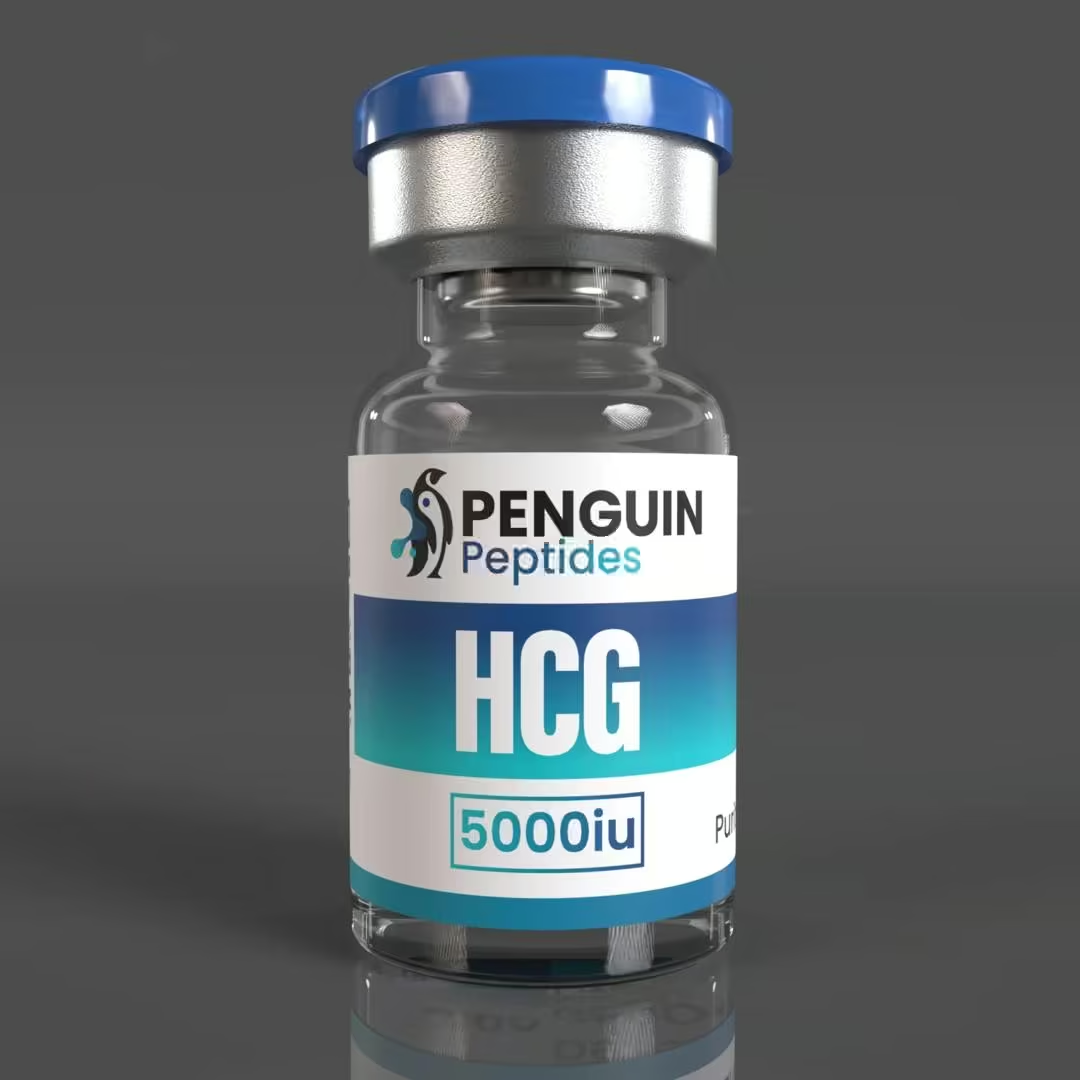
HCG 5000iu is a research-grade preparation of Human Chorionic Gonadotropin (hCG) supplied as a lyophilized (freeze-dried) white powder in a sealed 5,000 International Unit (IU) vial, intended for controlled laboratory research by qualified scientific personnel. Unlike most research peptides — which are measured in milligrams — HCG is quantified in International Units (IU), a standardized biological activity measure based on the compound’s gonadotropic potency relative to a WHO reference standard rather than its absolute mass.
HCG is not a simple synthetic peptide but a naturally occurring glycoprotein hormone — one of the most structurally complex endogenous signaling molecules studied in reproductive endocrinology. As a research compound, the 5,000 IU vial format provides a precisely quantified, reproducible dose of biological activity for use in preclinical endocrine signaling models, reproductive biology studies, and assay development.
Important Disclaimer: Research-grade HCG 5000iu is strictly for laboratory use only. It is not approved for unsupervised human use and is not for self-administration, veterinary use, or any non-clinical application outside of regulated medical or research contexts.
What Is HCG? Structure and Biochemistry
Human Chorionic Gonadotropin is a heterodimeric glycoprotein hormone composed of two non-covalently associated subunits — and understanding this architecture is fundamental to understanding why it behaves as one of the most potent LHCGR agonists in endocrine biology:
The α-Subunit (Common Subunit)
The alpha subunit of HCG is identical to the alpha subunit shared by three other pituitary/placental glycoprotein hormones: LH (Luteinizing Hormone), FSH (Follicle-Stimulating Hormone), and TSH (Thyroid-Stimulating Hormone). This 92-amino-acid subunit is encoded by a single gene and is common across the entire glycoprotein hormone family. It contributes to receptor binding but does not confer receptor specificity.
The β-Subunit (Unique Subunit)
The beta subunit is what makes HCG pharmacologically unique. The hCG β-subunit shares approximately 85% sequence identity with the LH β-subunit but contains a distinctive C-terminal peptide (CTP) extension of 24 additional amino acids — an extension entirely absent from LH. This CTP region carries four O-linked oligosaccharide chains (in addition to the two N-linked chains on the β-subunit core), producing a molecule with significantly higher carbohydrate content than LH — approximately 31% carbohydrate by weight versus ~15% for LH.
This heavy glycosylation is responsible for HCG’s markedly extended plasma half-life of approximately 24–36 hours — compared to LH’s ~90-minute half-life. The CTP extension stabilizes the molecule against clearance, making hCG the sustained-action counterpart to LH’s pulsatile physiological role.
| Feature | HCG | LH |
|---|---|---|
| Subunit Structure | α + β heterodimer | α + β heterodimer |
| β-Subunit Homology | ~85% identical to LH β | — |
| C-Terminal Peptide (CTP) | Present (24 aa, 4 O-linked glycans) | Absent |
| Carbohydrate Content | ~31% by weight | ~15% by weight |
| Plasma Half-Life | ~24–36 hours | ~90 minutes |
| Primary Source | Placental syncytiotrophoblasts | Pituitary gonadotrophs |
| Receptor Target | LHCGR (LHCG receptor) | LHCGR (shared) |
Mechanism of Action: LHCGR Biased Agonism
HCG and LH bind the same receptor — the LHCG receptor (LHCGR), a G protein-coupled receptor (GPCR) of the glycoprotein hormone receptor family expressed on Leydig cells in the testes, granulosa/theca cells in the ovary, and multiple extragonadal tissues. Despite sharing this receptor, research has established that HCG and LH are not pharmacologically equivalent — they are biased agonists that differentially activate downstream signaling cascades.
The cAMP/PKA Pathway (HCG-Dominant)
HCG binds LHCGR with significantly higher affinity than LH — approximately 10-fold greater potency in cAMP recruitment in Leydig cell models (Reproductive Biology and Endocrinology). Upon binding, HCG activates the Gαs protein → adenylyl cyclase → cAMP → Protein Kinase A (PKA) signaling axis. PKA then activates the cAMP-response element-binding protein (CREB), driving transcription of steroidogenic enzyme genes — most critically StAR (Steroidogenic Acute Regulatory Protein), CYP11A1 (cholesterol side-chain cleavage enzyme), and HSD3B (3β-hydroxysteroid dehydrogenase) — producing testosterone in Leydig cells.
The ERK1/2 / AKT Pathway (LH-Dominant)
Research published in Scientific Reports (2017) using BRET/FRET technology demonstrated that LH more potently activates ERK1/2 and AKT phosphorylation — mitogenic and pro-survival signaling pathways — compared to HCG at equivalent receptor occupancy. HCG preferentially drives the cAMP/PKA/steroidogenesis axis; LH preferentially drives ERK1/2/AKT mitogenic signaling. This differential signal bias has implications for research distinguishing steroidogenic from proliferative LHCGR responses.
Implications for Research Design
For laboratory researchers, the practical consequence of LHCGR biased agonism is that HCG 5000iu is the preferred tool when the research objective centers on maximal cAMP-driven steroidogenesis in Leydig cell or granulosa cell models — whereas studies focused on LHCGR-mediated proliferative or mitogenic endpoints may require LH or a combination approach for complete characterization.
Key Research Areas for HCG 5000iu
1. Reproductive Endocrinology and Gonadal Function
HCG 5000iu is one of the most widely used compounds in preclinical reproductive biology research. In male models, it stimulates Leydig cell testosterone production via LHCGR/cAMP/PKA activation, making it the primary tool for studying testicular steroidogenesis, Leydig cell morphology, intratesticular testosterone dynamics, and gonadal axis responsiveness. In female models, HCG is used to study ovulation triggering, luteal phase support, granulosa cell luteinization, and corpus luteum function.
2. Hypothalamic-Pituitary-Gonadal (HPG) Axis Research
Because HCG directly activates gonadal LHCGR with sustained potency — bypassing pituitary LH secretion — it is an essential tool for studying feedback regulation within the HPG axis. Research using HCG in preclinical models can isolate gonadal responsiveness from pituitary regulation, quantify testicular reserve, and examine how sustained LHCGR stimulation modifies LH receptor expression, sensitization, and desensitization.
3. Testosterone and Androgen Biosynthesis Studies
In laboratory models of testosterone pathway research, HCG 5000iu provides a reliable, dose-quantifiable signal for activating the complete Leydig cell steroidogenesis cascade: cholesterol transport → StAR → CYP11A1 → DHEA → androstenedione → testosterone via HSD17B3. The 5,000 IU vial size is particularly suited to dose-escalation and dose-response study designs across this pathway.
4. Male Infertility and Spermatogenesis Research
Spermatogenesis is primarily regulated by FSH and LH-driven intratesticular testosterone — and HCG mimics LH to support this process. Research published in Andrology (2026) examined hCG-based treatments for men with non-obstructive azoospermia, confirming that hCG binds LHCGR on Leydig cells with greater affinity than LH, preferentially inducing cAMP elevation and upregulating steroidogenic enzyme gene expression — directly underpinning its use as a research tool in male fertility models.
5. Placental and Trophoblast Signaling Research
In its natural physiological context, HCG is produced by placental syncytiotrophoblast cells beginning days after implantation — and rising hCG levels are the basis of pregnancy detection assays. Laboratory research uses HCG as a reference standard and signaling probe in studies of trophoblast biology, implantation, placental development, and early gestational endocrinology.
6. Oncology Biomarker Research
HCG and its subunits — including free β-hCG and hyperglycosylated hCG — are elevated in multiple tumor types including gestational trophoblastic disease, testicular germ cell tumors, and certain non-gestational cancers. Research-grade HCG 5000iu is used in analytical assay development, immunoassay calibration, and biomarker sensitivity studies for these oncological contexts.
Why 5000 IU? Understanding the HCG Vial Format
Unlike most research peptides sold in milligram quantities, HCG is measured and dispensed in International Units (IU) — a bioactivity-based unit standardized against a WHO reference preparation for human chorionic gonadotropin. This means 5,000 IU reflects a defined and reproducible level of biological gonadotropic activity, not simply a mass measurement.
The 5,000 IU vial format is the most common single-vial format for HCG research because it:
- Provides sufficient material for multiple dose-range experiments from a single vial
- Aligns with the IU-based dosing conventions used in published reproductive endocrinology research protocols
- Delivers a mid-to-high range stimulus useful for observing full Leydig cell steroidogenic responses in laboratory models
HCG 5000iu Research Product Specifications
| Specification | Details |
|---|---|
| Compound | Human Chorionic Gonadotropin (hCG) |
| CAS Number | 9002-61-3 |
| Molecular Formula | C₁₁₀₅H₁₇₇₀N₃₁₈O₃₃₆S₂₆ |
| Vial Content | 5,000 IU per vial |
| Physical Form | Lyophilized white/off-white powder |
| Purity | ≥99% (HPLC verified) |
| Quantification Standard | WHO International Unit (IU) biological activity reference |
| Certificate of Analysis | Required — third-party batch verified |
| Storage (lyophilized) | −20°C; dry, dark conditions; minimize moisture exposure |
| Storage (reconstituted) | Refrigerate at 2–8°C; use within 20–30 days; do not freeze |
| Reconstitution | Bacteriostatic water; inject slowly along vial wall; do not shake |
| Shipping Stability | Lyophilized form stable at ambient temperatures during transit |
Frequently Asked Questions About HCG 5000iu
Why is HCG measured in IU rather than milligrams? HCG is a glycoprotein whose biological potency cannot be reliably determined by mass alone, due to variability in glycosylation patterns and isoforms between preparations. International Units (IU) standardize biological activity against a WHO reference preparation, ensuring consistent gonadotropic potency across different batches and manufacturers regardless of absolute mass.
What is the difference between HCG and LH? HCG and LH both bind the same LHCGR receptor and stimulate gonadal steroidogenesis, but they are distinct molecules with different half-lives and signal biases. HCG has a much longer half-life (~24–36 hours vs LH’s ~90 minutes) due to its C-terminal peptide extension and higher glycosylation, and it preferentially drives cAMP/PKA steroidogenic signaling more potently than LH. LH more potently activates ERK1/2/AKT mitogenic pathways.
What does the α and β subunit structure mean for research? The α-subunit is shared with LH, FSH, and TSH — it contributes to receptor binding but not specificity. The β-subunit is unique to HCG and confers receptor specificity at LHCGR. Researchers studying glycoprotein hormone family cross-reactivity, subunit interactions, or receptor selectivity must account for this shared α-subunit architecture.
Is research-grade HCG 5000iu approved for human use? Research-grade HCG 5000iu vials are for laboratory use only. FDA-approved HCG formulations do exist for specific medical indications (e.g., fertility treatment, cryptorchidism), but these are entirely distinct from research-grade preparations and cannot be used interchangeably.
Summary
HCG 5000iu — a precisely quantified, lyophilized preparation of Human Chorionic Gonadotropin at 5,000 International Units per vial — is one of the most scientifically well-characterized glycoprotein research compounds in reproductive endocrinology. Its heterodimeric α/β structure, extended plasma half-life driven by the CTP-glycosylation architecture, and high-affinity LHCGR engagement with biased cAMP/PKA steroidogenic signaling make it the primary research tool for studying Leydig cell function, gonadal steroidogenesis, HPG axis feedback, male infertility models, and placental biology. Supplied at ≥99% HPLC-verified purity in sealed research vials, HCG 5000iu remains an indispensable compound across reproductive, endocrine, and oncological research programs. All use must remain fully compliant with applicable institutional and regulatory guidelines.
This content is provided for educational and informational purposes only. Research-grade HCG 5000iu is intended strictly for laboratory research use and is not for unsupervised human consumption, self-administration, medical treatment, or diagnostic use outside of regulated contexts. Always comply with applicable laws, institutional protocols, and safety guidelines when handling research compounds.
Be the first to review “HCG 5000iu”
Related products
Specialized Research Compounds
Specialized Research Compounds
Specialized Research Compounds
Reviews
There are no reviews yet.