


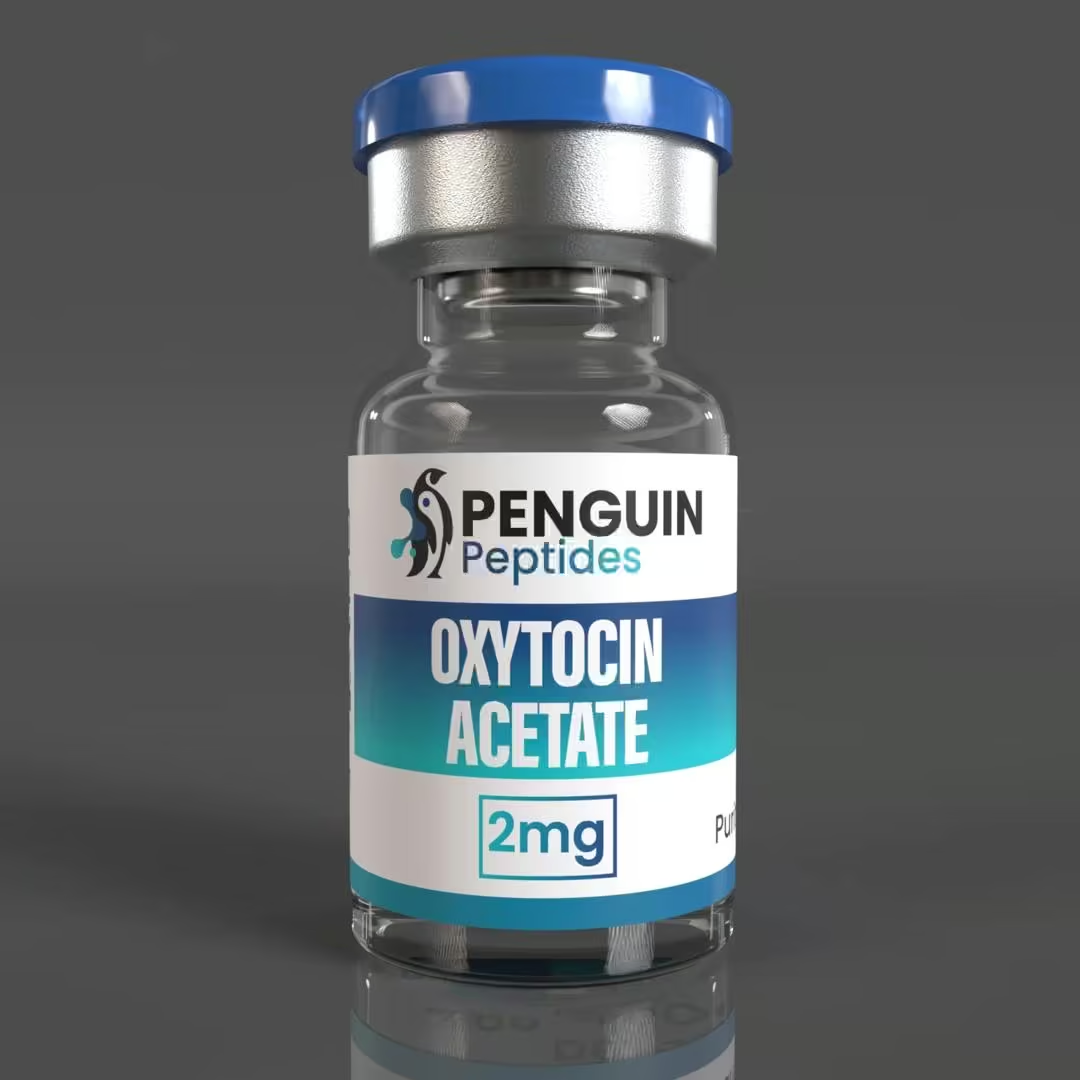


Oxytocin Acetate 2mg: The Complete Research Guide to the Master Social Neuropeptide
What Is Oxytocin Acetate 2mg?
Oxytocin Acetate 2mg is a research-grade synthetic preparation of Oxytocin — a naturally occurring cyclic nonapeptide hormone and neuropeptide — supplied as a lyophilized (freeze-dried) white to off-white powder in a sealed 2mg vial, formulated as the acetate salt for enhanced stability. It is synthesized to replicate the structure of endogenous human oxytocin with ≥98–99% HPLC-verified purity, and is intended strictly for controlled laboratory research use by qualified scientific personnel.
Oxytocin occupies a unique position in peptide research as both a peripheral hormone (regulating uterine contractility, milk ejection, and reproductive physiology) and a central neuropeptide (modulating social behavior, emotional memory, stress responses, and reward circuitry). No other single neuropeptide bridges peripheral reproductive biology and central social neuroscience as extensively as oxytocin — making Oxytocin Acetate 2mg one of the most broadly applicable research peptides in modern laboratory science.
Important Disclaimer: Oxytocin Acetate 2mg is strictly for laboratory research use only. It is not approved for unsupervised human self-administration, veterinary use, or any non-clinical therapeutic or diagnostic application.
Chemical Identity and Structure
Oxytocin is a cyclic nonapeptide — a nine-amino-acid peptide containing an intramolecular disulfide bridge between cysteine residues at positions 1 and 6 that creates the characteristic cyclic ring structure essential for receptor binding activity. The C-terminal glycine residue is amidated, a modification critical for biological potency.
| Specification | Details |
|---|---|
| Compound | Oxytocin Acetate |
| Also Known As | OXT, α-Hypophamine |
| CAS Number | 6233-83-6 (acetate); 50-56-6 (free base) |
| Molecular Formula | C₄₃H₆₆N₁₂O₁₂S₂ (free base) |
| Molecular Weight | 1,007.19 g/mol (free base) |
| Structure | Cyclic nonapeptide; disulfide bridge Cys¹–Cys⁶; C-terminal glycinamide |
| Salt Form | Acetate (improved stability, standard for research vials) |
| Physical Form | Lyophilized white/off-white powder |
| Vial Size | 2mg |
| Purity | ≥98–99% (HPLC verified) |
| Plasma Half-Life | ~1–2 minutes (plasma); ~20 minutes (CSF) |
| Synthesis Site | Hypothalamus (paraventricular and supraoptic nuclei) |
| Release Site | Posterior pituitary (peripheral); hypothalamic projections (central) |
The acetate salt form is the standard pharmaceutical and research-grade formulation for synthetic oxytocin — providing superior aqueous solubility, chemical stability during lyophilization and storage, and batch-to-batch reproducibility compared to the free base form.
Mechanism of Action: OXTR Signaling Cascades
Oxytocin exerts all of its known biological effects through a single receptor: the Oxytocin Receptor (OXTR) — a 7-transmembrane G protein-coupled receptor (GPCR) expressed across both peripheral tissues and central nervous system regions. The OXTR’s ability to couple to multiple G protein subtypes produces a diverse array of downstream signaling cascades from a single receptor interaction point.
Primary Pathway: Gq/11 → PLC → IP3/DAG → Ca²⁺ / PKC
The predominant OXTR signaling cascade engages Gq/11 proteins, activating Phospholipase C (PLC), which cleaves phosphatidylinositol 4,5-bisphosphate (PIP₂) into two second messengers:
- Inositol trisphosphate (IP3): Triggers calcium release from the endoplasmic reticulum, elevating cytosolic Ca²⁺ concentrations — the principal driver of smooth muscle contraction in the uterus and myoepithelial cells of the mammary gland, and a modulator of neuronal firing and synaptic plasticity in the CNS
- Diacylglycerol (DAG): Activates Protein Kinase C (PKC), which phosphorylates proteins involved in synaptic remodeling, gene transcription, and CREB (cAMP Response Element-Binding protein) activation
Secondary Pathway: Gi/o → MAPK / ERK1/2
OXTR can also couple to Gi/o proteins, modulating MAPK (Mitogen-Activated Protein Kinase) and ERK1/2 phosphorylation — pathways involved in neuronal survival, neurite outgrowth, and cellular viability. This secondary coupling is particularly relevant in CNS contexts where oxytocin influences neuroplasticity and neuroprotection.
CaMK Pathway
OXTR activation also engages Calmodulin-dependent protein kinases (CaMKs) via the calcium signal generated by IP3, contributing to long-term synaptic changes, emotional memory consolidation, and gene expression regulation through transcription factors including CREB and MEF-2.
OXTR Brain Distribution: Where Oxytocin Acts in the CNS
One of the most critical variables in any research involving Oxytocin Acetate 2mg is the neuroanatomical distribution of OXTR — because the behavioral and neurological outcomes of OXTR activation are highly region-dependent:
| Brain Region | OXTR Expression | Research-Relevant Function |
|---|---|---|
| Amygdala | High | Fear extinction, social behavior regulation, emotional memory |
| Hypothalamus (PVN/SON) | High | OXT synthesis, HPA axis modulation, stress regulation |
| Nucleus Accumbens | Moderate-High | Social reward, pair bonding, dopaminergic interaction |
| Prefrontal Cortex | Moderate | Social cognition, decision-making, trust modulation |
| Bed Nucleus Stria Terminalis | High | Anxiety regulation, stress circuits |
| Hippocampus | Moderate | Memory consolidation, social recognition |
| Brainstem | Moderate | Autonomic regulation, parasympathetic tone |
Research published in Physiological Reviews (“The Oxytocin Receptor: From Intracellular Signaling to Behavior”) comprehensively documented that OXTR expression in the central amygdala is independent of gonadal steroids — remaining stable across the estrous cycle, pregnancy, and lactation — making it a reliable, hormonally invariant research target. The study further established that oxytocinergic projections from the paraventricular nucleus of the hypothalamus innervate the amygdala, bed nucleus of the stria terminalis, and medial prefrontal cortex, forming the primary anxiety- and stress-regulating circuits studied with Oxytocin Acetate.
Key Research Areas for Oxytocin Acetate 2mg
1. Social Behavior and Bonding Neuroscience
Oxytocin is the benchmark compound for studying neural substrates of social affiliation, trust, pair bonding, and prosocial behavior. Laboratory models using Oxytocin Acetate 2mg examine how OXTR activation in nucleus accumbens and prefrontal circuits modulates social reward valuation, social approach behavior, and the dopaminergic reinforcement of social interaction. OXTR gene polymorphism studies — particularly the rs53576 variant — have linked OXTR expression differences to empathy, stress reactivity, and susceptibility to social anxiety.
2. Stress, Anxiety, and HPA Axis Research
The oxytocinergic system provides a direct counter-regulatory input to the Hypothalamic-Pituitary-Adrenal (HPA) axis — the primary stress response circuit. Research using Oxytocin Acetate in preclinical models demonstrates that OXTR activation in the amygdala and bed nucleus of the stria terminalis reduces corticotropin-releasing factor (CRF) signaling, attenuates cortisol/corticosterone stress responses, and promotes parasympathetic tone. These findings position Oxytocin Acetate 2mg as an essential tool in anxiety, PTSD, and stress biology research.
3. Reproductive Biology and Uterine Physiology
In peripheral reproductive tissue, OXTR activation via the Gq/11 → IP3 → Ca²⁺ cascade drives myometrial smooth muscle contraction — the mechanism underlying oxytocin’s well-established role in labor induction and parturition. Research-grade Oxytocin Acetate 2mg is used in uterine contractility studies, myometrial receptor pharmacology, and cervical ripening models. It is also studied in mammary gland myoepithelial cell contraction research relevant to lactation physiology.
4. Autism Spectrum Disorder (ASD) and Social Cognition Research
Reduced plasma oxytocin levels, blunted developmental increases in OXT with age, and OXTR gene variations have been consistently documented in ASD populations. Research-grade Oxytocin Acetate 2mg is used in preclinical ASD models to study whether OXTR stimulation can restore social approach behavior, emotion recognition, and social reward processing — areas where the oxytocinergic deficit hypothesis of ASD remains an active research frontier.
5. Maternal Behavior and Parent-Infant Bonding
Oxytocin is the primary neurobiological driver of maternal behavior — including pup retrieval, nest building, nursing, and maternal aggression in rodent models. Oxytocin Acetate research in these models has mapped the specific OXTR circuits in the medial preoptic area and ventral tegmental area responsible for maternal motivation, and has identified how early-life OXT exposure programs adult social behavior through epigenetic modifications to OXTR methylation patterns.
6. Epigenetics and OXTR Methylation Research
Early-life adversity and chronic stress alter DNA methylation of the OXTR gene promoter, reducing receptor expression and permanently modifying social behavior and stress reactivity in rodent models. Research using Oxytocin Acetate 2mg in combination with OXTR methylation analysis is an active area connecting developmental neuroscience, epigenetics, and social behavior biology.
Oxytocin Acetate 2mg Research Product Specifications
| Specification | Details |
|---|---|
| Compound | Oxytocin Acetate |
| Vial Size | 2mg |
| Physical Form | Lyophilized white/off-white powder |
| Purity | ≥98–99% (HPLC verified, lot-specific COA) |
| CAS Number | 6233-83-6 (acetate salt) |
| Molecular Weight | ~1,007.19 g/mol (free base) |
| Storage (lyophilized) | −20°C (−4°F); dry, dark conditions; protect from moisture |
| Storage (reconstituted) | Refrigerate at 2–8°C (36–46°F); use within 30 days; do not freeze |
| Reconstitution | Bacteriostatic water; inject slowly along vial wall; do not shake or vortex |
| Certificate of Analysis | Required — lot-specific, third-party verified |
| Handling | Standard peptide handling protocols; qualified laboratory personnel only |
Frequently Asked Questions About Oxytocin Acetate 2mg
What does “Acetate” mean in Oxytocin Acetate 2mg? It refers to the salt form of the peptide. Oxytocin is supplied as an acetate salt — the acetic acid counterion improves aqueous solubility and chemical stability of the lyophilized powder compared to the free base form. The acetate counterion has no biological activity and does not affect OXTR binding or downstream signaling.
Why is oxytocin called the “love hormone”? The informal label reflects oxytocin’s well-documented role in social bonding, trust, pair bonding, and maternal attachment. However, the actual science is considerably more nuanced — OXTR activation can also promote in-group favoritism, social memory consolidation, and context-dependent anxiety responses. In research, oxytocin is better characterized as a social salience modulator rather than a simple “bonding hormone.”
What is the plasma half-life of Oxytocin Acetate 2mg? Endogenous and synthetic oxytocin have a plasma half-life of approximately 1–2 minutes due to rapid degradation by oxytocinase (leucyl/cystinyl aminopeptidase) and non-specific peptidases. In cerebrospinal fluid (CSF), the half-life extends to approximately 20 minutes, which is why central vs peripheral OXT compartments are treated as semi-independent systems in research design.
What is the difference between oxytocin and vasopressin (AVP)? Oxytocin and vasopressin (arginine vasopressin/AVP) are structurally related nonapeptides differing by only two amino acids, both produced in the hypothalamus. OXT primarily drives prosocial, parasympathetic, and reproductive responses; AVP primarily drives social recognition, vigilance, territorial behavior, and sympathetic responses. Their receptors (OXTR vs V1a/V1b/V2) are pharmacologically distinct, though some cross-reactivity exists at high concentrations.
Is Oxytocin Acetate 2mg approved for human use? Research-grade Oxytocin Acetate 2mg vials are not for unsupervised human use and are intended exclusively for laboratory research. FDA-approved oxytocin formulations (e.g., Pitocin) exist for specific obstetric indications under medical supervision — these are distinct from research-grade preparations in every respect.
Summary
Oxytocin Acetate 2mg — a ≥98–99% purity synthetic cyclic nonapeptide supplied in a lyophilized 2mg research vial — is one of the most scientifically multifaceted neuropeptides available for laboratory research. Its single receptor (OXTR) drives diverse Gq/11 → IP3 → Ca²⁺/PKC, Gi/o → MAPK/ERK1/2, and CaMK signaling cascades across peripheral reproductive tissues and central neurobiological circuits spanning the amygdala, nucleus accumbens, prefrontal cortex, and hypothalamus. Bridging reproductive endocrinology, social neuroscience, stress biology, epigenetics, and developmental psychiatry, Oxytocin Acetate 2mg represents a uniquely cross-disciplinary research tool with few equivalents in the peptide research space. All handling and use must remain fully compliant with applicable institutional and regulatory guidelines.
This content is provided for educational and informational purposes only. Oxytocin Acetate 2mg is intended strictly for laboratory research use and is not for human self-administration, medical treatment, therapeutic application, or diagnostic use outside of regulated contexts. Always comply with applicable laws, institutional protocols, and safety guidelines when handling research peptides.
Be the first to review “OXYTOCIN ACETATE 2mg”
Related products
Specialized Research Compounds
Specialized Research Compounds
Specialized Research Compounds
Reviews
There are no reviews yet.