


Kisspeptin 10mg: The Complete Research Guide to Benefits, Mechanism, and Dosage
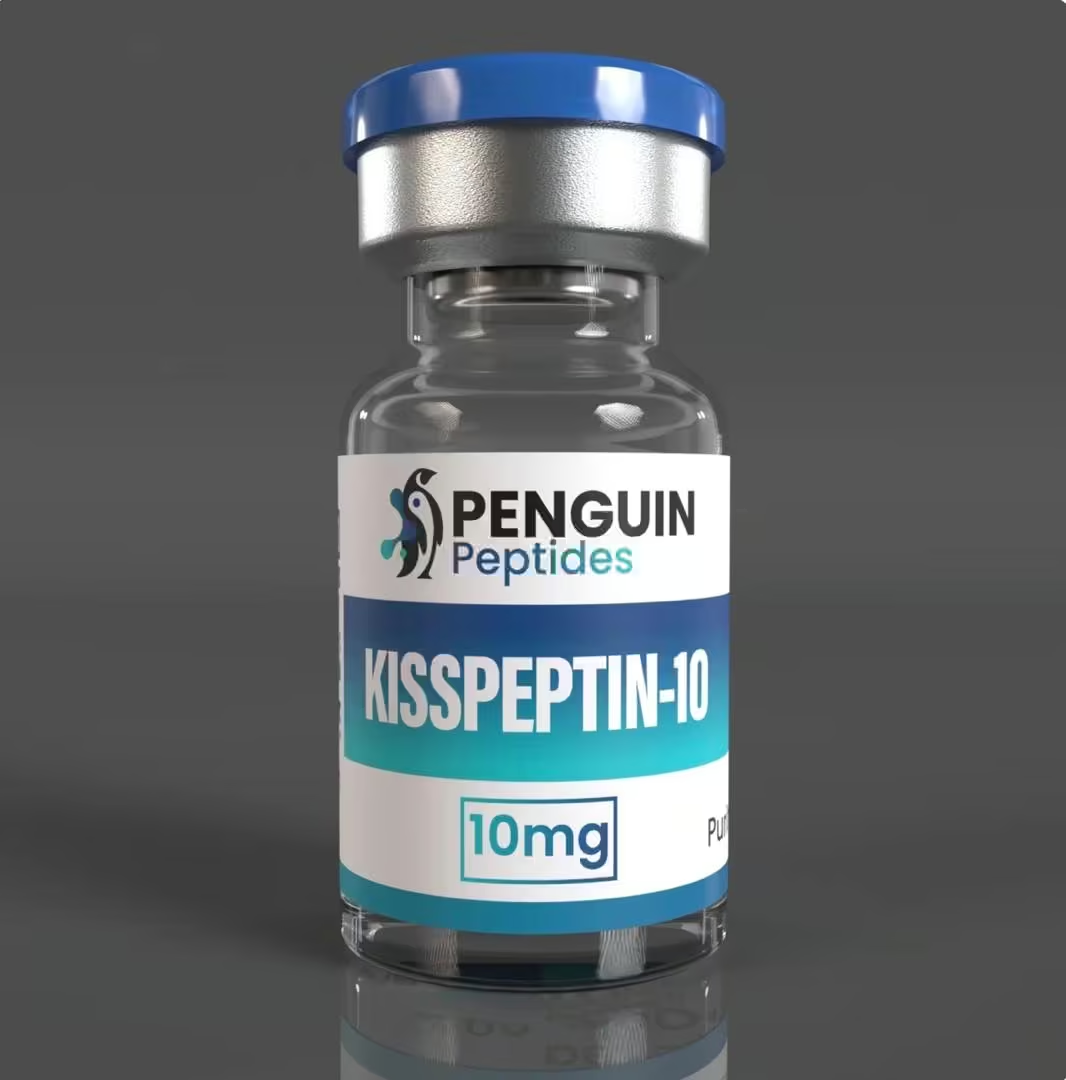
If you’ve been exploring the world of peptide research or reproductive endocrinology, you’ve likely come across the name Kisspeptin. Specifically, Kisspeptin 10mg — referring to the research vial concentration of the bioactive fragment known as Kisspeptin-10 — has drawn growing attention from scientists, clinicians, and the wellness community alike.
But what exactly is Kisspeptin-10? How does it work in the body? And why are researchers at institutions like Imperial College London and Massachusetts General Hospital investing time and resources into studying it?
This guide answers all of those questions — and more.
What Is Kisspeptin 10mg?
Kisspeptin is a naturally occurring neuropeptide encoded by the KISS1 gene. It exists in several isoforms — KP-54, KP-13, and KP-10 — with the numbers referring to the number of amino acids in each fragment. Kisspeptin-10 is a synthetic decapeptide and the shortest biologically active fragment of the kisspeptin family, with an amino acid sequence of Tyr-Asn-Trp-Asn-Ser-Phe-Gly-Leu-Arg-Phe-NH2.
When researchers refer to Kisspeptin 10mg, they are typically referring to a lyophilized (freeze-dried) vial of Kisspeptin-10 at a 10mg concentration, intended for laboratory and scientific research use.
Despite being the smallest fragment in the kisspeptin family, KP-10 retains full biological activity at the receptor level, making it a highly valuable research tool for studying the reproductive axis, metabolism, and endocrine function.
How Does Kisspeptin-10 Work?
Natural and synthetic forms of Kisspeptin-10 bind to and activate the Gαq11-protein coupled receptor GPR-54 (also known as the kisspeptin receptor or KISS1R), which is highly expressed in the central nervous system and in peripheral tissues of rodents and humans.
In the human and rodent brain, GPR-54 is enriched in the hypothalamus, particularly in the infundibular nucleus (in humans) and the arcuate nucleus (in rodents), the lateral hypothalamic area, and the dorsomedial nucleus.
Once GPR-54 is activated, a chain reaction begins that ultimately drives the release of gonadotropin-releasing hormone (GnRH). GnRH then signals the pituitary gland to release luteinizing hormone (LH) and follicle-stimulating hormone (FSH) — the two master hormones that regulate sex hormone production and reproductive function in both men and women.
This pathway — Kisspeptin → GnRH → LH/FSH → sex hormones — places Kisspeptin-10 at the very top of the reproductive hormone cascade, making it one of the most upstream regulators of human fertility and hormonal health.
Key Areas of Kisspeptin-10 Research
1. Reproductive Hormone Regulation
The most well-established application of Kisspeptin-10 in research is its role in stimulating the reproductive axis. Researchers are increasingly looking into Kisspeptin-10 as a key component of hormone signaling during puberty and as a facilitator of reproductive processes.
Ongoing clinical research at Imperial College London is investigating what happens to reproductive hormone levels — including LH, FSH, testosterone, and oestradiol — when kisspeptin is administered over an 8-day period each month at varying doses. This type of sustained administration study helps researchers understand how kisspeptin behaves not just acutely, but over meaningful treatment windows.
2. Fertility and Infertility Applications
One of the most exciting frontiers for Kisspeptin-10 is its potential in fertility medicine. While showing promise, Kisspeptin-10 is not yet approved for fertility treatment, though research is ongoing. It offers a more physiological approach to stimulating the reproductive axis compared to direct GnRH or gonadotropin administration.
Because Kisspeptin-10 stimulates the body’s own GnRH release rather than bypassing it entirely, it may allow for a more natural hormonal response — a property that researchers believe could reduce the risk of ovarian hyperstimulation and other complications associated with conventional fertility drugs.
3. Hyperprolactinemia Research
Researchers at Massachusetts General Hospital are studying how kisspeptin affects women with elevated levels of prolactin (hyperprolactinemia), a condition that can disrupt menstrual cycles, impair fertility, and cause a range of hormonal imbalances. The study, led by experts in reproductive endocrinology, underscores the broadening clinical interest in kisspeptin beyond just basic science.
4. Metabolic and Anti-Obesity Effects
Perhaps one of the more surprising emerging areas of research involves Kisspeptin-10’s metabolic properties. A 2025 study published in a peer-reviewed journal found that twice-daily administration of Kisspeptin-10 decreased body weight, blood glucose, and energy intake to normal diet levels in high-fat-fed female mice. This points toward a potential future role for Kisspeptin-10 not only in reproductive medicine but in metabolic disease management as well.
Separate research examining Kisspeptin’s effects on food intake in women with overweight or obesity used intravenous infusion to explore the peptide’s reproductive and metabolic effects, adding to the growing body of evidence that this neuropeptide has a broader systemic influence than previously appreciated.
5. Cardiovascular Research
Kisspeptins, including KP-10, have been identified in the human coronary artery and umbilical vein and have demonstrated potent endothelium-dependent vasoconstriction function. Kisspeptin receptors have also been found in atrial and ventricular tissues of humans, with effects observed on cardiac activity. While this area of research is still emerging, it highlights the diverse physiological reach of the kisspeptin system.
Kisspeptin 10mg Dosage in Research Contexts
Dosage in Kisspeptin-10 research varies significantly depending on the administration route and study objective.
The typical dosage range of 0.01–3.0 μg/kg for bolus administration and 1.5–4 μg/kg/h for continuous infusion appears effective for most research applications.
In animal studies, an IV injection of 1 mg/kg has been used, though the half-life of the peptide was found to be extremely short — under one minute — in rats. This rapid degradation is one reason researchers explore different administration methods, including subcutaneous and continuous infusion models, to extend the peptide’s active window.
Effects on LH levels can typically be seen within 30–45 minutes of IV administration, making the timing of blood sampling in research protocols critically important.
Safety Profile and Considerations
Kisspeptin-10 is generally considered to have a favorable safety profile in studies, though long-term safety data in humans is limited, and more research is needed to establish its safety profile for extended use.
Researchers and clinicians should be aware of a few key considerations:
Cardiovascular effects: Given its vasoconstriction properties and the presence of kisspeptin receptors in cardiac tissue, individuals with cardiovascular conditions warrant particular attention in any future clinical applications.
Short half-life: The rapid degradation of Kisspeptin-10 in the bloodstream means that dosing protocols must be carefully designed to achieve consistent exposure, especially in extended research models.
Hormone interactions: Because Kisspeptin-10 sits at the top of the reproductive hormone cascade, its administration can meaningfully influence testosterone, estrogen, LH, and FSH levels — making it particularly relevant for research involving testosterone replacement therapy, fertility treatments, and hormonal studies.
Kisspeptin-10 vs. Other Kisspeptin Isoforms
It’s worth understanding how Kisspeptin-10 compares to its longer counterparts, KP-13 and KP-54.
All three isoforms activate the same GPR-54 receptor, but they differ in potency, duration of action, and stability. KP-54 is the most stable and longest-acting, while KP-10 is the most potent on a molar basis but has the shortest half-life. Researchers often select the isoform based on the specific outcome they are studying — acute LH pulses, sustained hormonal shifts, or receptor binding kinetics.
Who Is Researching Kisspeptin-10?
Interest in Kisspeptin-10 spans some of the world’s most respected research institutions. Imperial College London has run multiple trials examining its reproductive effects. Massachusetts General Hospital has studied it in the context of hyperprolactinemia. University research groups from Ulster to Tokyo have explored its metabolic, cardiac, and oncological dimensions.
This breadth of institutional involvement speaks to one thing: Kisspeptin-10 is a peptide that science takes seriously.
Final Thoughts
Kisspeptin 10mg occupies a fascinating position in contemporary peptide research. As the smallest yet fully active fragment of the kisspeptin family, it gives researchers a precise tool for probing one of the most important hormonal pathways in human physiology — the reproductive axis.
From its potential in fertility medicine and testosterone optimization, to emerging applications in metabolic disease and cardiovascular research, Kisspeptin-10 is far more than a niche compound. It represents a scientifically legitimate and rapidly expanding area of biomedical inquiry.
As always, any application outside of controlled research settings should only occur under the guidance of qualified healthcare professionals. Kisspeptin-10 is currently intended for research use only and has not received FDA approval for clinical use beyond specific investigational studies.
Disclaimer: This content is provided for educational and informational purposes only. Kisspeptin-10 is a research peptide and should only be used in accordance with applicable laws and under appropriate professional supervision.
Be the first to review “KissPeptin 10mg”
Related products
Specialized Research Compounds
Specialized Research Compounds
Specialized Research Compounds
Reviews
There are no reviews yet.