


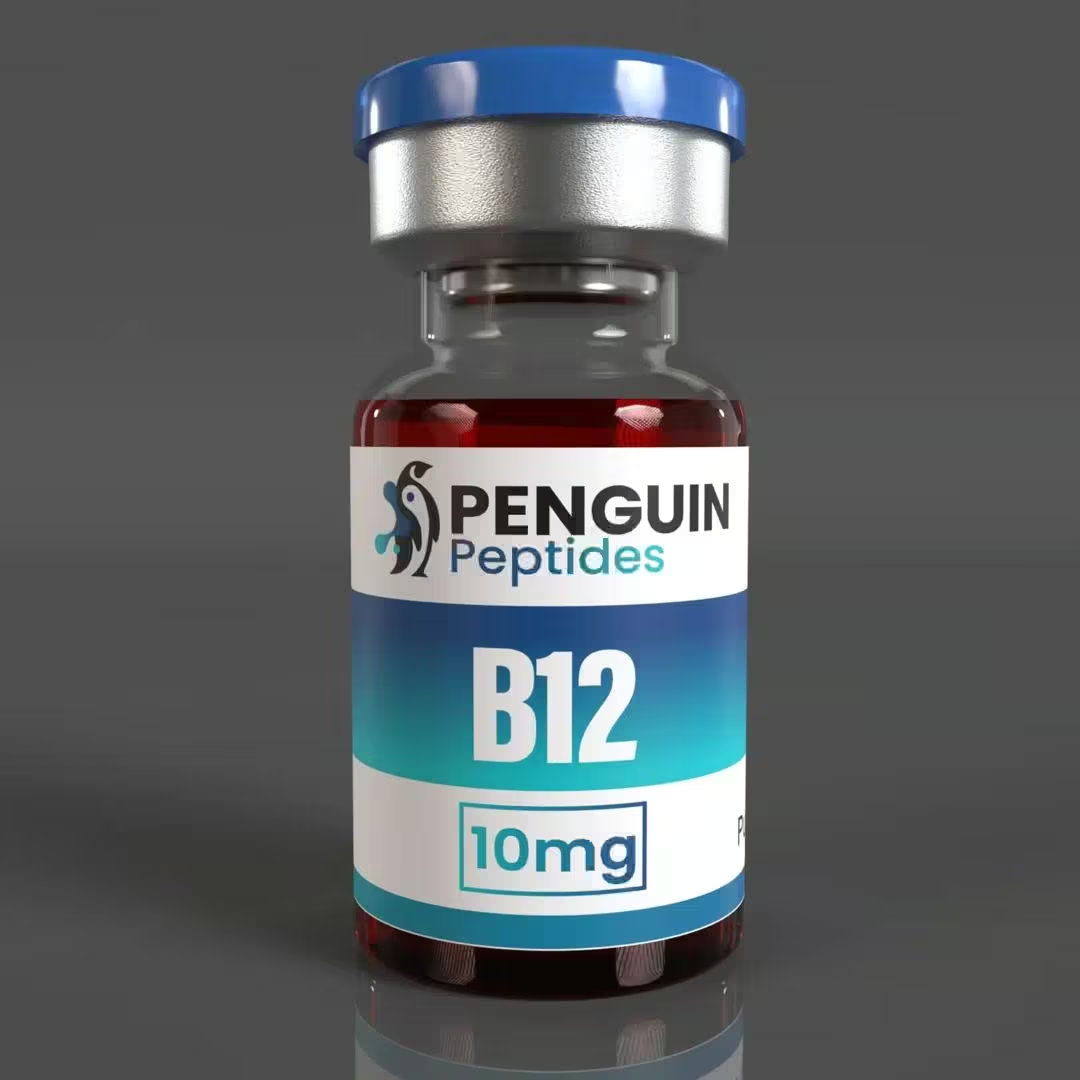

Vitamin B12 10mg: The Complete Guide to Benefits, Deficiency, Dosage, and Administration
Vitamin B12 is one of the most talked-about nutrients in modern health — and for very good reason. Despite being required only in microscopic amounts by the body, its absence can trigger a cascade of serious neurological, hematological, and psychological consequences. For individuals with absorption issues, specific health conditions, or dietary restrictions, B12 10mg formulations — whether injectable or high-dose oral — represent a clinically important intervention.
This comprehensive guide covers everything you need to know about Vitamin B12 10mg: what it is, why it matters, who is most at risk of deficiency, how injections compare to oral supplementation, proper dosage protocols, and the latest science on its role in brain health and cognitive function.
What Is Vitamin B12?
Vitamin B12, also known as cobalamin, is an essential water-soluble vitamin that plays an important role in many bodily functions. Its primary jobs include helping with nerve function, the formation of red blood cells (which carry oxygen throughout the body), and the production of DNA.
Vitamin B12 is naturally found only in animal products like meat, fish, eggs, and dairy, or in fortified foods and supplements, as plants do not produce it. This dietary reality makes B12 one of the nutrients most commonly deficient in vegetarians, vegans, and individuals following plant-forward diets.
When people refer to B12 10mg, they are typically referring to high-concentration injectable formulations or high-potency supplement vials used in clinical, wellness, or IV therapy settings. While the standard daily requirement for healthy adults is just 2.4 micrograms, high-dose formulations are used therapeutically to rapidly replenish stores in individuals with deficiency, particularly when absorption is impaired.
Why Is Vitamin B12 So Critical?
It’s difficult to overstate the systemic importance of Vitamin B12. It is involved in some of the body’s most fundamental biological processes:
Red Blood Cell Production: B12 is essential for the synthesis of healthy red blood cells. Without sufficient B12, the body produces abnormally large, dysfunctional red blood cells — a condition known as megaloblastic anemia — which impairs the blood’s ability to carry oxygen efficiently.
DNA Synthesis: Every cell in the body requires B12 to replicate its DNA. This makes it especially critical during periods of rapid cell division, including fetal development, childhood growth, and immune cell proliferation.
Nervous System Health: Perhaps most critically, a Vitamin B12 deficiency can express itself through a wide variety of neurological manifestations such as paraesthesias, skin numbness, coordination disorders, and reduced nerve conduction velocity. In elderly people, a latent Vitamin B12 deficiency can be associated with progressive brain atrophy.
Energy Metabolism: B12 is crucial for energy — it helps convert food into usable energy, and vitamin deficiency can lead to persistent fatigue and weakness, impacting both physical and mental performance.
Neurotransmitter Production: B12 contributes to mental clarity and brain function by supporting the production of neurotransmitters — the chemical messengers in the brain that influence mood, memory, and concentration.
Vitamin B12 Deficiency: Causes, Symptoms, and Risks
Who Is at Risk?
The global burden of vitamin B12 deficiency is substantial, disproportionately affecting aging populations, individuals with gastrointestinal malabsorption disorders (such as pernicious anemia and Crohn’s disease), those adhering to plant-based diets devoid of animal-derived sources, and individuals using medications such as metformin and proton pump inhibitors (PPIs), which are emerging contributors to deficiency.
Vitamin B12 deficiency happens if you aren’t eating enough vitamin B12 or if your body isn’t absorbing it properly. Common causes include gastritis — inflammation of the stomach lining — which can impair absorption due to reduced hydrochloric acid production.
Other risk factors include:
Pernicious anemia — an autoimmune condition in which the body cannot make intrinsic factor, the protein needed to absorb B12. Another autoimmune disease, atrophic gastritis, thins the lining of the stomach and prevents the body from making enough hydrochloric acid and intrinsic factor needed to absorb B12.
Age — Older adults are disproportionately affected, both due to reduced stomach acid production (which impairs B12 absorption) and lower dietary intake. Emerging research is strengthening the case for earlier intervention. A 2025 comprehensive review concluded that B12 deficiency remains a modifiable risk factor for neurological and cognitive problems, especially in high-risk groups such as older adults and vegetarians.
Signs and Symptoms of B12 Deficiency
Vitamin B12 deficiency can cause physical, neurological, and psychological symptoms. The symptoms can develop slowly and get worse over time. You may have no symptoms despite having a low level of vitamin B12 in your body.
Common symptoms include:
Physical symptoms: Persistent fatigue and weakness, pale or jaundiced skin, shortness of breath, headaches, and a sore or inflamed tongue.
Neurological symptoms: Numbness and tingling are among the first neurological symptoms of vitamin B12 deficiency. People may find it difficult to remember and process information, and often experience coordination difficulties and sleep problems.
Psychological symptoms: Too little B12 in your body can affect your energy level, mood, and memory. Depression, irritability, and cognitive fog are frequently reported, particularly in older adults.
The Neurological Stakes Are High
The neurological consequences of untreated B12 deficiency deserve special emphasis. Moderately elevated concentrations of homocysteine (above 10 µmol/L) — which rise when B12 is insufficient — have been associated with an increased risk of dementia, notably Alzheimer’s disease, in many cross-sectional and prospective studies. Raised plasma concentrations of homocysteine are also associated with both regional and whole brain atrophy, not only in Alzheimer’s disease but also in healthy elderly people.
Clinician awareness should be raised to accurately diagnose and treat early Vitamin B12 deficiency to prevent irreversible structural brain damage, according to published neurological research. The urgency here is real: unlike many nutrient deficiencies, neurological damage from prolonged B12 deficiency can be permanent if left untreated long enough.
Groundbreaking 2025 research published in the Annals of Neurology found that lower total B12 levels within the specified normal range may still be associated with subtle functional and structural neurological deficits if the active fraction of plasma B12 is too low to sustain adequate cellular B12 needs — suggesting that current clinical thresholds for “normal” B12 may themselves be inadequate.
B12 Injections vs. Oral Supplementation
One of the most clinically important questions surrounding B12 is how to administer it — particularly for individuals who cannot absorb it effectively through the gut.
The Case for B12 Injections
Vitamin B12 injections deliver a purified form of vitamin B12 directly into the muscle or under the skin, bypassing the digestive system for rapid absorption.
Unlike oral supplements, injections deliver B12 directly into the bloodstream, ensuring rapid and complete absorption — which is a critical advantage for those with pernicious anemia, gut malabsorption, or conditions that impair the production of intrinsic factor.
Common injectable forms include hydroxocobalamin, which is often preferred in medical practice due to its longer duration in the body, as well as cyanocobalamin — the form most commonly used in clinical trials and pharmaceutical formulations.
What Does the Research Say About Oral vs. Injectable?
A comprehensive 2024–2025 systematic review and meta-analysis directly compared sublingual and oral B12 against intramuscular injection. Supplementation improved neurological symptoms in patients with overt deficiency, with oral therapy showing similar efficacy to intramuscular injections, better tolerability, and lower cost in many cases.
This finding has important practical implications: for many patients with dietary B12 deficiency (rather than absorption impairment), high-dose oral supplementation may be equally effective to injection. However, for individuals with true malabsorption — such as those with pernicious anemia — injections that bypass the gut entirely remain the standard of care.
A 2024 double-blind randomized clinical trial also demonstrated that Sucrosomial B12 was significantly more effective than conventional B12 formulations in increasing and maintaining higher serum B12 levels across all time points, reflecting ongoing innovation in oral delivery technologies that may narrow the gap with injectable forms.
B12 10mg Dosage Guidelines
It’s important to understand that 10mg (10,000 mcg) is a high-concentration formulation — far above the 2.4 mcg daily requirement — and is intended for therapeutic or clinical use, not routine supplementation.
Injectable Dosage Protocols
The FDA-approved injectable cyanocobalamin dosage for adults is 100 mcg daily for 6 or 7 days, followed by 100 mcg every other day for 14 days, then every 3 to 4 days for several more weeks. This loading-then-maintenance structure is designed to rapidly replenish depleted stores before transitioning to a sustainable maintenance schedule.
For ongoing deficiency management, dosage protocols vary by clinical context:
For mild deficiency, a typical dosage might be 1,000 mcg once a week for several weeks. For moderate to severe deficiencies, the dosage may increase to 1,000 mcg several times a week initially, followed by a maintenance dose. Once B12 levels are normalized, a maintenance dose of 1,000 mcg monthly or every few months may be recommended.
High-dose B12 10mg vials used in IV or wellness therapy settings are typically diluted and administered as part of broader nutritional infusion protocols, with dosing calibrated to individual patient assessment, deficiency severity, and treatment goals.
Who Needs High-Dose B12?
Therapeutic high-dose B12 is most appropriate for:
Individuals with pernicious anemia — where gut absorption is permanently impaired, making ongoing injectable therapy a lifelong requirement.
People with gastrointestinal conditions — including Crohn’s disease, celiac disease, or those who have undergone gastric bypass surgery, all of which can significantly impair B12 absorption.
Long-term metformin users — metformin, one of the world’s most widely prescribed diabetes medications, is a well-documented inhibitor of B12 absorption and can lead to gradual deficiency over years of use.
Vegans and strict vegetarians — who obtain no dietary B12 from animal sources and may require supplementation indefinitely.
Older adults — particularly those over 60, in whom stomach acid production declines, impairing the release and absorption of food-bound B12.
Safety and Side Effects
Vitamin B12 has a well-established safety profile. Because it is water-soluble, excess B12 is excreted in the urine rather than stored in tissues, making toxicity from supplementation exceptionally rare.
For injectable B12, the most common side effects are localized and mild — including redness, swelling, or discomfort at the injection site. Systemic reactions are uncommon but can include mild headache, nausea, or transient dizziness following administration.
Hydroxocobalamin injections are generally well tolerated even at high doses, and long-term injectable therapy carries a strong safety record across decades of clinical use. Individuals with known hypersensitivity to cobalt or cobalamin preparations should consult their physician before use.
The Evolving Science of B12 and Brain Health
One of the most important frontiers in B12 research in 2025 and beyond is its relationship with cognitive health and neurodegeneration.
Researchers now suggest that clinicians should consider supplementation in older patients with neurological symptoms even if their levels are within normal limits, and that B12 insufficiency may be a preventable cause of cognitive decline that warrants more research into underlying biology and better biomarkers.
This evolving scientific consensus is shifting how B12 deficiency is diagnosed and treated — moving away from relying solely on serum B12 levels (which can appear normal even when cellular B12 is inadequate) toward more nuanced biomarker assessment including homocysteine, methylmalonic acid, and holotranscobalamin levels.
Final Thoughts
Vitamin B12 10mg formulations sit at the intersection of essential nutrition and targeted therapeutic medicine. For the majority of healthy adults with adequate dietary intake and normal gut function, standard B12 supplementation at lower doses is sufficient. But for those with impaired absorption, pernicious anemia, age-related decline in stomach acid, or long-term use of absorption-blocking medications, high-dose B12 — whether delivered by injection or advanced oral formulation — is not optional. It is medically necessary.
The neurological stakes of untreated B12 deficiency are among the most serious of any common nutritional gap — with consequences ranging from reversible fatigue and cognitive fog to irreversible nerve damage and accelerated brain atrophy. The good news is that B12 deficiency is eminently treatable when caught early, and the science for identifying and addressing it is only getting stronger.
If you suspect a deficiency, consult a qualified healthcare professional for appropriate blood testing and an evidence-based treatment plan tailored to your specific needs.
Disclaimer: This article is for educational and informational purposes only and does not constitute medical advice. Always consult a licensed healthcare professional before beginning any supplementation or injectable therapy.
Be the first to review “B12 10mg”
Related products
Metabolic-Research-Compounds
Metabolic-Research-Compounds
Metabolic-Research-Compounds
Metabolic-Research-Compounds
Metabolic-Research-Compounds
Metabolic-Research-Compounds
Metabolic-Research-Compounds
Metabolic-Research-Compounds
Reviews
There are no reviews yet.