
B12 10mg: The Complete Research Guide to Methylated Vitamin B12
What Is B12 10mg?
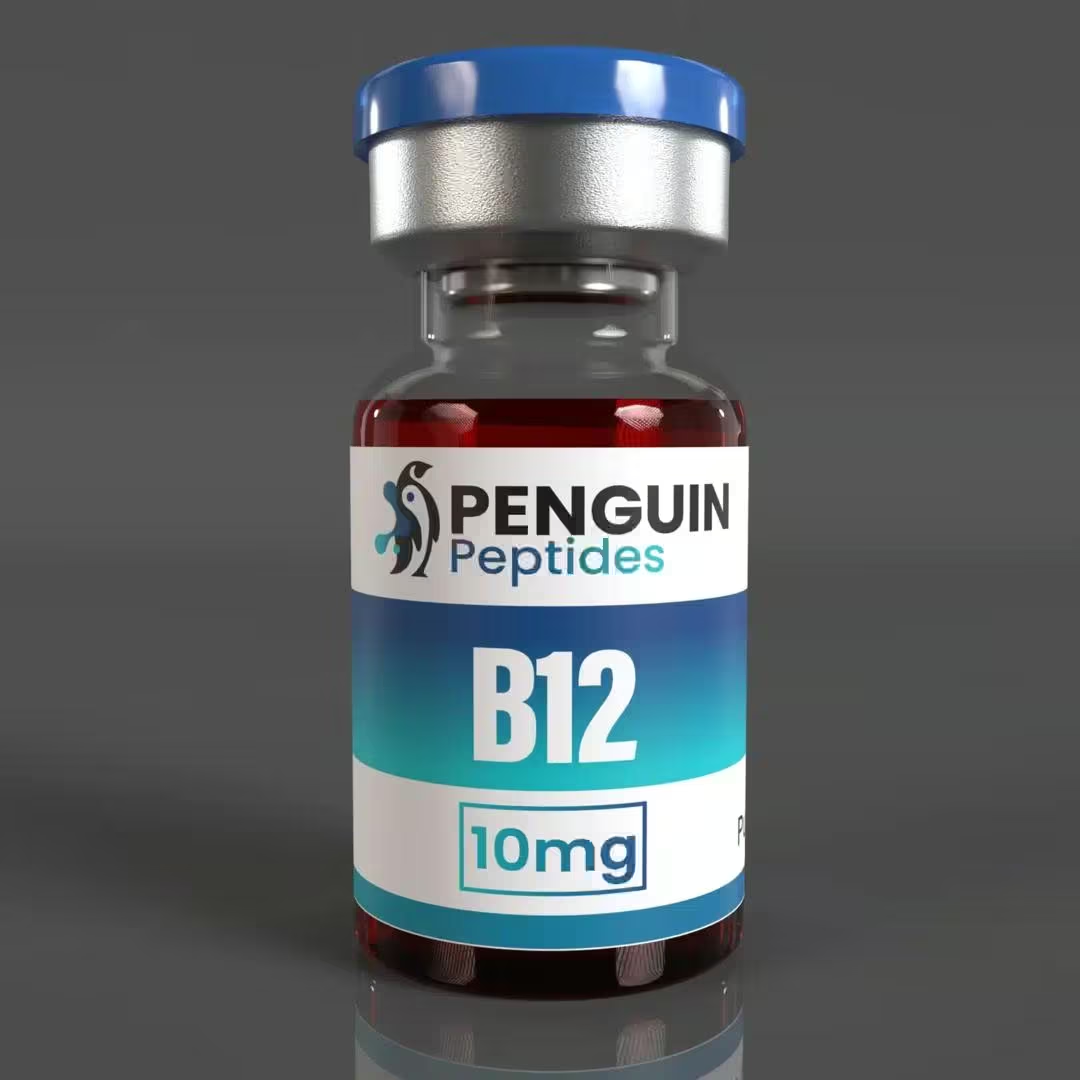
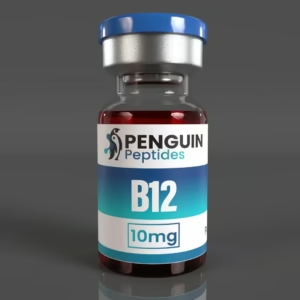
B12 10mg is a research-grade formulation of Methylcobalamin — the active, methylated form of Vitamin B12 — supplied as a liquid solution in a 10mL vial at a concentration of 1mg per milliliter, yielding a total of 10mg per vial. It is intended exclusively for controlled laboratory research and is not formulated or approved for human consumption, therapeutic use, or diagnostic purposes.
Unlike standard supplement-grade B12 products, research-grade B12 10mg is produced to pharmaceutical-quality purity standards, supported by batch-specific Certificates of Analysis (COA), and supplied in a ready-to-use liquid format that eliminates the need for reconstitution — making it a precise and reproducible tool for in vitro and preclinical research workflows.
Important Disclaimer: B12 10mg is strictly for laboratory research use only. It is not approved for human use, veterinary use, or any medical or diagnostic application.
Why Methylcobalamin? Understanding the Active Form of B12
Vitamin B12 exists in four principal forms — methylcobalamin, cyanocobalamin, hydroxocobalamin, and adenosylcobalamin. All four ultimately serve the same core biological role, but they differ meaningfully in their structure, bioavailability, stability, and metabolic conversion requirements.
Methylcobalamin is the naturally occurring, bioactive coenzyme form of B12. Where cyanocobalamin (the most common synthetic form used in supplements) must first be converted in the body into active coenzymes before it can participate in cellular reactions, methylcobalamin is already in the active state — no conversion step required. This makes it the form most directly relevant for research into methylation biochemistry and neurological signaling pathways.
The key distinction is at the molecular level: all B12 molecules share a cobalt ion at the center of a corrin ring; what differentiates the forms is the group attached to that cobalt ion. Methylcobalamin carries a methyl group (–CH₃), which it can donate directly into enzymatic reactions — most critically, as a cofactor for methionine synthase, the enzyme that converts homocysteine back into methionine.
The Role of Methylcobalamin in Laboratory Research
Research-grade Methylcobalamin (B12 10mg) is studied across several active areas of biochemical and molecular research:
1. One-Carbon Metabolism and Methylation Pathways
Methylcobalamin is a central component of the one-carbon (1C) metabolic cycle — a network of interconnected biochemical reactions that generate and transfer methyl groups, impacting DNA methylation, RNA processing, histone modification, and protein function. As a cofactor for methionine synthase, methylcobalamin is required for the remethylation of homocysteine to methionine, which then drives the production of S-adenosylmethionine (SAM) — the body’s universal methyl donor utilized by DNA, RNA, histone, and protein methyltransferases.
Research published in PMC (B Vitamins and One-Carbon Metabolism, 2020) confirmed that perturbations in B12 status — and therefore methylcobalamin availability — can disrupt one-carbon metabolism, contributing to neurological defects, anemia, aberrant immune responses, and epigenetic dysregulation. This makes methylcobalamin a key variable in studies examining methylation-dependent cellular processes.
2. Homocysteine Metabolism
Elevated homocysteine is an established biomarker in cardiovascular and neurological research. Methylcobalamin’s role as a direct cofactor in homocysteine remethylation makes B12 10mg a compound of significant interest in laboratory models studying hyperhomocysteinemia, endothelial function, and oxidative stress pathways.
3. Neurological Signaling Research
Methylcobalamin has been studied extensively in the context of neurological function. Research published in Cell Metabolism (2024) identified that B12 deficiency leads to widespread hypomethylation of DNA, affecting over 4,000 gene promoters — highlighting the compound’s broad influence on gene expression regulation in neuronal tissue. A 2025 review further confirmed that methylcobalamin offers direct bioavailability advantages for neurological research applications compared to synthetic cobalamin forms, due to its pre-converted active state.
The most prominent recent clinical research involves the JETALS Phase 3 trial, in which ultrahigh-dose methylcobalamin (50mg intramuscular) slowed functional decline by 43% in early-stage ALS patients compared to placebo over 16 weeks. Japan subsequently approved this application as Rozebalamin in September 2024. While the clinical doses used in that trial are far outside research peptide contexts, the data represents a significant milestone for methylcobalamin’s neurological research profile.
4. Epigenetic Research
As one-carbon metabolism directly feeds into SAM production — and SAM is the substrate for virtually all methyltransferase reactions — methylcobalamin availability influences epigenetic regulation at the level of DNA and histone methylation. Research-grade B12 10mg is used in laboratory settings to probe these upstream regulatory connections.
B12 10mg: Methylcobalamin vs Other B12 Forms
| Feature | Methylcobalamin (B12 10mg) | Cyanocobalamin | Hydroxocobalamin |
|---|---|---|---|
| Form | Active coenzyme | Synthetic | Natural, from bacteria |
| Conversion required? | No — already active | Yes — converts to active forms | Partial conversion |
| Primary research use | Methylation, neurology, 1C metabolism | General B12 studies | Intracellular kinetics |
| Half-life / Retention | Well-retained in tissue | More readily excreted | Processed intracellularly 6x faster than cyano (2024 kinetics study) |
| Stability | Light-sensitive | Most stable form | Stable |
| Naturally occurring? | Yes — found in animal foods | No — synthetic only | Yes — bacterial origin |
For laboratory research focused specifically on methylation pathways, neurological signaling, and one-carbon metabolism, methylcobalamin is the most directly relevant B12 form — because the research question is about the molecule that actually participates in those reactions, not a precursor that must first be converted.
B12 10mg Research Product Specifications
When sourcing B12 10mg (Methylcobalamin) for laboratory use, researchers should verify the following:
- Active compound: Methylcobalamin (Vitamin B12, active coenzyme form)
- Concentration: 1mg/mL
- Vial volume: 10mL
- Total content: 10mg per vial
- Format: Liquid solution (no reconstitution required)
- Purity: Pharmaceutical-grade quality standards, batch-verified
- Certificate of Analysis: Required — third-party verified per batch
- Storage: Store in a cool, dry location away from light; do not refrigerate unless specified. Methylcobalamin is sensitive to light degradation — always store in amber or opaque packaging.
- Handling: For use by qualified laboratory personnel only, in certified research facilities
Frequently Asked Questions About B12 10mg
What form of B12 is in B12 10mg research vials? Research-grade B12 10mg typically contains methylcobalamin — the active, naturally occurring coenzyme form of Vitamin B12, supplied at 1mg/mL in a 10mL vial.
Why is methylcobalamin preferred over cyanocobalamin for research? Methylcobalamin is already in the active coenzyme state and does not require enzymatic conversion before participating in methylation reactions. This makes it the preferred form for research into one-carbon metabolism, methylation pathways, and neurological signaling, where the active molecule itself is the subject of study.
Is B12 10mg safe for human consumption? No. Research-grade B12 10mg is not for human or veterinary use. It is produced for laboratory research purposes only and is not FDA-approved for any therapeutic, medical, or diagnostic application.
How should research-grade B12 10mg be stored? Keep in a cool, dry place away from direct light. Methylcobalamin is light-sensitive and can degrade with prolonged UV exposure. Always review the COA and manufacturer storage guidelines for your specific batch.
What is the difference between B12 10mg and standard B12 supplements? Research-grade B12 10mg is formulated to pharmaceutical-quality purity standards, batch-documented, and supplied in a precise liquid format for controlled laboratory use. Standard supplements are consumer-grade products produced for oral ingestion, subject to different regulatory frameworks entirely.
Summary
B12 10mg — supplied as research-grade Methylcobalamin at 1mg/mL in a 10mL vial — is a high-purity laboratory compound used to study one-carbon metabolism, methylation biochemistry, homocysteine pathways, and neurological signaling in controlled preclinical research environments. As the active, bioavailable coenzyme form of Vitamin B12, methylcobalamin is the most directly relevant B12 form for research focused on SAM-dependent methylation reactions, epigenetic regulation, and methionine synthase activity. All handling and use of research-grade B12 10mg must remain fully compliant with applicable institutional and regulatory guidelines.
This content is provided for educational and informational purposes only. B12 10mg is intended strictly for laboratory research use and is not for human consumption, medical treatment, therapeutic application, or diagnostic use. Always comply with applicable laws, institutional protocols, and safety guidelines when handling research compounds.
Be the first to review “B12 10MG”
Related products
Metabolic-Research-Compounds
Metabolic-Research-Compounds
Metabolic-Research-Compounds
Metabolic-Research-Compounds
Metabolic-Research-Compounds
Metabolic-Research-Compounds
Metabolic-Research-Compounds
Metabolic-Research-Compounds
Reviews
There are no reviews yet.